
When all you are getting are positive reviews, it can feel shocking to suddenly see one bad review on Amazon show up on your listing. That reaction is normal, but can a single bad review really affect conversion rate and daily sales on a platform like Amazon?
For online shoppers, about 98% read reviews before buying a product they have never purchased. Reviews act as a substitute for seeing the product in person, giving buyers confidence in their purchase.
Because of this, most Amazon sellers work hard to maintain positive feedback and strong ratings. However, one bad review on Amazon does not always mean your product is finished.
In this guide, we explain how one bad review on Amazon can affect your conversion rate and provide strategies to respond effectively. Our Amazon agency also discusses best practices for managing reviews, protecting sales, and rebuilding buyer trust.
Table of Contents
Implement a Review Recovery Plan
We create image and content updates that answer buyer concerns fast.
The Effects of One Bad Review on Amazon Listings
Most shoppers place a high value on product reviews because they give insight into the actual experience of using a product before purchase. A single negative review can create hesitation, especially when a product has only a few ratings, making buyers second-guess their decision.
One bad review can act as a “conversion friction” point, particularly if it raises safety concerns or highlights a perceived defect. Even if the claim is inaccurate, the presence of a 1-star rating can slow sales, force price adjustments, or distract the seller from focusing on growth.
Despite the impact, one negative customer review does not mean your product is doomed. The key is understanding how conversion, sales velocity, and social proof interact on Amazon, so sellers can respond strategically rather than reactively and protect their listing.
Common Mistakes Sellers Make in Handling a Bad Review on Amazon
Some Amazon sellers don’t know the first thing about handling a negative customer review, which often makes the situation worse and adds unnecessary stress. This is why it’s critical to understand the common mistakes sellers make when reacting to a bad review before taking any action.
1. Obsessing Over Review Removal
Sellers often spend too much time and energy trying to get a negative review deleted. This focus can be wasted effort because the chance of success is usually very low, leaving sellers distracted from actions that actually drive sales.
2. Reacting Emotionally
Many brand owners treat a single bad review as a permanent failure for their product. This emotional reaction can cause anxiety and lead to analysis paralysis, preventing them from making smart, forward-looking decisions.
3. Ignoring the Root Cause
Some sellers fail to look at what caused the negative review in the first place. This oversight prevents them from addressing issues in the listing or customer experience that could be corrected for future buyers.
4. Maintaining Comfortable Pricing
When a bad review hits, some sellers refuse to adjust their pricing. Holding prices steady can prolong low conversion because shoppers see negative social proof and hesitate to purchase.
5. Over-Valuing a Single Data Point
It’s common to assume that one review will completely tank a product’s success. This mistake makes sellers hyper-focused on the negative instead of considering the overall trend and long-term growth opportunities.
6. Chasing Black Hat Services
Some sellers turn to services that promise quick review removals using prohibited methods. This can risk account suspensions and add unnecessary legal and financial stress to an already difficult situation.
7. Ignoring Customer Communication
Many sellers fail to engage with the reviewer or respond publicly in a professional way. Avoiding communication can make the negative impression last longer and reduce trust for future buyers.
8. Freezing Marketing Efforts
A bad review can scare sellers into pausing ads or promotions. Stopping marketing campaigns lowers traffic, which actually makes the negative review’s impact on conversion more pronounced.
Stop the Sales Bleed
We step in with a clear action plan to rebuild trust and keep that single bad review from stealing your hard-earned sales.
Best Practices for Handling a Bad Review on Amazon
Even though one bad review on Amazon can potentially harm your conversion rate and slow sales, there are many ways for sellers to recover by using proven strategies. Implementing these best practices helps protect your listing, maintain buyer trust, and keep your sales momentum intact.
1. Focus on Sales Volume, Not Revenge
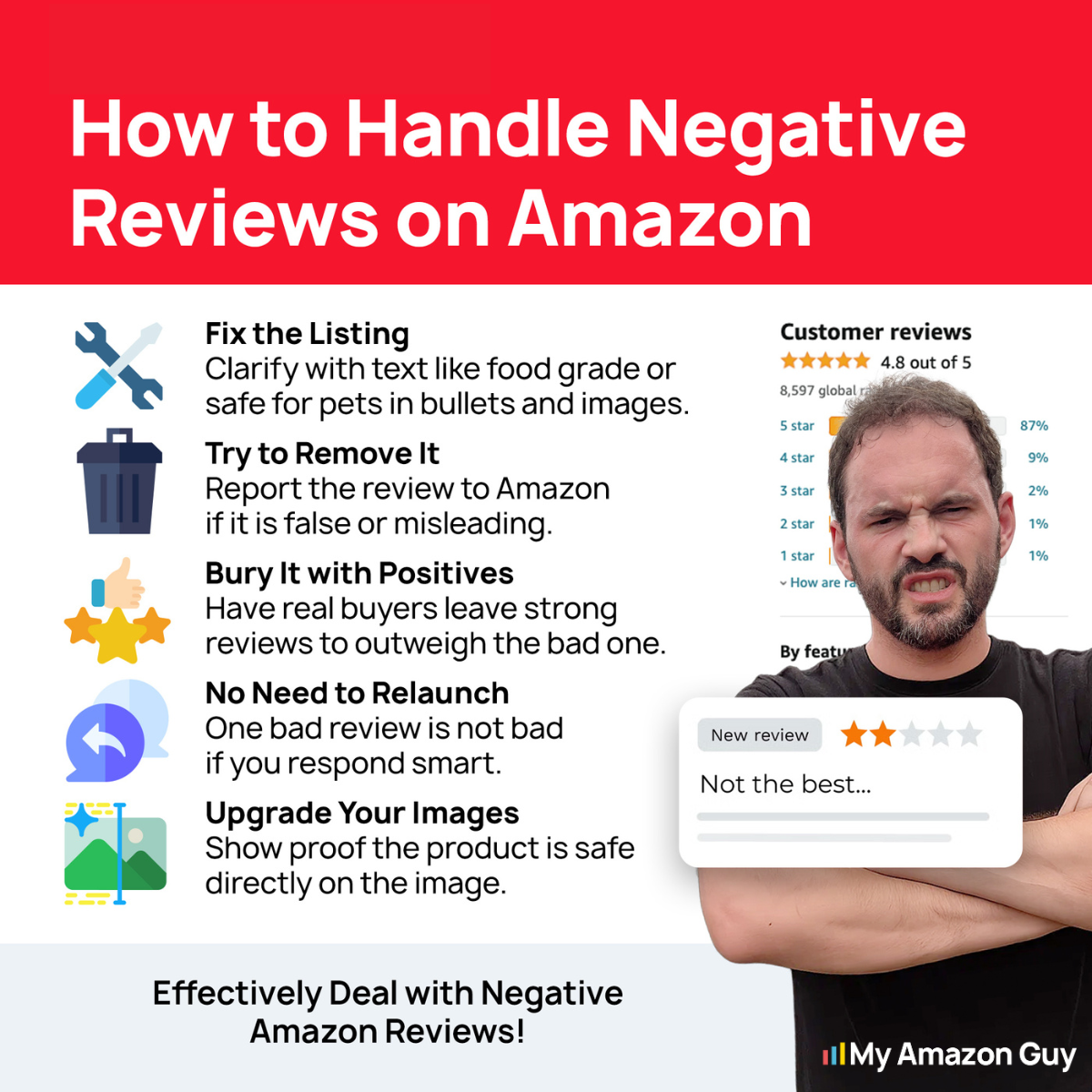
Rather than obsessing over getting a single review removed, prioritize generating more sales and positive reviews. High sales volume naturally dilutes the impact of a negative rating and stabilizes your product’s average star score.
By aiming for consistent sales, the one-star review becomes statistically less significant. This approach leverages Amazon’s algorithm, which favors products with ongoing purchase activity.
2. Use Pricing to Regain Buyer Trust
Lowering your price strategically can help overcome hesitation caused by a bad review. Shoppers are more willing to take a risk on a product with lower perceived financial stakes.
This “uncomfortable pricing” tactic can jumpstart sales velocity without requiring massive ad spend. Over time, the increase in purchases helps improve rankings and reduces the review’s negative effect.
3. Address Complaints Visually in Listings
If a negative review raises a specific concern, show your solution in your product images. Adding clear labels or instructions directly on images reassures shoppers without them having to read lengthy text.
For example, highlighting “Non-Toxic Material” or a step-by-step setup graphic can prevent confusion that leads to returns. This method both defends your brand and improves click-through rates on your listing.
4. Respond Calmly and Strategically
Avoid reacting emotionally or making hasty replies to a negative review. A measured response shows professionalism and prevents damaging your brand image further.
Treat the review as a short-term challenge and focus on long-term growth strategies. Sellers who remain calm can allocate their energy to improving sales instead of getting stuck in reactive cycles.
5. Respond Publicly, but Professionally
Posting a public reply demonstrates to future customers that you care about feedback. Keep the tone polite, empathetic, and solution-oriented.
A brief, professional comment can reassure shoppers that their concerns will be addressed. This approach also reduces the psychological weight of the negative review on new buyers.
6. Contact the Customer Privately (If Brand Registered)
Use Amazon’s Brand Registry “Contact Customer” feature to address the issue directly and privately. This allows you to offer refunds, replacements, or guidance without violating policies.
Resolving concerns offline prevents public arguments and shows buyers that you are actively managing customer satisfaction. Proper private communication can often turn a frustrated customer into a satisfied one.
7. Check for Policy Violations and Removal Options
Not all negative reviews are removable, but some clearly violate Amazon’s rules. Reports can be submitted if a review contains hate speech, profanity, personal information, or competitor sabotage.
Understanding what qualifies for removal saves time and prevents sellers from wasting energy on reviews that are unlikely to disappear. It also ensures compliance with Amazon’s strict policies.
8. Learn and Prevent Future Issues
Use each negative review as a learning opportunity to improve your product, listing, or service. Analyzing complaints can reveal areas where new instructions, images, or packaging changes can reduce misunderstandings.
Encouraging more satisfied customers to leave reviews also helps balance a single negative rating. Over time, a proactive approach makes future bad reviews far less impactful.
Frequently Asked Questions
Can I request that one bad review on Amazon be removed?
You can only request removal if the review violates Amazon’s policies, such as containing hate speech, personal info, or spam. Legitimate negative feedback about the product itself generally cannot be removed.
Will one bad review ruin my product’s sales?
Not necessarily; its impact is greatest on new listings with few reviews. With proper response and ongoing sales, a single negative review can be offset quickly.
Should I contact the customer who left a negative review?
Yes, but only through Amazon’s approved messaging system if you are Brand Registered. Always stay professional and solution-focused, avoiding any incentives for changing or deleting the review.
Protect Your Conversion Despite One Bad Review
Online shoppers only get to see your product through a screen, which makes trust harder to earn. Positive product reviews play a huge role in building that trust and encouraging purchases.
When sellers receive a negative review, it’s normal to panic because one low rating feels like it can destroy your listing. The key is understanding how reviews affect conversion and taking strategic steps to respond, recover, and maintain sales momentum.
Are you struggling to manage negative reviews and protect your product’s conversion rate? Contact our full-service Amazon agency today and let our experts restore your listing’s performance and buyer confidence.
Protect Your Conversion Rate
Our team audits your listing to reduce the sales impact of negative feedback.