
Are you wondering whether Amazon FBA vs affiliate marketing is the better path for you? Both options come with different risks and rewards, and weighing the tradeoffs can help you decide which model fits your goals best.
There are many ways sellers can make money on Amazon, whether through private label products, wholesale sourcing, or even content creation. But two of the most talked about approaches are selling through FBA and earning through affiliate marketing.
Both of these business models offer real income potential, which is why so many entrepreneurs consider them. However, it can get confusing when you try to figure out which one aligns with your budget, skills, and long-term vision.
This article talks about the key differences between Amazon FBA and affiliate marketing. It breaks down costs, control, scalability, and income potential to help sellers decide which model fits their goals best.
Table of Contents
Get Help Choosing Your Amazon Path
Work with our experts to understand your options and make smarter business decisions.
What Is Amazon FBA and How Does It Work?
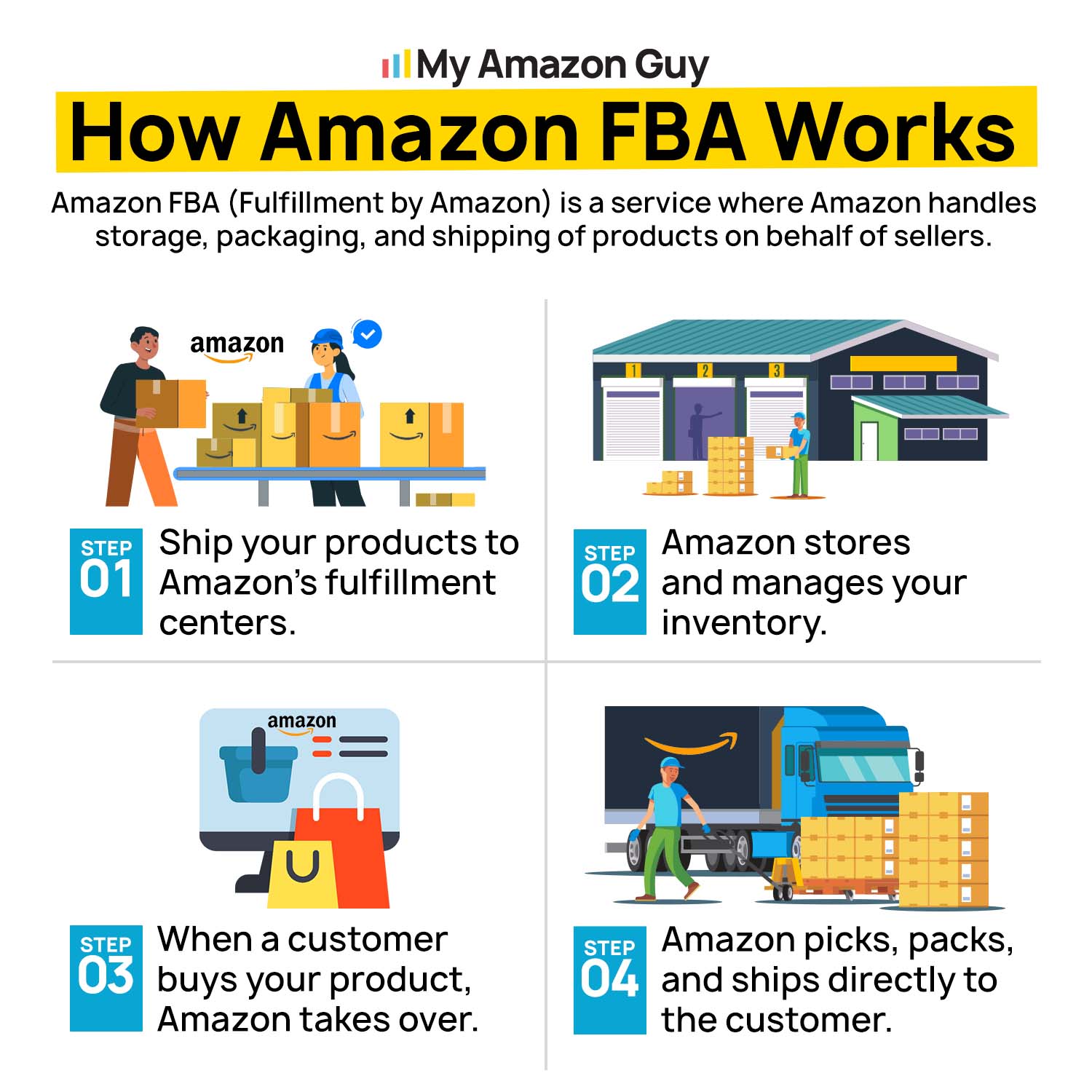
Amazon FBA stands for Fulfillment by Amazon, a program where sellers send their products to Amazon’s warehouses and let Amazon handle storage, packing, shipping, and customer service. When a customer places an order, Amazon picks, packs, and delivers the item, and your listing becomes eligible for Prime shipping, which often increases trust and conversion rates.
To get started, you open a seller account, enroll in FBA, and ship inventory to Amazon’s fulfillment centers so it is ready for sale. With over 9 million sellers worldwide and more than 80 percent using FBA, it is clear this model dominates the platform, and many sellers report reaching profitability within their first year when managed correctly.
Pros and Cons of Amazon FBA
There are clear benefits and real drawbacks to using Amazon FBA, and understanding both gives you a better idea of whether this model fits your goals. When you look at the upside and the risks side by side, you can determine if it matches your budget, skill set, and risk tolerance.
Pros of Amazon FBA
- Prime eligibility helps your products reach millions of loyal Amazon customers quickly.
- Amazon handles storage, packing, shipping, and returns, reducing operational workload.
- You can scale faster without owning a warehouse or hiring a fulfillment team.
- Customers trust Amazon’s delivery and support system, which often boosts sales.
- You can expand into international marketplaces using Amazon’s global infrastructure.
Cons of Amazon FBA
- Fulfillment, storage, and referral fees can cut deeply into profit margins.
- Competition is intense, especially in saturated or generic product categories.
- You have limited control over packaging, returns, and parts of the customer experience.
- Startup costs can range from several thousand dollars for inventory and advertising.
- Poor inventory forecasting can lead to high storage fees or stranded inventory.
What Is Amazon Affiliate Marketing and How Does It Work
For those who want to earn money on Amazon without handling inventory or shipping, Amazon affiliate marketing is a great choice. It allows content creators, bloggers, and social media influencers to earn commissions by promoting products through trackable links, earning a percentage of each sale.
To get started, you join the free Amazon Associates program, place affiliate links in your content, and drive traffic to the product pages. When someone clicks your link and makes a purchase within 24 hours, you earn a commission, making it a performance-based way to monetize your audience while building online content.
Pros and Cons of Amazon Affiliate Marketing
Even though Amazon affiliate marketing is easier to start and can generate income without handling products, it comes with its own challenges. Knowing the advantages and limitations can help you decide if this model fits your skills and long-term goals.
Pros of Amazon Affiliate Marketing
- Low startup cost makes it accessible for beginners without inventory or fulfillment.
- You can earn passive income once the content is published and continues to drive traffic.
- Millions of products are available to promote across any niche you choose.
- Customers trust Amazon, which increases conversion rates on your links.
- You earn commissions on the entire cart if someone buys multiple items after clicking your link.
Cons of Amazon Affiliate Marketing
- Commission rates are generally low (1-10%), limiting potential earnings on low-priced items.
- The 24-hour cookie window means delayed purchases may not earn you credit.
- You have no control over pricing, stock levels, or product availability.
- Generating meaningful revenue requires consistent content creation and traffic building.
- Strict compliance rules mean account violations can result in suspension or termination.
Optimize Your Business Strategy Now
Our full-service agency can create a plan that maximizes profits and growth.
Amazon FBA vs Affiliate Marketing Key Differences
While both Amazon FBA and affiliate marketing are solid ways to earn money on Amazon, they have major differences in structure, risk, and income potential. Understanding these distinctions can help you choose the model that best fits your resources, skills, and goals.
| Key Difference | Amazon FBA | Amazon Affiliate Marketing |
|---|---|---|
|
Investment & Risk |
High upfront costs, risk of unsold inventory |
Low startup cost, low financial risk |
|
Product Ownership |
Own your products, full control |
No ownership, promote others’ products |
|
Logistics |
Handle inventory, Amazon ships & handles service |
No logistics, only marketing required |
|
Profit Margins |
Higher per sale, scalable |
Lower per sale, commission-based |
|
Learning Curve |
Steep, requires inventory & branding skills |
Moderate, focus on content & marketing |
|
Scalability |
Large potential via Amazon network |
Limited by audience size and commissions |
|
Customer Service |
Amazon handles returns & support |
Merchant handles everything, you focus on traffic |
|
Flexibility |
More hands-on, structured around products |
Highly flexible, work anywhere, anytime |
|
Marketing |
PPC, listing optimization, campaigns |
Content marketing, SEO, social media |
|
Income Potential |
High if scaled & optimized |
Steady, reliable, passive income potential |
1. Investment & Risk
Amazon FBA requires significant upfront capital for inventory, shipping, and fulfillment fees. You also take on the risk of unsold inventory and potential losses if products don’t sell as expected.
Affiliate marketing has minimal startup costs and lower financial risk. You don’t need inventory or fulfillment, and you only invest in your website, content, and promotional efforts.
2. Product Ownership & Control
With Amazon FBA, you own your products and control branding, pricing, and quality. This allows for customization and building a brand identity on Amazon.
In affiliate marketing, you don’t own the products you promote. You have no control over inventory, pricing, or customer experience, so your focus is on marketing and driving sales.
3. Logistics & Operations
FBA sellers manage manufacturing, shipping to Amazon, and inventory tracking. Amazon then handles storage, packing, shipping, and customer service.
Affiliate marketers don’t handle logistics at all. Their job is creating content, sharing links, and driving traffic to earn commissions.

4. Profit Margins
FBA can provide higher profit margins per sale, especially for private-label or niche products. Margins increase as you scale and optimize inventory management.
Affiliate marketing relies on commissions, which are lower than FBA profits per product. Earnings are steady but capped by commission rates and audience size.
5. Learning Curve
Amazon FBA has a steeper learning curve, requiring knowledge of product research, branding, inventory management, and compliance. Mistakes can be costly.
Affiliate marketing is generally easier to start, but it still requires marketing skills, SEO, and content creation strategies. Success depends on building and engaging an audience.
6. Scalability & Growth Potential
FBA offers massive scalability through Amazon’s logistics and customer base. You can increase product selection, enter new markets, and handle higher order volumes efficiently.
Affiliate marketing can scale, but growth is limited by traffic, niche saturation, and commission rates. Expanding often requires creating more content and building partnerships.
7. Customer Service & Support
FBA sellers have Amazon handle customer service, returns, and complaints. This relieves you from direct customer interaction but reduces control over the experience.
Affiliate marketers don’t handle customer service at all. Your responsibility is driving traffic; the merchant handles all inquiries, returns, and support.
8. Flexibility & Work Environment
FBA requires more active involvement with inventory monitoring, listing optimization, and compliance with Amazon policies. Work is structured around product and logistics needs.
Affiliate marketing offers high flexibility. You can work anywhere, set your schedule, and promote multiple products across different platforms.
9. Marketing & Promotion
FBA sellers need to actively promote their listings using Amazon PPC, social media, and other campaigns to drive visibility. You can optimize listings to improve conversions and sales velocity.
Affiliate marketers focus entirely on content marketing, SEO, social media, and email campaigns to drive traffic to affiliate links. Marketing efforts directly determine your earnings.
10. Income Potential
FBA can yield high income if you manage products, scale efficiently, and optimize listings. Profits can grow exponentially with strong demand and a trusted brand.
Affiliate marketing provides steadier, commission-based income. While it’s lower per sale, it can become a reliable passive revenue stream with consistent content and audience engagement.
Find Out Whether Amazon FBA vs Affiliate Marketing Fits You
Even knowing the differences between Amazon FBA vs Affiliate Marketing, it can still be tricky to decide which one is the best fit for your goals and resources. This quick quiz is designed to help you see which model aligns with your skills, budget, and preferred work style.
FAQs About Amazon FBA vs Affiliate Marketing
How much can I earn from Amazon Affiliate Marketing?
Earnings depend on your audience size, niche, and promotional efforts. Most affiliates earn a few hundred dollars per month starting out, while top performers can make thousands or even six figures annually.
How much money do I need to start with Amazon FBA?
Starting an FBA business usually requires $5,000-$10,000 for inventory, shipping, and marketing. Costs can be lower for small-scale sellers, but a larger upfront investment improves chances of profitable growth.
Which is easier for beginners: Amazon FBA or Affiliate Marketing?
Affiliate marketing is generally easier to start since it doesn’t require inventory or shipping. FBA has a steeper learning curve, including product sourcing, listing optimization, and inventory management.
Choosing Between Amazon FBA and Affiliate Marketing
There are many ways sellers can earn on Amazon, and the right approach depends on your goals, resources, and risk tolerance. The two most widely discussed methods are Amazon FBA and Amazon Affiliate Marketing, each offering unique advantages and challenges.
By understanding how FBA handles inventory, logistics, and customer service versus how affiliate marketing focuses on content promotion and commissions, sellers can make a smarter choice. Knowing the strengths and limitations of each model helps you plan effectively, avoid costly mistakes, and maximize your chances of success.
Still unsure which model suits you best? Reach out to our full-service Amazon agency and let our experts help you understand the options, evaluate your goals, and create a strategy that aligns with your business vision.
Start Your Amazon FBA Journey Today
Learn how our experts can help you launch and scale your FBA business successfully.