
Are you struggling to keep track of Amazon seller cost management and protect your profit? Hidden fees, inefficient processes, and overlooked expenses can quietly erode your margins even as sales grow.
The Amazon marketplace has become a high-stakes environment where precision in managing FBA costs is critical. Fulfillment fees, storage charges, and inventory placement decisions can make the difference between profit and loss.
Effective Amazon seller cost management is about more than cutting costs because it’s about financial protection and recovering lost revenue. By tracking every expense and optimizing operations, sellers can stop hidden losses and secure long-term profitability.
In this guide, we talk about key Amazon seller cost management strategies to protect profit, reduce hidden fees, and recover lost revenue. Our Amazon agency will also discuss practical solutions like Small Bulky tier optimization, SIPP certification, and TACoS monitoring to help sellers maximize margins and streamline operations.
Table of Contents
Cut Hidden FBA Costs Today
Stop losing profit to overlooked FBA fees and improve your margins immediately.
Why Cost Management Is Non-Negotiable for Amazon Sellers
Cost management is critical for Amazon sellers because even small missteps can quickly erode profit. In fact, 82% of small businesses fail due to cash flow mismanagement, and FBA sellers are particularly vulnerable to hidden fees, inventory costs, and fluctuating fulfillment charges.
Amazon’s fee structure and operational rules are constantly evolving, from fulfillment and storage fees to inbound placement and advertising costs. Without proactive oversight, sellers can appear profitable on paper while losing money on every sale due to inefficient processes or overlooked charges.
Effective cost management is about protecting your business from financial surprises. By monitoring fees, optimizing inventory, and controlling ad spend, sellers can safeguard margins, maintain cash flow, and ensure long-term stability in a competitive marketplace.
Breaking Down Amazon Seller Costs
There are a lot of moving parts that Amazon sellers need to track to protect their margins. From fulfillment fees to hidden inventory penalties, every small cost can quickly add up and eat into your profit.
A. Core Fulfillment Fees
Fulfillment fees also depend on product price. Higher-value items often carry a premium handling surcharge, while small adjustments in packaging can save substantial money.
| Price Tier | 2025 Fee | 2026 Fee |
|---|---|---|
|
Low-Price (<$10) |
$2.95 |
$3.00 |
|
Mid-Range ($10-$50) |
$3.06-$5.77 |
$3.32-$6.08 |
|
Premium (>$50) |
$4.99-$5.77 |
$5.04-$6.08 |
|
Small Bulky |
$9.61 |
$7.55 |
|
Large Bulky |
$9.61 |
$9.35 |
B. Inventory Penalties
Inventory-related fees can quietly eat into your profits if not monitored closely. From low-stock penalties to aged inventory surcharges, sellers need proactive inventory management to avoid unnecessary charges.
| Fee Type | Trigger | Cost per Unit |
|---|---|---|
|
FNSKU Low Inventory |
30- & 90-day supply < 28 days |
$0.32-$1.11 |
|
Aged Inventory 12-15 months |
Product unsold >181 days |
$0.30/unit or $6.90/cu ft |
|
Aged Inventory 15+ months
|
Product unsold >12.5 months |
$0.35/unit or $7.90/cu ft |
C. Logistics and Inbound Placement
Inbound and logistics fees are another critical area where costs can balloon. Shipment splits, labeling mistakes, and packaging inefficiencies can cost dollars per unit if not carefully managed.
| Fee Type | Trigger | Cost per Unit |
|---|---|---|
|
Minimal Shipment Splits |
Ship to 1 location |
$0.21-$0.68 |
|
Inbound Defect Fees |
Label errors, deleted or misrouted shipments |
Up to $0.60 |
|
Packaging Surcharge (SIPP not certified) |
Bulky items not certified for SIPP |
Up to $4.04 |
D. Referral Fees
Referral fees are predictable but still must be factored into every SKU’s margins. Even small percentage changes can add up when you’re selling high volumes across multiple products.
| Category | Fee | Minimum Fee |
|---|---|---|
|
Most categories |
15% |
$0.30 |
|
Apparel < $15 |
5% |
$0.30 |
|
Apparel $15-$20 |
10% |
$0.30 |
Diversify Channels to Protect Margins
Expand beyond Amazon with DTC or other marketplaces to increase revenue.
10 Proven Strategies to Control and Reduce Amazon Seller Costs
The good news is that there are proven strategies that Amazon sellers can use to control costs and protect their profit. By applying these approaches, you can optimize every SKU, reduce hidden fees, and turn financial protection into a competitive advantage.
Strategy 1: Qualifying for the Small Bulky Tier
The Small Bulky tier offers a major opportunity to recover fulfillment fees by moving heavy, compact products from the previous Large Bulky category, saving an average of $2.06 per unit. Sellers should audit their catalog to ensure items meet the tier’s dimensional and weight requirements and pursue SIPP certification to maximize cost savings while protecting margins.
Strategy 2: Using SIPP Certification to Protect Profit
The Ships in Product Packaging (SIPP) program lowers fulfillment fees for bulky items, while non-certified products face an extra $2.07 per unit, creating up to $4.13 in potential savings per Small Bulky item. Sellers should identify eligible products in Seller Central, complete the required testing, and coordinate inventory arrivals so only compliant stock benefits from the fee reduction.
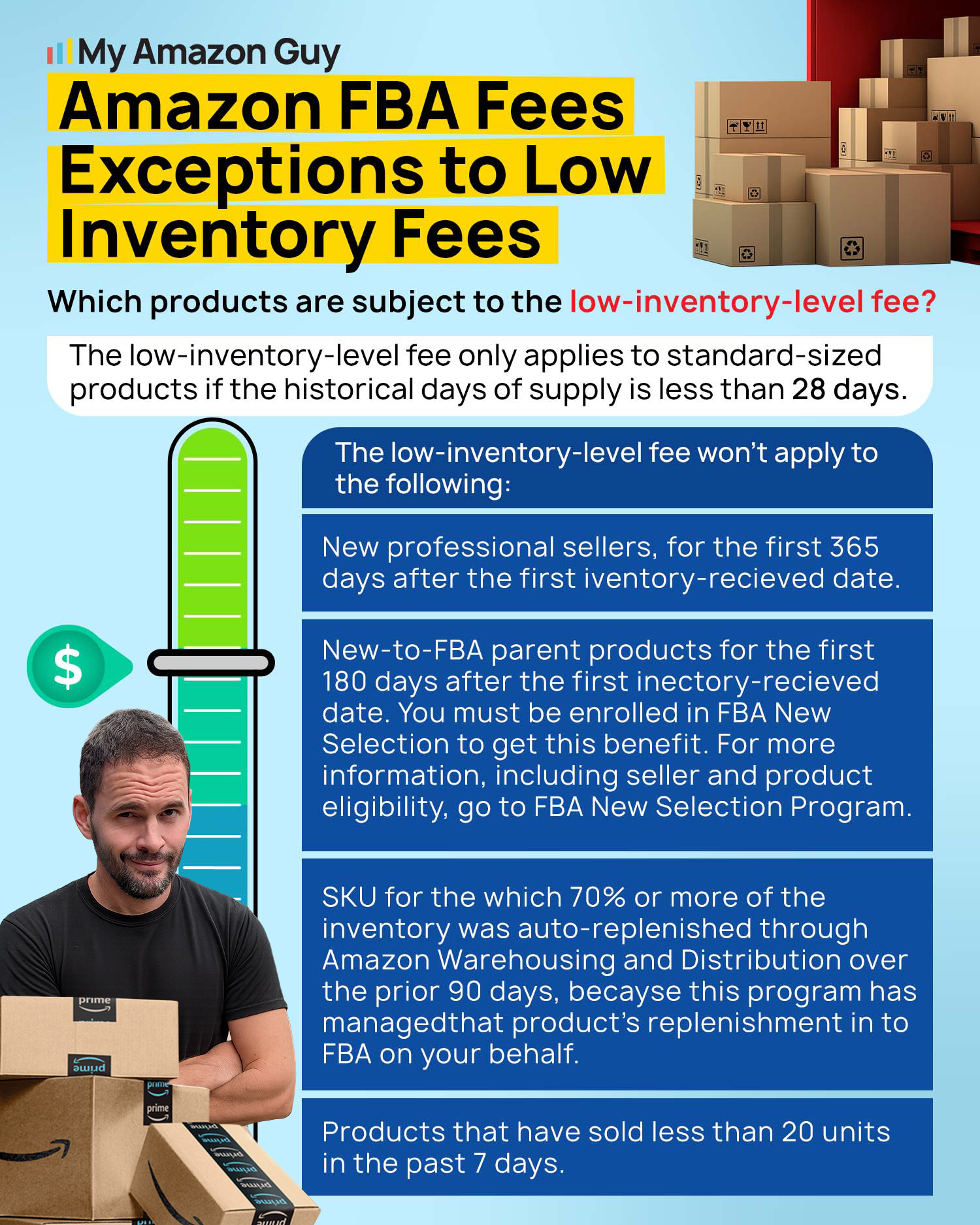
Strategy 3: Mastering Low-Inventory-Level Fees
The Low-Inventory-Level (LIL) fee is now applied per FNSKU, with penalties ranging from $0.32-$1.11 for standard items and up to $1.85 for Small Bulky products. Sellers should use real-time inventory tracking and AI-driven demand forecasting to maintain enough stock to avoid LIL fees while preventing aged inventory.
Strategy 4: Optimizing Inbound Placement Service Fees
Inbound placement fees cost $0.05 per standard-size unit and $0.27 per Large Bulky unit for minimal splits. Sellers can eliminate these fees by using Amazon’s optimized shipment splits, balancing upfront shipping and labor costs to maximize per-unit profit.
Strategy 5: Shift from ROAS to TACoS for Ad Efficiency
ROAS can be misleading because it ignores the impact of ads on organic sales, so sellers should track TACoS to measure total ad spend against overall revenue. Maintaining a healthy TACoS of 10% to 20% helps identify wasted spend, optimize keywords, and improve conversion rates to protect margins.
Strategy 6: Using the Search Term Isolation Framework
The Search Term Isolation framework improves efficiency by moving high-performing keywords from Auto campaigns into Exact Match while adding them as Negative Exact to prevent internal competition. This structure focuses the budget on proven keywords while continuously discovering new ones, maximizing return on ad spend, and protecting margins.
Strategy 7: Recover Lost Revenue with Refunds
Recovering lost revenue is a key part of cost management, as FBA errors like lost inventory, damaged units, and mishandled returns can quietly reduce profits. Sellers should regularly audit their accounts and file reimbursement claims to reclaim money that would otherwise be left uncollected.
Strategy 8: Navigate Tariffs and Global Trade Pressures
External factors like tariffs and trade policy changes can quickly erode margins if not managed properly. Sellers should monitor cost increases, explore alternative sourcing options, and adjust pricing strategies to maintain healthy profit margins.
Strategy 9: Diversify Sales Channels to Protect Margins
Relying entirely on Amazon increases risk, as platform fees and policy changes can directly impact profitability. Sellers should build additional sales channels like DTC or other marketplaces to reduce fees, own customer data, and improve overall margins.
Strategy 10: Hire an Amazon Agency for Financial Protection
Managing FBA fees, advertising spend, and complex inventory requirements can overwhelm even experienced sellers. Partnering with a specialized Amazon agency, like My Amazon Guy, provides expert guidance to optimize costs, recover lost revenue, and implement systems that protect margins while scaling efficiently.
How My Amazon Guy Helps You Cut Costs and Increase Profit
My Amazon Guy helps sellers tackle the FBA cost landscape with actionable, results-driven solutions. From identifying Small Bulky tier opportunities to optimizing SIPP certification, MAG ensures every unit is positioned to reduce fees and protect margins.
Through proprietary frameworks like the 4-Phase SEO Methodology and high-converting image stacks, MAG boosts organic visibility and conversion rates, lowering the effective cost of advertising. Additionally, revenue recovery services audit FBA discrepancies, reclaim lost inventory value, and return capital to sellers, creating a full-circle approach to cost control and profit growth.
Frequently Asked Questions
How do I know if my product qualifies for the Small Bulky tier?
Check your product’s weight and dimensions against Amazon’s Small Bulky specifications. If it meets the criteria, reclassifying it can save you around $2.06 per unit in fulfillment fees.
What’s the easiest way to avoid Low-Inventory-Level fees?
Maintain real-time inventory tracking and forecast demand to keep stock above the 28-day supply threshold. This prevents penalties without overstocking and accumulating aged inventory fees.
How can SIPP certification impact my profits?
SIPP-certified bulky items get a lower base fulfillment fee, while non-certified items incur extra packaging costs. Compliance can yield up to $4.13 savings per Small Bulky unit, directly protecting your margins.
Cut Costs and Protect Amazon Profits
Managing fees, inventory, and ad spend is part of selling on Amazon since these costs can quickly eat into your margins. Using strategies like Small Bulky tier qualification, SIPP certification, and TACoS monitoring helps you protect profits efficiently.
Understanding fulfillment fees, placement costs, and LIL penalties allows sellers to make smarter operational decisions and recover lost revenue. Targeted cost management keeps your business lean, competitive, and profitable in 2026 and beyond.
Need help controlling costs and boosting margins on Amazon? Contact our full-service Amazon agency and let our experts optimize your operations for maximum profit.
Recover Lost Revenue From FBA Errors
Identify reimbursement opportunities from lost, damaged, or mishandled inventory.