Price wars on Amazon can damage a brand’s reputation and erode profit margins. However, did you know that there’s a way for brands to protect both their pricing and their brand value called the Amazon minimum advertised price?
On Amazon, shoppers naturally compare prices across listings, which can drive intense competition and put downward pressure on products. Without a MAP policy, this can erode margins and make even premium products appear discounted or cheap.
When pricing pressure spikes, brands may see their products advertised too low by resellers trying to win the Buy Box. Implementing and enforcing a MAP policy helps brands maintain consistent pricing, protect profit margins, and prevent unauthorized discounting.
This blog talks about how the Amazon minimum advertised price policy helps brands protect profit margins, prevent destructive price wars, and maintain premium product positioning. Our Amazon agency also shares practical steps to enforce MAP effectively.
Table of Contents
Stop Margin Erosion
Our team tracks undercutting sellers and takes action to keep your Amazon margins healthy.
What Is the Amazon Minimum Advertised Price and How Does It Work?
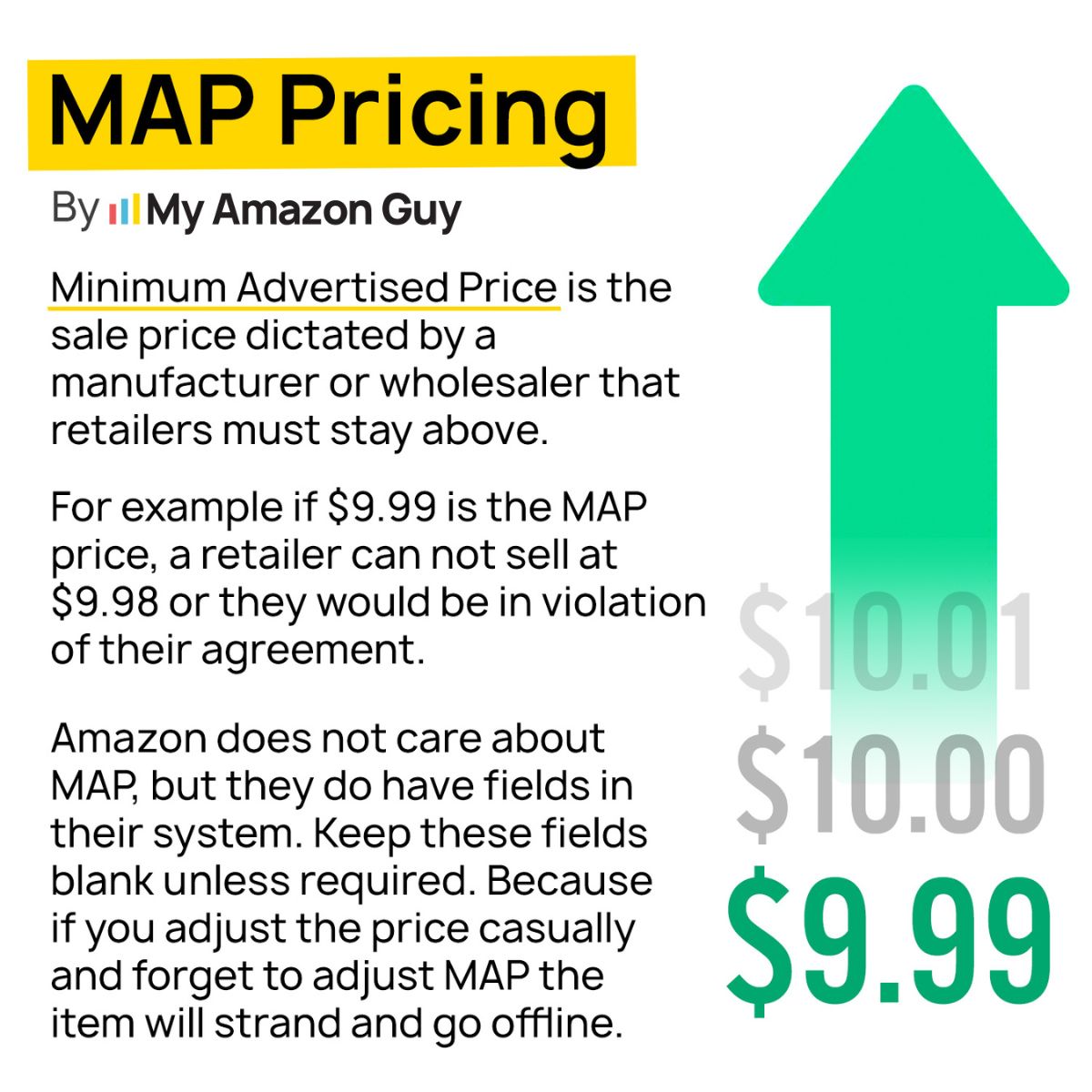
The Amazon Minimum Advertised Price, or MAP, is a policy set by brands to define the lowest price their products can be publicly advertised at on Amazon. It acts as a “price floor”, helping brands protect their margins, maintain premium positioning, and preserve the overall value of their products.
MAP is especially important because 68% of shoppers always or often compare prices before buying, which can push multiple sellers into aggressive price competition. Without a MAP policy, automated repricing tools, and undercutting by resellers can quickly drive prices below the desired threshold, eroding profit margins and damaging the brand’s reputation.
MAP only applies to the advertised price, not the final sale price a customer sees after adding an item to the cart. Brands are responsible for defining, communicating, and enforcing the policy, ensuring that all authorized sellers advertise within the MAP rules to maintain consistent pricing and protect the brand’s integrity.
Why Brands Should Implement an Amazon Minimum Advertised Price
Although some brands may think a MAP policy is unnecessary, the truth is that implementing one can be extremely valuable. A MAP policy helps brands protect profit margins, maintain consistent pricing, and preserve the premium perception of their products.
- MAP prevents a “race to the bottom” where sellers undercut each other, which can quickly erode profits.
- Consistent pricing helps products appear high-quality and prevents them from looking cheap to customers.
- MAP stops dominant sellers from using predatory pricing to push smaller competitors out.
- It reduces the risk of rogue or unauthorized sellers disrupting the market with extremely low prices.
- Uniform pricing across sellers builds trust and prevents customers from feeling misled.
- Brands that enforce MAP demonstrate reliability and professionalism, which can lead to stronger, long-term partnerships with authorized sellers.
Scopes of the Amazon Minimum Advertised Price Policy
For brands that want to protect their pricing and brand reputation, there are specific areas under the MAP policy that they can define to ensure sellers follow the rules. These scopes help keep pricing consistent and prevent practices that could devalue the product.
A. Listing Price
This is the publicly visible price on the product page or search results. Sellers cannot display a price lower than the minimum advertised price without violating MAP.
B. Shipping Costs
Deals like free or discounted shipping can effectively lower the total price below MAP. Brands must monitor shipping offers to ensure the final cost does not undercut the policy.
C. Discounts and Coupons
Applying coupon codes or checkout discounts that bring the total below MAP is a violation. Even if the listed price complies, the advertised discount cannot push the product below the minimum.
D. Product Bundles
Selling multiple products together at a combined price is allowed, but the total must respect the MAP threshold. Any bundle pricing below the minimum advertised price counts as a breach.
E. Add-to-Cart Exception
Sellers can technically sell below MAP using “Add-to-Cart” pricing, where the lower price is only revealed after adding the item to the cart. This is acceptable as long as the advertised price shown to the public stays compliant.
F. Application to All Sellers
MAP applies to all authorized resellers, wholesalers, and arbitrage sellers on Amazon. Compliance is required across all sellers to maintain fair competition.
G. Enforcement and Consequences
Brands are responsible for monitoring compliance, and violations can lead to lost Buy Box eligibility, suspension of brand privileges, or termination of dealer agreements.
Common Mistakes Brands Make with Implementing an Amazon MAP Policy
Many brands make mistakes when implementing or enforcing Amazon MAP policies, which can unintentionally weaken pricing control and damage margins. Understanding these pitfalls helps brands maintain consistent pricing, protect profit margins, and preserve their market reputation.
1. Confusing MAP with the Final Selling Price
Some brands mistakenly think MAP applies to the final sale price instead of the advertised price. Misunderstanding this can lead to unclear policies and miscommunication with resellers, undermining the effectiveness of MAP.
2. Failing to Monitor Automated Pricing Tools
Automated repricers can quickly push advertised prices below MAP if not properly managed. Brands that do not set clear thresholds or communicate rules risk seeing their MAP policy violated without realizing it.
3. Ignoring Unauthorized Sellers
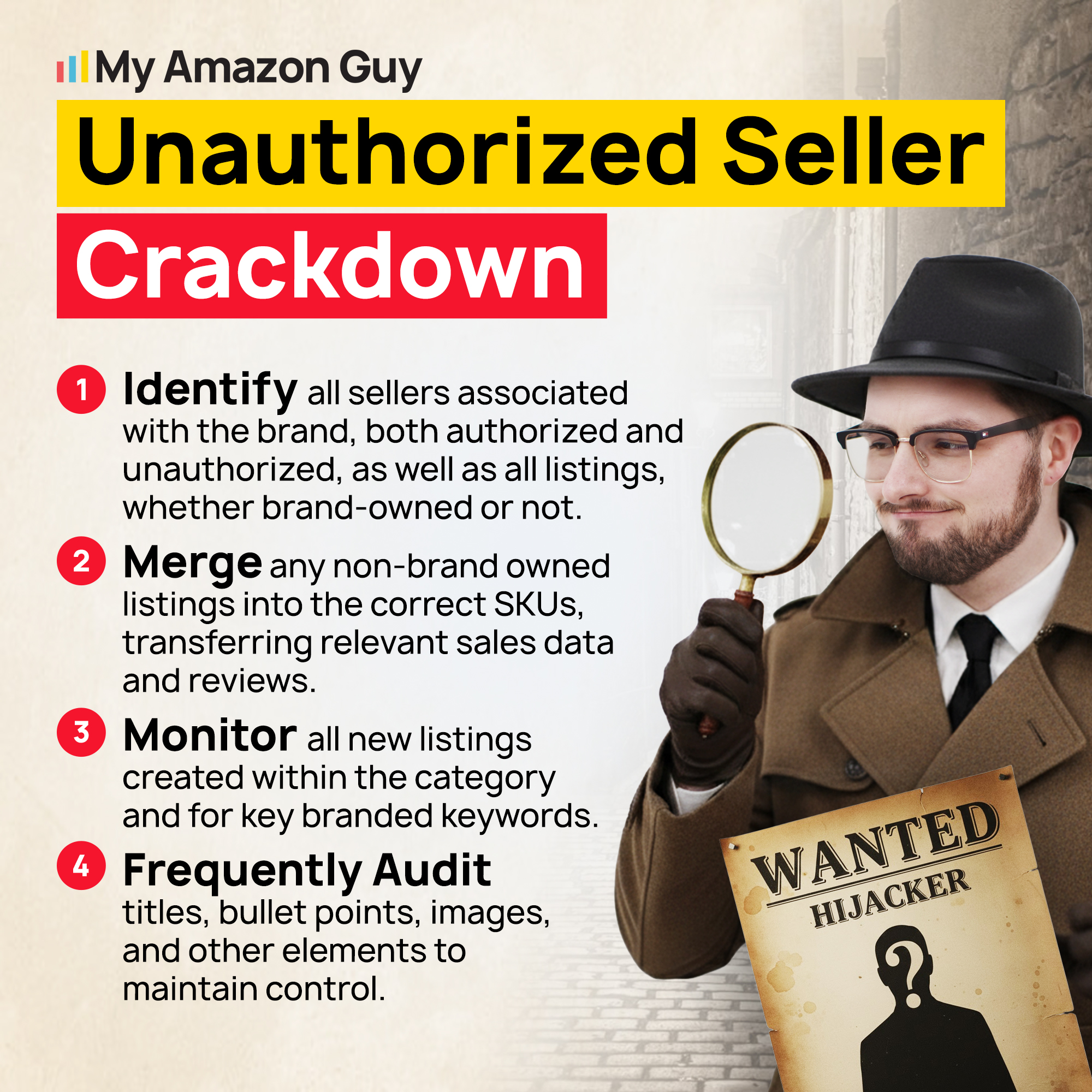
Brands that fail to monitor unauthorized sellers risk having their products advertised below MAP. These rogue listings can distort the marketplace, forcing compliant sellers into price competition that damages margins.
4. Overlooking Bundling or Promotion Loopholes
Brands sometimes allow product bundles or promotional offers that unintentionally undercut MAP. Without defining rules for bundles or discounts, advertised pricing can fall below the minimum, weakening the brand’s pricing control.
5. Inconsistent Enforcement
Applying MAP selectively or inconsistently sends the wrong message to the market. Brands that enforce rules unevenly undermine their own policy, encouraging resellers to ignore MAP and lowering overall pricing consistency.
6. Mismanaging Coupons and Promotional Deals
Discount codes, BOGO promotions, or other marketing offers can reduce advertised prices below MAP. Brands that do not clearly communicate limits on these promotions risk violations that erode margins and brand value.
Fix MAP Violations Fast
We identify coupon abuse, bundle loopholes, and rogue discounts that break your pricing standards.
Proven Steps to Enforce the Amazon MAP Policy the Right Way
For brands that want to implement an Amazon Minimum Advertised Price policy, following best practices is essential to maximize its benefits. Doing so helps protect margins, maintain brand integrity, and ensure consistent compliance across all sellers.
1. Create a Clear, Written MAP Policy
Define your MAP policy in writing, specifying what counts as a violation, including in-cart pricing, bundles, or promotions. Clearly outline the consequences for non-compliance so both brands and sellers understand the rules.
2. Use Automated Monitoring Tools
Manual tracking of prices is inefficient and often incomplete. Brands should leverage automated tools to detect violations in real time and identify which listings are out of compliance.
3. Enforce the Policy Consistently
Consistency is critical for credibility. Brands that enforce MAP fairly across all sellers, and sellers who adhere uniformly to the rules, prevent loopholes and maintain a level playing field.
4. Document Violations
Keep detailed records of all MAP breaches, including screenshots, seller IDs, and timestamps. This documentation supports enforcement actions and ensures accountability for both brands and sellers.
5. Assign Product Serial Numbers
Tracking inventory with unique serial numbers helps identify which distributor or seller is responsible for a violation. Brands can trace unauthorized undercutting, and sellers can verify compliance with MAP across their own listings.
6. Leverage Amazon Brand Registry and Programs
Use Brand Registry tools like Project Zero and Transparency to monitor listings, remove unauthorized sellers, and track authentic products. Both brands and compliant sellers benefit from these programs by protecting MAP and maintaining market integrity.
FAQs About Amazon Minimum Advertised Price
What can brands do when a seller doesn’t follow the Amazon MAP?
Brands can issue warnings, escalate to formal cease-and-desist notices, or even stop supplying the seller altogether. Consistently documenting violations and taking prompt action helps maintain the integrity of the MAP policy.
Does MAP prevent sellers from lowering the final sale price?
No, MAP only applies to the publicly advertised price, not the final sale price after checkout. Sellers can technically sell below MAP, but they cannot advertise it publicly without violating the policy.
How can brands monitor compliance with MAP on Amazon?
Brands should use automated monitoring tools and programs like Amazon Brand Registry and Transparency to track listings and detect violations. Regularly reviewing listings and documenting any breaches ensures consistent enforcement and protects margins.
How Amazon MAP Protects Your Margins and Brand Value
The Amazon MAP policy can be a powerful tool for brands to protect pricing and maintain strong profit margins. This is because the policy ensures consistent advertised prices, shielding brands from aggressive undercutting and destructive price wars.
Still, many brands fail to implement or enforce MAP properly, which results in lost revenue and diminished brand perception. By establishing clear rules, monitoring compliance, and taking action against violations, brands can maintain control and preserve their premium positioning.
Are you having trouble keeping your Amazon pricing consistent and protecting your margins? Contact our full-service Amazon agency, and let our experts help enforce your MAP policy and safeguard your brand on the marketplace.
Build Strong MAP Policy
Our agency creates clear, brand-safe MAP guidelines that work with Amazon reality.