
Turn clicks into sales with Amazon PPC
Growth starts with visibility, and Amazon PPC helps shoppers find your products. With the right strategy, businesses of all sizes can compete and increase sales.
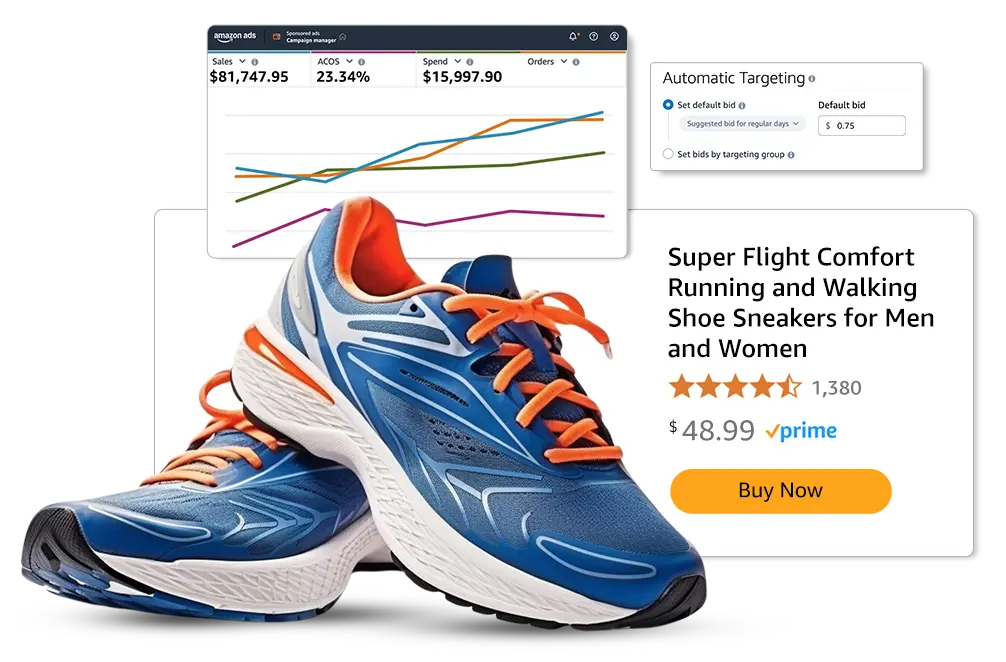
What is Amazon PPC?
Amazon PPC is a pay-to-play system where sellers bid on keywords to get their products in front of shoppers. Done right, it boosts rankings, increases conversions, and maximizes profits. Done wrong, it drains your budget fast.
Mastering Amazon PPC isn’t just about running ads, it’s about outsmarting the competition with data-driven strategies, tight budget control, and precise keyword targeting.
- Keyword Strategy – Target the search terms most likely to drive profitable sales.
- Bid & Budget Management – Allocate spend efficiently to maximize returns and reduce waste.
- Ongoing Optimization – Use performance data to refine campaigns and improve results.
Different types of Amazon PPC Ads
Strong titles and descriptions improve visibility and click-through rates. Here’s how we make them effective for your website.
The ideal title is around 60 characters and the description is roughly 160 characters. This ensures they’re displayed fully in search results, maximizing your impact.

Sponsored Products
The most popular ad type, these appear in search results and product pages. They help individual listings gain traction, making them essential for product launches and ongoing sales.

Sponsored Brands
These ads showcase multiple products and your brand logo at the top of search results. Ideal for building brand awareness and driving traffic to your Amazon Store.

Sponsored Display
These retarget shoppers both on and off Amazon, reminding them about your product even after they leave the platform. Great for increasing conversions and brand recall.
Key Amazon PPC metrics to track
When managing PPC campaigns, tracking the right metrics is essential for understanding your campaign’s performance and making adjustments for improvement.

Ad Revenue

ACoS and TACoS

Conversion Rate (CVR)
High traffic but low conversions? You might have a pricing problem, weak listing content, or irrelevant targeting.

Sessions, Click-Through Rate
More sessions mean more traffic, but a low CTR signals weak ad performance or poor main images.

Impressions and Market Share
Use Amazon’s Search Query Performance Report to see how often your brand appears and how it compares to competitors.
Is a high or low ACOS better?
A lower ACoS (Advertising Cost of Sale) is generally better in Amazon PPC. It means you’re spending less on ads relative to the sales you’re generating, indicating more efficient advertising.
However, if your ACoS is too low, you might be under-spending and missing out on potential sales. Aim for a balanced ACoS that aligns with your profit margins and overall business goals.
Low ACoS
- Indicates you’re spending less on ads relative to the sales generated
- More efficient advertising, higher profitability
- Can suggest you’re under-spending on ads, possibly missing out on growth opportunities
High ACoS
- Means you’re spending more on ads for each sale, which reduces profitability
- Can indicate a need for better ad targeting or optimization
- Acceptable for brand awareness or growth but must be monitored to avoid wasted ad spend
Amazon Troubleshooting
Stop wasting ad spend. Our Amazon PPC Audit uncovers weak campaigns and rebuilds them for higher profitability.
Amazon PPC tips to lower ACoS
Lowering your ACOS involves a multi-faceted approach that combines strategic planning with continuous optimization:
Keyword Research
Use robust tools to find highly relevant keywords that match your product and audience intent. Focusing on long-tail keywords can reduce competition and cost.
Bid Optimization
Regularly adjust your bids based on performance. Lower bids on underperforming keywords and invest more in high-converting terms.
Ad Copy
Craft compelling, clear ad copy that resonates with your target audience. An engaging ad can lead to higher click-through rates and better conversion rates.
Campaign Structure
Organize your campaigns by product category or performance metrics. This allows for more granular control and easier optimization.
Performance Monitoring
Continuously monitor campaign performance and adjust your strategy based on data insights. Incorporate A/B testing to determine which adjustments yield the best results.
Take control of your Amazon PPC costs today, watch this playlist below for actionable strategies to lower ACoS and maximize your ROI.
Amazon PPC Masterclass – ACOS Hacks
Growing Sales with Amazon PPC
A well-optimized PPC campaign can do more than just lower ACOS—it can significantly boost your overall sales:
Targeting Different Customer Journey Stages
- Awareness: Use Sponsored Brands to introduce your brand to potential new customers.
- Consideration: Leverage Sponsored Products to capture interest from shoppers already searching for products like yours.
- Decision: Deploy Sponsored Display ads for retargeting, helping customers finalize their purchase decisions.
Channel Integration
Integrate your PPC efforts with other marketing channels such as social media, email campaigns, and content marketing. This holistic approach reinforces your brand message and drives more traffic to your listings.
5 Amazon PPC Hacks
Steven Pope discusses five Amazon PPC Hacks that you can do in under 5 minutes to help improve the performance of your ads.
Avoiding common Amazon PPC mistakes
While striving to optimize your Amazon PPC, steer clear of these common pitfalls.
Overbidding
Excessively high bids can quickly drain your budget without yielding proportional sales.
Neglecting Negative Keywords
Failing to add negative keywords can result in irrelevant clicks that inflate your ACOS.
Ignoring Data
Not regularly reviewing performance data may lead you to miss out on opportunities for optimization or allow inefficiencies to persist.
Poor Campaign Structure
A disorganized campaign can make it difficult to pinpoint issues or apply targeted improvements.
Avoid costly Amazon PPC errors—watch our playlist to identify common mistakes and master strategies for better ad performance!
Top Amazon PPC Errors That Kill Profits
Live Amazon PPC Q&A for businesses
Get your Amazon questions answered in our free weekly Q&A. Catch past episodes on YouTube or join live Tuesdays at 1AM EST.
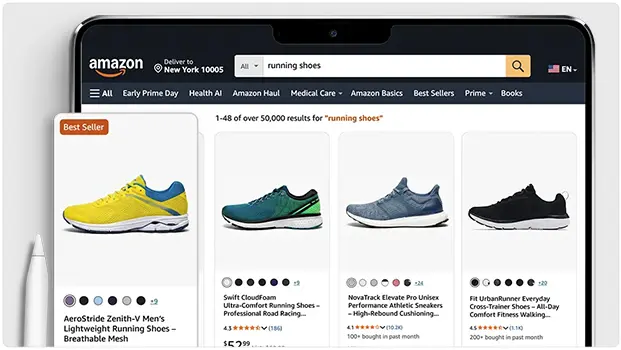
Improve PPC campaigns with SEO
PPC campaigns are built on strong keyword research. Amazon SEO helps sellers target the right searches and maximize ad spend.
Frequently Asked Questions
Contact us for other questions or concerns.
How do I Increase my PPC campaign on Amazon?
Optimizing your product listing is the first step to increasing your PPC campaigns. This includes creating a clear and concise product title, writing a compelling product description, and using high-quality images that showcase your product’s features.
Conduct thorough keyword research to identify your product’s most relevant and high-traffic keywords. Incorporate these keywords into your product listing and ad campaigns to increase your visibility and relevance. Bid optimization is also a crucial component of successful PPC campaigns. Start by analyzing your ad performance and adjusting your bids accordingly to ensure you are maximizing your ROI.
Create ad groups based on the keywords you are targeting to customize your ad copy and bidding strategy for each group, increasing the relevance of your ads and improving their performance.
How do I improve my PPC ads?
To improve PPC ads, one should focus on several key areas. Firstly, it is important to ensure that the ad copy is compelling and relevant to the product being advertised. This involves highlighting the product’s unique features and benefits and using strong calls to action to encourage clicks.
Additionally, incorporating positive customer reviews and using high-quality product images can increase credibility and persuade potential customers to click on the ad. Another crucial factor in improving PPC ads is targeting the right audience.
Utilizing Amazon’s targeting options, such as keywords, product categories, and customer behavior, can ensure that the ad is reaching the right people. Bid optimization is also crucial for achieving a high return on investment (ROI), and should be continuously monitored and adjusted as needed.
Finally, regularly monitor campaign performance and experiment with different strategies, such as different ad formats and bidding strategies.
What are PPC strategies?
The best PPC strategies to use depend on the specific products being advertised and the target audience. Some effective strategies include:
- Targeted keyword optimization
Identifying and incorporating high-traffic and relevant keywords into your ads to increase their visibility and relevance to potential customers. - Campaign segmentation
Grouping ads based on specific product categories, keywords, or target audiences can help tailor ad messaging and bidding strategies to improve performance. - Sponsored Product ads
These ads appear in search results and are targeted based on specific keywords or products. Sponsored Products can increase visibility and drive sales for individual products. - Sponsored Brands
These ads include a brand logo, multiple products, and customizable messaging to help to build brand awareness and drive consideration among potential customers. - Sponsored Display ads
These ads can reach customers off Amazon, targeting them based on interests, behaviors, and product viewing history. They can help drive awareness and consideration for products beyond Amazon.
What is the best time to run Amazon PPC?
Determining the best time to run PPC campaigns can vary depending on several factors, including the product category, competition, and target audience.
Typically, the best time to run Amazon PPC campaigns is during peak shopping seasons, such as the holiday season, Black Friday, Cyber Monday, and other major sales events. These periods generally see higher levels of traffic and sales, which can lead to increased exposure and sales for PPC campaigns.
In addition to peak shopping seasons, advertisers should also consider the day of the week and time of day when running PPC campaigns. For example, weekends and evenings may see higher levels of traffic and engagement, while weekdays and mornings may see lower levels of activity.
Ultimately, the best time to run Amazon PPC campaigns will depend on the individual advertiser’s goals, budget, and target audience.
What makes a good PPC Campaign?
Here are some key elements that make a good Amazon PPC campaign:
- Keyword Research
Effective keyword research ensures that the campaign is targeting relevant, high-traffic keywords that will drive quality traffic to the product listing. - Compelling Ad Copy
The ad copy should be clear, concise, and highlight the key features and benefits of the product to entice shoppers to click and make a purchase. - Optimized Landing Pages
The landing page should be optimized to match the ad copy and provide a seamless, high-converting user experience. - Continuous Monitoring and Optimization
The campaign should be continuously monitored and optimized to improve performance and maximize the return on ad spend (ROAS). - Clear Goals and Metrics
Clear goals and metrics should be established at the outset of the campaign to ensure that performance can be accurately measured and evaluated against predetermined benchmarks.
How to make PPC profitable?
Focus on high-converting keywords. By identifying and targeting high-converting keywords, you can increase the likelihood that customers will click on your ads and make a purchase. Set realistic budgets that align with your advertising goals.
Continuously monitor your spending and adjust your budget as needed to optimize ad performance. A well-optimized product listing can increase the likelihood that customers will convert after clicking on your ad. This includes using high-quality images and compelling product descriptions.
Continuously test different ad formats, targeting options, and bidding strategies to determine what works best for your product and audience. Use this data to make data-driven decisions and optimize your campaigns accordingly. While it may be tempting to focus solely on short-term gains, it’s important to consider the long-term ROI of your PPC campaigns. By building brand awareness and loyalty, you can generate more sales over time.
How to spy on PPC ads?
There are various tools and methods you can use to spy on PPC ads and gain insights into your competitors’ strategies. Conducting regular searches on Amazon for your target keywords can reveal which competitors are ranking highly and what types of ads they are running.
There are several third-party tools, such as SpyFu and SEMrush, that allow you to monitor your competitors’ ad campaigns, keywords, and bids. These tools can provide valuable insights into your competitors’ strategies. Amazon provides detailed advertising reports that allow you to track key performance metrics for your campaigns and analyze your competitors’ performance.
These tools allow you to view your competitors’ ads as they would appear to customers on Amazon. This can help you to identify key elements of their ad copy and creative, as well as any promotions they may be running.
What are the 5 key aspects of PPC?
The five key aspects of PPC (Pay-Per-Click) advertising on Amazon are:
- Keyword research and targeting: Identifying relevant and high-traffic keywords and incorporating them into your ads can increase visibility and relevance to potential customers.
- Ad copy and creative: Crafting compelling ad copy and creative can entice customers to click on your ads and make a purchase.
- Bid management: Continuously monitor and adjust bids to optimize ad performance and achieve advertising goals.
- Campaign structure and targeting: Organizing campaigns based on specific product categories, keywords, or target audiences can help to tailor ad messaging and bidding strategies to improve performance.
- Performance analysis and optimization: Regularly analyzing campaign data and making data-driven decisions to optimize campaigns can improve ad performance and drive sales.
What are good examples of PPC?
Sponsored Products: Sponsored Products appear in search results and on product detail pages, and are targeted based on keywords. They are a good example of PPC because advertisers only pay when a customer clicks on their ad.
Sponsored Brands: Sponsored Brands are ads that appear at the top of search results and feature a custom headline, logo, and multiple products. Advertisers only pay when a customer clicks on their ad.
Sponsored Display: Sponsored Display ads appear on and off Amazon and target audiences based on interests, behaviors, and other factors. They are a good example of PPC because advertisers only pay when a customer clicks on their ad.
Video ads: Video ads are a newer ad format on Amazon that allow advertisers to showcase their products in a video format. They are good because advertisers only pay when a customer clicks on their ad.
What are some common PPC goals?
Some common PPC goals Amazon include:
- Driving sales: Increasing product sales is often the primary goal of Amazon advertisers, and PPC can be an effective way to drive sales by increasing product visibility and attracting new customers.
- Improving product visibility: By targeting relevant keywords and optimizing ad campaigns, advertisers can improve their product’s visibility on Amazon and increase the likelihood of customers finding and purchasing their products.
- Maximizing return on ad spend (ROAS): Advertisers can use PPC to achieve a specific ROAS target, which measures the revenue generated from ad spend.
- Brand awareness: PPC can also be used to build brand awareness and increase the visibility of a brand or product on Amazon, even if immediate sales aren’t the primary goal.
- Launching new products: PPC can be an effective way to launch new products on Amazon, by increasing visibility and generating initial sales momentum.
What is a good CTR in Amazon PPC?
As an Amazon expert, what constitutes a good click-through rate (CTR) can vary depending on several factors such as product category, competition, and bidding strategy. Generally, a CTR of around 0.5% to 1% can be considered good on Amazon. However, it is important to note that CTR should not be the sole metric for measuring the success of a PPC campaign, as conversion rates and return on ad spend (ROAS) are equally important.
It is also important to continuously monitor and optimize campaigns to improve performance over time, and to make data-driven decisions based on campaign metrics. Advertisers should strive to achieve a balance between clicks and conversions, ensuring that their ads are generating quality traffic and ultimately driving sales.
Ultimately, what constitutes a good CTR on Amazon depends on the specific goals and objectives of the campaign and the competitive landscape in which it is operating.
What is KPI in Amazon PPC?
Amazon PPC KPI refers to the metrics used to measure the success and effectiveness of advertising campaigns on Amazon. KPIs help advertisers evaluate the performance of their campaigns and determine whether they are meeting their advertising goals and objectives. Some common KPIs in Amazon PPC include:
- Click-through rate (CTR): The percentage of clicks generated by an ad compared to the number of impressions it received.
- Cost per click (CPC): The cost of each click generated by an ad.
- Conversion rate: The percentage of clicks that result in a sale or other desired action.
- Cost per conversion (CPC): The cost of each conversion generated by an ad.
- Return on ad spend (ROAS): The ratio of revenue generated to the cost of the ad campaign.
What is a good ACOS for Amazon PPC?
Determining what constitutes a good advertising cost of sales (ACOS) can vary depending on several factors, including product category, competition, and profit margins. Generally, a good ACOS on Amazon is between 15% to 25%, although this can vary based on the goals and objectives of the campaign.
It is important to note that while a low ACOS is desirable, it is not necessarily an indicator of a successful campaign. It is possible to have a low ACOS but low sales volume, or a high ACOS but high sales volume, depending on the specific goals and objectives of the campaign. Ultimately, the ideal ACOS for Amazon depends on the individual advertiser’s goals, budget, and profit margins.
Advertisers should continuously monitor and optimize their campaigns to improve performance and maximize their return on ad spend (ROAS).
MAG School PPC Course
Learn how to structure, monitor, and optimize your paid advertising to maximize growth and profitability.