Still can’t decide between Amazon FBA wholesale vs private label? Picking the wrong model can quietly drain your budget and cost you months of effort, so it pays to understand how each one really works.
Many sellers dive in without knowing the differences, then wonder why margins are tight or growth stalls. The reality is your choice determines how you source, compete, and scale on Amazon.
Both models can use FBA, but they play by completely different rules. Wholesale resells proven products, while private label requires building and pushing your own brand from scratch.
Here, our Amazon agency will talk about the differences between FBA wholesale and private label business models. You will see the pros, cons, and key factors to help decide which model fits your goals and resources best.
Table of Contents
Maximize Profits with Expert Amazon Help
Learn strategies to boost margins and scale your Amazon business effectively.
What Is Amazon FBA Wholesale and How It Works
Amazon FBA wholesale is a business model where you buy existing branded products in bulk and resell them on Amazon. You don’t create your own product by utilizing products that already have demand and compete on listings with existing traffic and sales.
About 25% of Amazon’s roughly 6 million third-party sellers use the wholesale model, showing its popularity as a simpler way to start. In practice, you source inventory from brands or distributors, send it to Amazon’s warehouses, and let FBA handle storage, shipping, and customer service while you focus on pricing, stock, and winning the Buy Box.
Pros and Cons of the Amazon FBA Wholesale Business Model
There are both advantages and disadvantages to using the Amazon FBA wholesale business model, and understanding them helps you decide if it actually fits your goals. This model can look simple on the surface, but the real impact shows up in your margins, control, and long-term growth.
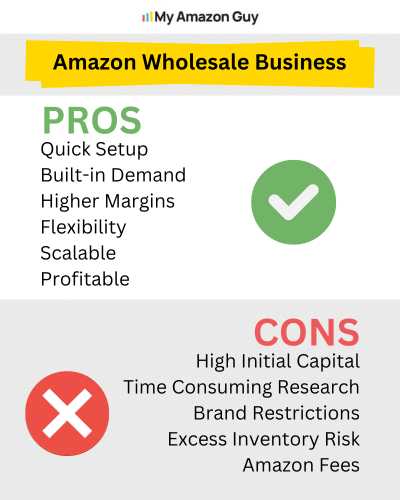
Pros of Amazon FBA Wholesale
- Quick to launch with existing products
- Built-in demand from established brands
- No need to create listings or build a brand
- Bulk buying can improve the cost per unit
- FBA handles storage, shipping, and customer service
Cons of Amazon FBA Wholesale
- Strong competition leads to price wars
- Limited control over listings and branding
- High upfront cost for bulk inventory
- Profit margins can shrink over time
- Requires supplier approvals and ongoing outreach
What Is Amazon Private Label and How It Works
Amazon private label is a business model where you sell products under your own brand rather than reselling existing brands. You work with a manufacturer to produce the items and customize everything from packaging to listings so the product is uniquely yours.
This model is popular for building long-term value, with at least 67% of Amazon sellers using it. You identify a product opportunity, partner with a manufacturer, ship inventory to Amazon FBA, and then manage the listing, marketing, and scaling to grow your brand.
Pros and Cons of the Amazon Private Label
Like any other business model, Amazon private label comes with both advantages and challenges that can impact your results. By understanding these, you can better assess if this model aligns with your budget, skills, and long-term goals.
Pros of Amazon Private Label
- Full control over branding, pricing, and listings
- Higher profit margins compared to reselling
- Ability to build a long-term sellable brand
- Exclusive ownership of your product listings
- Easier to expand with related products
Cons of Amazon Private Label
- Higher upfront costs for inventory and branding
- Requires strong PPC and marketing skills
- Longer time to launch and see profits
- Risk of choosing a poor product
- Managing manufacturing and supply chain can be complex
Scale Your Amazon Business Faster
Our agency provides tailored solutions for both wholesale and private label sellers.
Key Differences Between Amazon FBA Wholesale vs Private Label
There are major differences between Amazon FBA wholesale vs private label, and understanding them is key to making the right decision. When you break down how each model operates, it becomes much easier to see which one aligns with your budget, goals, and risk tolerance.
| Key Difference | Wholesale | Private Label |
|---|---|---|
|
Product Ownership |
Resell others’ products |
Own your brand |
|
Brand Control |
Limited |
Full control |
|
Competition |
High |
Lower |
|
Profit Margins |
Low |
High |
|
Inventory & Product Dev |
Supplier-managed |
You manage & improve |
|
Marketing Strategy |
Shared listings |
Own marketing & ads |
|
Risk & Investment |
Low |
High |
|
Long-Term Potential |
Limited |
Scalable brand asset |
1. Product Ownership
When selling wholesale on Amazon, you are reselling products from established brands. You don’t own the brand or the product, so control over inventory and sales is limited.
Private label sellers, on the other hand, create products under their own brand name. Owning the product gives you complete control over what you sell and how it’s presented to customers.
2. Brand Control
With wholesale, branding is set by the manufacturer, leaving little room for customization or differentiation. Shared listings also limit how you can shape the customer experience.
By creating a private label, you control every aspect of your brand, from packaging to marketing. This allows you to craft a unique identity that stands out in the marketplace.
3. Competition
Wholesale products face intense competition since multiple sellers can list the same items. Price wars are common, which can reduce profitability.
Private label items are unique to your brand, which lowers direct competition. You can focus on quality, design, and brand loyalty rather than just competing on price.
4. Marketing Strategy
Marketing wholesale products centers on availability and competitive pricing. Shared listings make it harder to stand out with ads or promotions.
Private label sellers can build a marketing strategy around their brand identity and niche audience. Owning your advertising channels allows more control over traffic, engagement, and conversions.
5. Profit Margins
Margins are usually slimmer with wholesale because prices are driven down by competitors selling the same product. It can be hard to maintain consistent profitability.
Private label products often enjoy higher margins because you set the price and control production costs. Strong branding and differentiation allow for better long-term profitability.
6. Inventory and Product Development
Wholesale sellers rely on suppliers for inventory and product options, limiting flexibility. You have no ability to modify or improve the items you sell.
Private label businesses manage their own inventory and can develop or improve products based on customer feedback. This lets you innovate, launch new SKUs, and meet market demand more effectively.
7. Risk and Investment
Starting wholesale requires lower investment and carries less risk since you’re selling established products. The focus is mainly on purchasing inventory and managing sales.
Private label demands higher upfront investment in product development, branding, and advertising. The risk is greater, but so is the potential reward when a brand gains traction.
8. Long-Term Potential
Growth with wholesale is tied to supplier relationships and existing products, limiting scalability. Long-term value is minimal because you don’t own the brand.
Private label offers higher scalability and long-term upside. A recognized brand with loyal customers becomes a valuable business asset that can be sold or expanded into new markets.
Amazon FBA Wholesale vs Private Label: Which Suits You Best?
Despite understanding the benefits, drawbacks, and major differences between Amazon FBA wholesale and private label, it can still be hard to know which path is right for you. That’s why we created this quick quiz to help sellers figure out which business model fits their goals and resources best.
FAQs About Amazon Wholesale vs Private Label
Can I use both Amazon FBA wholesale and private label at the same time?
Yes, some sellers run both models simultaneously to diversify income and test which works best. It’s important to manage inventory and branding carefully to avoid confusion or operational issues.
Which model makes more profit faster, wholesale or private label?
Wholesale can generate income more quickly because you sell products with existing demand and listings. Private label takes longer to build but offers higher margins and long-term brand value.
Do I need a lot of experience to start a private label on Amazon?
No prior experience is required, but understanding sourcing, branding, and marketing is essential. Many new sellers start small and scale as they learn the process.
Choose the Right Amazon Business Model for You
Amazon FBA wholesale and private label are both strong ways to build a successful business on the platform. Many sellers are finding success with one or even both models because each offers unique advantages depending on your goals and resources.
If you’re struggling to decide which path to take, it’s worth studying both business models and understanding the key differences between them. Knowing how wholesale and private label operate, their pros and cons, and how they fit your strategy will make choosing the right approach much easier.
Are you ready to start selling on Amazon but aren’t sure which business model fits you best? Let our experts help you out; contact our full-service Amazon agency today!
Choose Your Ideal Amazon Business Model
Get guidance on whether FBA wholesale or private label suits your goals.