Planning on expanding your brand beyond the United States but unsure where to start? If you are searching for how to sell internationally on Amazon, the opportunity is bigger and more accessible than most sellers realize.
At some point, your US listings will gain traction, and you will hit a ceiling in growth. Expanding globally can feel complicated, but sellers who approach it strategically can increase revenue while reducing marketplace risk.
This blog breaks down how to sell internationally on Amazon using proven insights from experienced sellers operating across multiple marketplaces. Our Amazon agency also shares practical considerations around taxes, listings, fulfillment, and risk diversification so you can expand with confidence.
Expand Your Amazon Sales Globally Today
Reach new international customers without risking your U.S. revenue.
Why Selling Internationally Is No Longer Optional
If you want to increase sales and protect your business long term, selling internationally is no longer optional. The best time to expand was years ago, but the second-best time is now, while many sellers are focused solely on their home market.
Even when sales slow in one region due to market shifts or supply chain issues, international markets can provide stability and additional revenue streams. Expanding globally is about diversifying risk and protecting your business against unexpected local disruptions.
Best Markets to Start Your Amazon Expansion
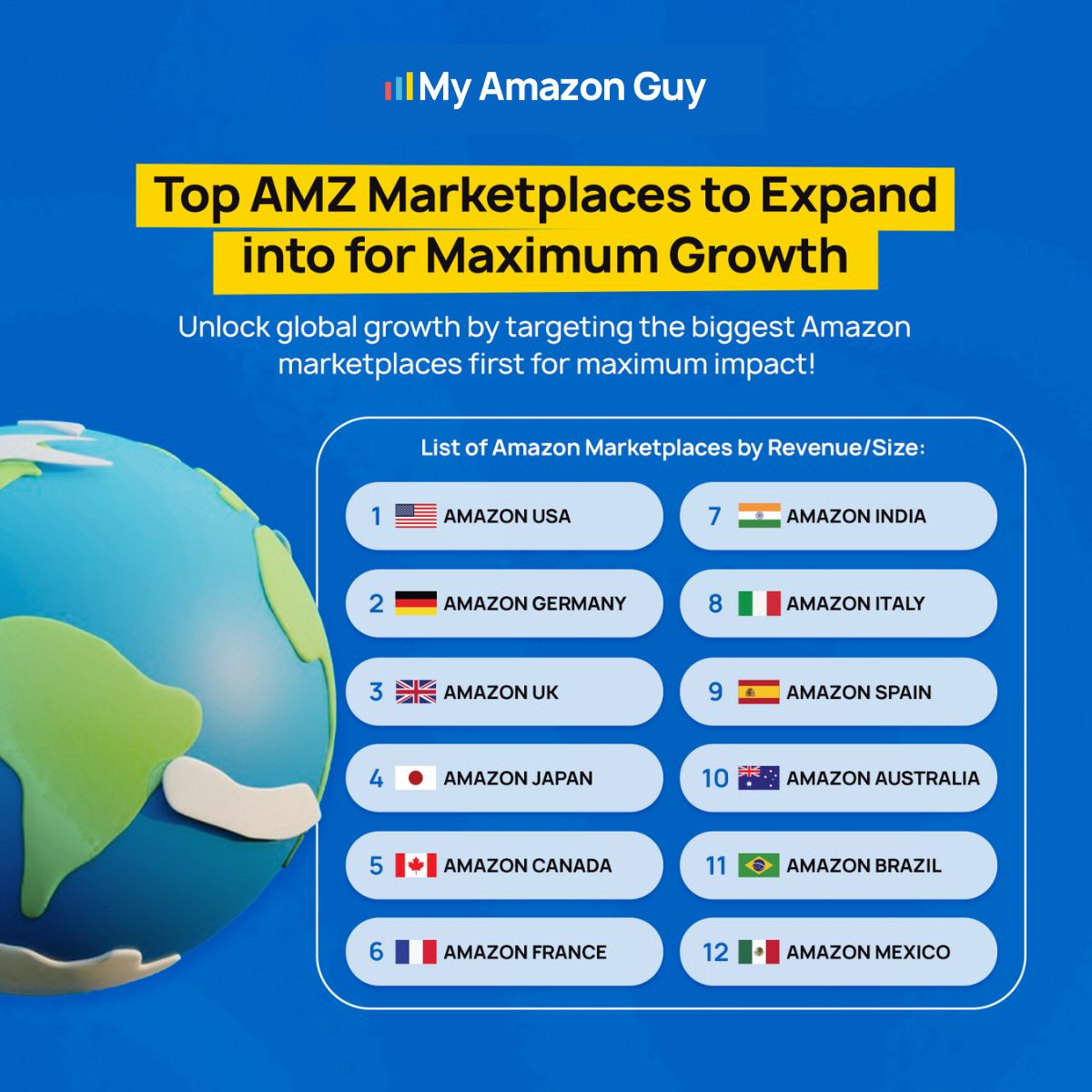
There are a lot of marketplaces sellers can expand into, but some stand out because they’re easier to navigate, have higher sales potential, and offer fewer logistical headaches. These markets are better starting points for international growth since they allow sellers to leverage their existing systems and experience while minimizing risk.
1. Canada
Canada is often the simplest first step for U.S. sellers because it shares a similar language and marketplace infrastructure. Registration is straightforward, taxes are manageable through Amazon’s GST/HST collection, and sales processes closely mirror the U.S., making the learning curve minimal.
2. United Kingdom
The U.K. offers a high-demand, English-speaking market with strong e-commerce adoption. While there are minor language and cultural differences, existing U.S. listings, images, and reviews can often be adapted, and advertising tools are fully supported, giving sellers a familiar but profitable environment to expand.
3. Germany
Germany is one of Europe’s largest Amazon markets with strong sales velocity. Sellers should account for language translation and VAT requirements, but the market rewards well-prepared products and can deliver significant revenue growth once properly set up.
Common Fears Sellers Have With Amazon International Expansion
Expanding internationally is a natural step for many Amazon sellers, but it can feel intimidating at first. Since selling in new countries involves unfamiliar rules, taxes, and logistics, it’s normal for sellers to have concerns about potential risks and complications.
Here are the main fears mentioned in the podcast transcript, each explained briefly:
- Fear of account suspension
Sellers worry that making mistakes in international marketplaces could lead to account suspension, which might halt sales. While suspensions are stressful, international accounts are often independent, so a US suspension doesn’t automatically affect other countries. - Fear of complex taxes and VAT
Navigating taxes, VAT, and customs in foreign countries can feel overwhelming. Sellers are concerned about compliance, filing requirements, and ensuring they don’t underpay or overpay taxes in each market. - Fear of product listing errors
Uploading products internationally can be confusing, especially with bulk files, SKUs, and UPCs. Sellers fear that mistakes could delay launches or result in lost reviews and customer trust. - Fear of unfamiliar customer expectations
Different countries have different buying habits, languages, and product terminology. Sellers worry that misaligned listings could hurt conversions and sales performance. - Fear of additional operational workload
Expanding means handling new paperwork, shipping requirements, and inventory management. Sellers often fear that the added complexity will overwhelm their current operations. - Fear of low sales or return on investment
Some sellers worry that international markets won’t generate enough sales to justify the effort. This fear often comes from uncertainty about demand, competition, and local market dynamics.
Expert Tips for Selling Internationally on Amazon
Selling internationally can feel overwhelming for many Amazon sellers, but there are proven strategies that can simplify the process and reduce common fears. By following these expert tips, sellers can confidently expand their business overseas while minimizing risks and maximizing opportunities.
1. Start with Familiar Markets First
Focus on countries that share similarities with your home market, such as Canada for U.S. sellers. This reduces complexity because you can use the same account, advertising strategies, and product knowledge while expanding your reach.
2. Register Properly With Local Authorities
Before selling, register your U.S.-based business with the foreign government to obtain a local business number and handle tax obligations. For example, in Canada, you’ll need a GST/HST registration, which Amazon can integrate to collect taxes automatically.
3. Use Existing Product Data Efficiently
Leverage Amazon’s bulk upload tools to import your product listings from your primary marketplace. Using the same SKUs and UPCs helps retain reviews and images, ensuring your international listings aren’t starting from scratch.
4. Diversify Risk Through Multiple Marketplaces
Selling in several countries reduces reliance on a single market and mitigates potential disruptions. For instance, if U.S. sales drop, revenue from the UK, Canada, or Germany can help balance your overall performance.
5. Leverage NARF for Low-Risk Expansion
The North American Remote Fulfillment (NARF) program lets you sell U.S. inventory in Canada or Mexico without shipping additional stock. This approach allows sellers to test international demand with minimal upfront cost, though customer experience may differ slightly.
6. Understand VAT and Local Tax Systems
Europe has complex tax rules, including VAT, which differs from Canada’s GST system. Use resources like Amazon VAT guides and consult local tax advisors to ensure compliance and properly calculate what you owe.
7. Start Small, Scale Gradually
Begin with one or a few marketplaces rather than trying to go global all at once. This focus allows you to learn local requirements, handle fulfillment, and adjust marketing strategies without being overwhelmed.
8. Use Flat Rate Tax Schemes When Available
Some countries, like the UK, offer simplified flat rate schemes for small sellers. This allows you to calculate tax as a fixed percentage of sales, reducing complexity and helping you predict costs while your international business grows.
Go Global Confidently: Expand Your Amazon Reach
Selling internationally can feel daunting, but with the right strategies, it’s a highly rewarding way to grow your business and diversify revenue. By starting with familiar markets, handling taxes correctly, and leveraging programs like NARF, sellers can simplify the process and maximize profits overseas.
Need help navigating international Amazon expansion and avoiding costly mistakes? Reach out to our full-service Amazon agency, and let our experts guide you so you can confidently scale your business worldwide.
Optimize Listings for Multiple Marketplaces
We adapt your products for each country to maximize conversions.