
Last Updated: September 25, 2026
Not using Amazon user-generated content for your listings? You could be leaving sales on the table because UGC builds trust and shows shoppers your product in real-life use.
Marketing your product is essential if you don’t want to get lost among the millions of items on Amazon. But with shoppers bombarded by ads and promotions, many listings get ignored despite having a great product.
One of the most effective ways to stand out is through user-generated content because real customer photos, videos, and reviews feel more relatable than brand-created content. But how do you consistently get high-quality UGC that actually helps your listing convert?
This guide explains what Amazon user-generated content is, why it matters, and how sellers can use authentic customer photos, videos, and reviews to boost trust and conversions. Our Amazon agency also shares proven strategies, common mistakes to avoid, and tips for turning UGC into a powerful growth driver for your listings.
Table of Contents
Use real customer feedback to make your product listings more compelling.
Customer photos, reviews, and creator videos from Amazon’s own program sell harder than any studio shot. Push that same content to TikTok as external traffic, and it starts sending shoppers to your listing too.
- Use real-life content you own
- Never trade rewards for reviews
- Fix what negative reviews reveal
- Reuse winning clips as ads
- Tag TikTok links for tracking
UGC only works when it’s used, legal, and measured. Put it on the listing first, then send it to work off Amazon.
What Is Amazon User-Generated Content
Amazon user-generated content, or UGC, is any product-related content created by customers rather than the brand itself. This can include reviews, photos, videos, and Q&A submissions that showcase real experiences with your product.
What makes UGC so powerful is that it provides authentic social proof, helping potential buyers see themselves using the product in their daily lives. When shoppers can imagine how a product fits into their routines, they are more likely to trust the listing and make a purchase.
UGC is essentially modern word-of-mouth marketing for the digital age, because it’s raw, authentic, and often shot on a phone rather than a professional camera. This real-life perspective makes your product feel relatable and approachable, turning casual browsers into buyers.
Why Having Amazon User-Generated Content Is Important
Having UGC for your Amazon listings is critical, especially since 74% of shoppers in a Bazaarvoice survey said they trust UGC more than brand-provided content on product pages. Beyond building trust, UGC also provides multiple benefits that can directly improve conversions and sales.
- Customers trust real experiences over polished ads
- Shoppers buy when they see real people using your product
- Positive reviews and photos show your product is worth buying
- Customer content helps your listing rank higher on Amazon
- UGC cuts down on expensive content creation
- Featuring customers makes them feel valued
- Reviews and feedback highlight product improvements
- UGC fosters a sense of community and repeat purchases
Shoppers trust UGC more than traditional advertising because the person holding the product has nothing to sell them. The same research found 78% of shoppers feel more confident in a purchase after viewing UGC, which means real customer content helps you close more of the traffic you already paid for.
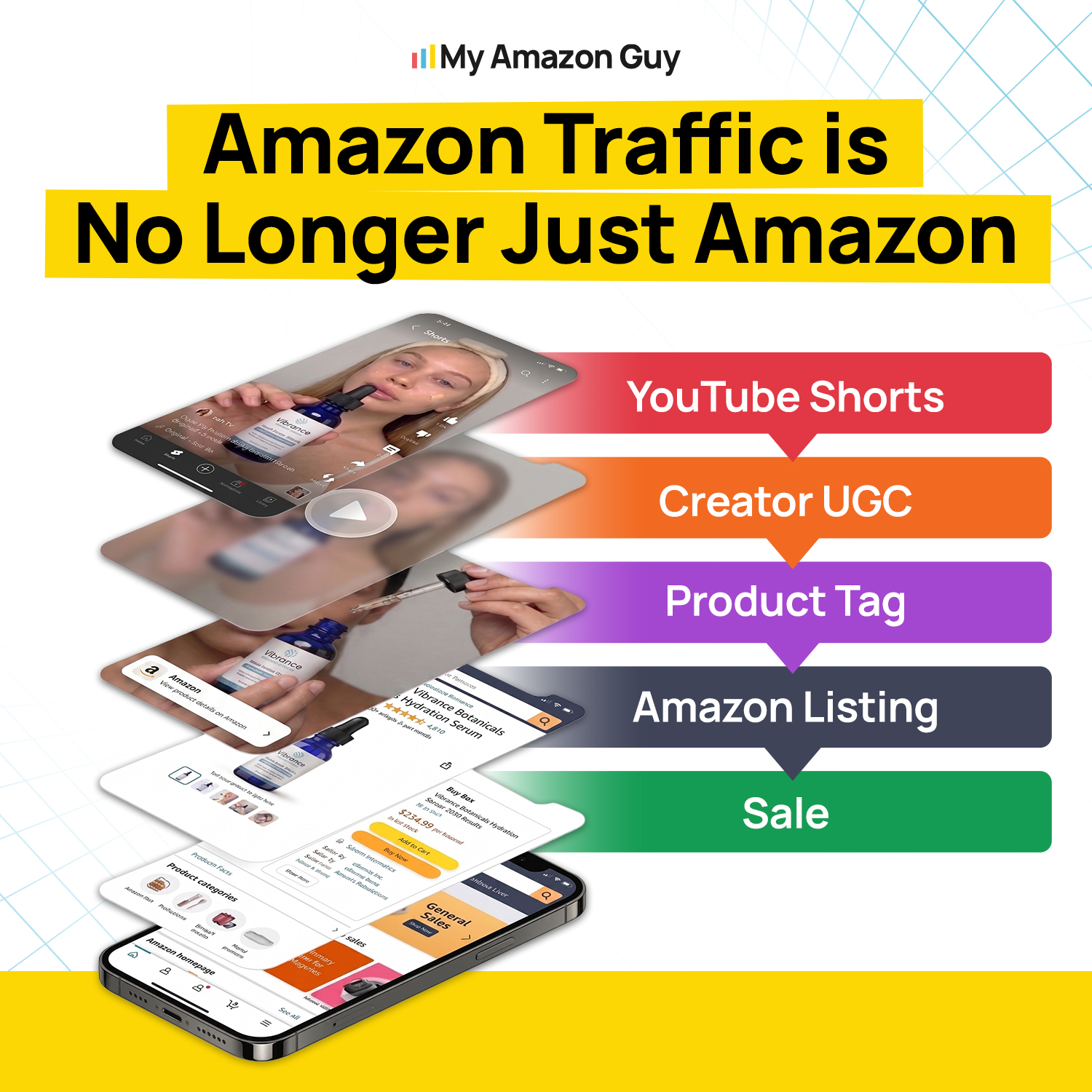
Amazon Traffic Is No Longer Just Amazon
Amazon UGC vs Professional Brand Content
Even with polished brand content on your listings, UGC plays a critical role in building trust and showing shoppers real-life use of your products. That’s why it’s important to understand the major differences between professional content and UGC, so you can prioritize authentic customer experiences that drive more sales.
1. Trust and Authenticity
Professional brand content is polished and visually appealing, but it can sometimes feel overly promotional or “corporate” to shoppers. While it communicates your brand’s message, it doesn’t always resonate as deeply as real experiences.
User-generated content comes from actual customers sharing their personal experiences. Seeing real people use your product builds trust and makes shoppers more likely to convert.
2. Control Over the Message
With professional content, brands control the visuals, messaging, and tone, ensuring consistency across marketing channels. This allows sellers to present their product exactly how they want.
UGC is created independently by customers, so you can’t control every detail. That lack of control actually builds credibility, as buyers see genuine feedback and real-world use.
3. Engagement
Professional content supports your brand image and long-term campaigns, but usually generates limited interaction. It’s important for maintaining a consistent and polished presence.
UGC naturally drives engagement because it’s relatable and authentic. Customers comment, share, and respond to these posts, creating social proof and stronger connections.
4. Cost and Scalability
Producing professional content requires a budget for creative teams, production, and sometimes ads, making it a high-cost investment. While it guarantees quality and consistency, scaling can be expensive.
UGC is far more cost-effective, as customers willingly create reviews, photos, and videos with minimal brand investment. This allows sellers to scale authentic content quickly without heavy production costs.
5. Production Value and Style
Professional content is polished, with studio lighting, color grading, and scripted visuals designed to present products in idealized settings. It aligns with your brand’s identity and aspirational messaging.
UGC is raw, often shot on phones with natural lighting, showing products in real-life settings. Its casual, relatable style helps shoppers visualize themselves using the product, which can boost conversions.
| Difference | Professional Brand Content | User-Generated Content |
|---|---|---|
|
Trust & Authenticity |
Polished and promotional; may feel corporate |
Real customer experiences; highly trusted and relatable |
|
Control Over Message |
Complete control over visuals and messaging |
Created by customers; authentic but less control |
|
Engagement |
Supports brand image; lower direct interaction |
Sparks comments, shares, and social proof |
|
Cost & Scalability |
High production costs; limited assets |
Low cost; scalable and diverse content |
|
Production Value & Style |
Studio-quality visuals; aspirational |
Raw, real-life visuals; shows everyday use |
Showcase authentic customer photos and videos to increase trust and conversions.
Common Mistakes Sellers Make with Amazon UGC
Amazon user-generated content is a powerful tool for boosting trust and conversions, but common mistakes can limit its effectiveness. If sellers aren’t careful, missteps can reduce engagement, hurt credibility, or even violate Amazon’s policies.
1. Violating Amazon’s Review Policies
Paying for reviews, using friends or family to post feedback, or abusing “Request a Review” can get your account suspended, and the damage no longer stops at Amazon. The FTC’s fake review rule took effect October 21, 2024, banning bought reviews and letting the agency seek civil penalties of more than $51,000 per violation.
2. Over-Polishing Content
Turning UGC into overly produced, commercial-style videos or images can make it feel fake to shoppers. Sellers sometimes think polished content is better, but it actually decreases relatability and engagement.

Polished Ads Look Pretty UGC Ads Print Clicks
3. Ignoring Negative Feedback
Failing to act on negative reviews or complaints makes your brand look unresponsive and can lower conversions, and since Amazon no longer allows public seller replies, the fix has to show up in the product, the listing, and your customer service. You also can’t ask a buyer to change or remove a review, as Amazon’s seller forum team confirms, so use that feedback to spot product issues and improve the listing instead.
4. Not Using UGC in Listings
Some sellers collect customer photos, videos, and creator clips but never turn them into listing images, listing videos, or ads they have the rights to use, which cuts the impact of UGC on conversions and buyer confidence. In A+ Content, use that UGC as real-life lifestyle images you own and keep review quotes and star ratings out, since Amazon’s A+ guidelines treat them as testimonials and reject the module.
5. Mismanaging Customer Communication
Slow responses to customer questions or attempts to pressure shoppers about negative reviews can hurt seller metrics. Sellers make this error often due to poor process management or a lack of policy awareness.
Best Practices for Using Amazon User-Generated Content
When used correctly, Amazon user-generated content can become a powerful driver of trust, conversions, and engagement. That’s why it’s essential for sellers to know how to use UGC effectively to maximize its impact.
1. Highlight Customer Visuals on Listings
Add real-life photos and videos to your product gallery using customer or creator content you have written permission to use, since unboxing clips and demos help shoppers picture the product in their own routine. Customer photos inside reviews show up on your listing automatically, but anything you upload must meet Amazon’s image and video rules, and your main image stays a clean product shot on white.
2. Create UGC Mashups for Ads
Combine clips from different customers into ad variations, then run them inside Amazon as Sponsored Brands video and Sponsored Display video creative, as long as you hold the usage rights. Test three or four UGC hooks against your current studio video and keep whichever wins on click-through rate, which keeps your ads fresh and shows you which angles your audience actually responds to.

3 UGC Videos Every Amazon Brand Should Test
3. Collaborate with Micro-Influencers
Recruit influencers with 1,000 to 50,000 followers through Amazon’s Creator Connections program or your own outreach, because their audience trusts their picks and their posts often outperform highly produced ads on engagement. Whoever you hire, every paid post needs a clear disclosure of the relationship.
4. Encourage Customer Content
Motivate shoppers to leave reviews or post videos through Amazon-approved channels like the Request a Review button, a product insert that asks for honest feedback with no reward attached, and Amazon Vine for eligible products, which is allowed because Amazon runs the program and labels those reviews. Amazon’s review rules ban any benefit that depends on a shopper writing a review or on what the review says, so skip discounts, gift cards, and free product swaps and let these approved channels build your UGC library instead.
5. Engage and Repurpose
Answer customer questions when Amazon routes them to you, and check the Voice of the Customer dashboard weekly, where review monitoring moved after Amazon retired the old Customer Reviews tool, because the same complaint showing up three times points to a product or listing fix. With permission, share UGC across Amazon listings and social media to strengthen your brand’s credibility and inspire more customers to participate.
6. Send TikTok UGC Traffic to Your Amazon Listing
Post your best customer and creator clips on TikTok with a spoken cue telling viewers what to search on Amazon, like your brand name plus your main keyword, because viewers who skip the link still type that phrase into the Amazon app. In the video below, our Amazon agency shows why TikTok is the cheapest place to send UGC right now and how it pulls outside shoppers to your listing, grows brand searches, and gets a second life as Amazon ad creative.
TikTok for Amazon Sellers: The Cheapest Traffic Play Right Now
How a Keto Supplement Brand Made Its Social Proof Pay Off on Amazon
A keto and carnivore electrolyte brand came to our Amazon agency with the kind of social proof most sellers chase, including a 4.6-star rating on its main product and more than 7,000 units sold on TikTok Shop. But its Amazon account leaned on a handful of branded search terms, and a healthy-looking 10% ACoS hid suppressed listings, campaigns that cannibalized organic sales, and weak indexing that kept it out of non-branded category searches.
We brought top SKUs back online, split branded and non-branded campaigns, and grew the active paid keyword footprint by 350% while optimizing listings, A+ Content, and the Brand Store. Weekly sales climbed from a pre-engagement low of $7,961 to $11,765, and priority keywords reached page 1 organically, which shows that great reviews and TikTok buzz only turn into revenue when the listing is built to catch that traffic.
FAQs About Amazon User-Generated Content
Is it against policy if I pay for Amazon UGC?
Paying for reviews breaks Amazon policy, but paying a creator to shoot photos or videos for your listing, ads, or social channels is allowed. Keep those two worlds separate, disclose every paid partnership, and never tie a reward to a review.
Where can I include Amazon UGC in listings?
UGC can go in your image gallery, listing videos, Brand Store, and Sponsored Brands or Sponsored Display ads, as long as you own the rights. Keep review quotes and star ratings out of A+ Content, since Amazon's A+ guidelines don't allow customer testimonials.
Which platforms can I post Amazon UGC?
UGC can be shared on Amazon, your social media channels, and other e-commerce marketplaces. Always get customer permission before reposting their content outside Amazon.
Is it against Amazon policy to incentivize customer reviews?
Yes, any reward tied to leaving a review or to what the review says gets the review removed and puts your account at risk. The FTC also treats buying reviews as a violation with civil penalties attached, so the only approved way to put free product in reviewers' hands is Amazon Vine.
Can customer photos and videos be added to Amazon product listings?
Yes, once the customer gives you written permission to use them. Upload them as secondary images or listing videos that meet Amazon's media rules, and keep the main image a product shot on white.
How can sellers use UGC in A+ Content?
Use real-life photos you have the rights to as lifestyle images inside your modules. Leave out review quotes, star ratings, and customer names, which A+ Content reviewers reject.
Can Amazon UGC be used in Amazon ads?
Yes, UGC clips make strong Sponsored Brands video and Sponsored Display video creative when you hold the rights. Stitch several customer clips into one ad to test different hooks at the cost of a single edit.
Does TikTok UGC help Amazon sales?
It does when viewers have a clear path to your listing, and you track every click. Amazon Attribution measures off-Amazon traffic for free, and one brand in our video case study grew weekly brand searches from about 100 to roughly 5,000 with TikTok UGC.
Make Your Amazon Listings Shine with UGC
Amazon UGC is a powerful way to build trust, boost conversions, and show products in real-life use. It drives more authentic engagement than polished professional content alone, yet many sellers still rely solely on brand-generated content, missing out on these benefits.
As a result, listings without UGC often struggle to connect with shoppers and convert browsers into buyers. Integrating real customer photos, videos, and reviews makes your product more relatable and increases the likelihood of sales.
Are you ready to take your Amazon listings to the next level? Reach out to our full-service Amazon agency, and let our team help you create and implement UGC that drives results.
Highlight genuine user stories to make your listings more relatable.