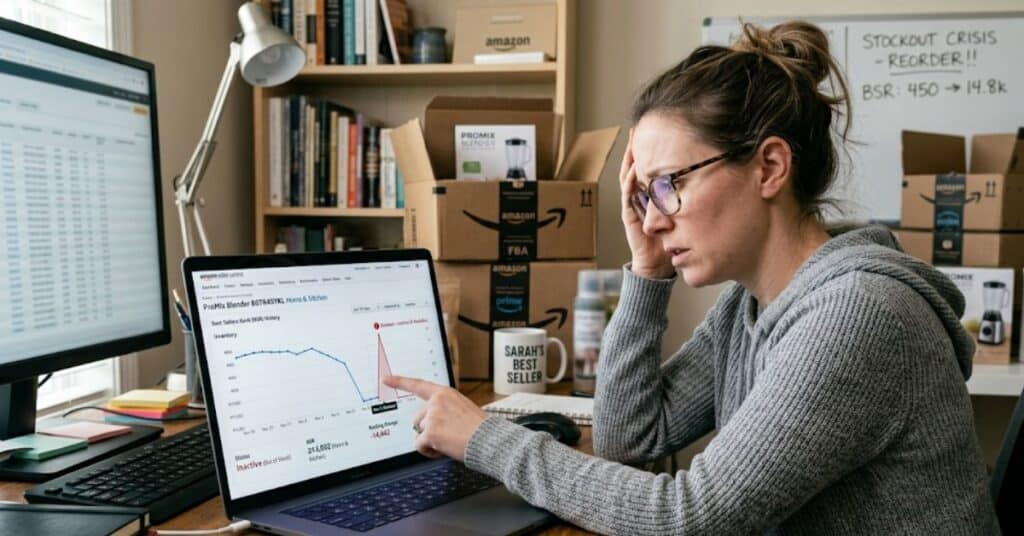
Did you experience a sudden Amazon ranking drop after a stockout? This is one of the fastest ways to lose momentum on the platform, and fixing it quickly matters more than most sellers realize.
When it comes to selling on Amazon, running out of stock is one of the most damaging disruptions a seller can face. It stops your sales history cold and signals to Amazon’s algorithm that demand may no longer be consistent. That break in performance often leads to a steep drop in organic rankings.
Because of this, sellers need to respond quickly and with a clear recovery plan once inventory is back. Delays in restarting sales activity can make recovery more expensive and more dependent on aggressive ad spend later. Acting early helps stabilize ranking signals before they decay further.
In this guide, our Amazon agency breaks down why ranking drops happen after stockouts and how to recover sales velocity step by step. We also cover the exact strategies used to rebuild performance through Amazon PPC, promotions, and inventory-aware planning.
Table of Contents
Recover Lost Amazon Rankings Fast
Get expert help rebuilding sales velocity after a stockout so your ASIN can regain visibility faster.
TL;DR - Ranking Drops After Amazon Stockouts and How to Recover Sales
A sudden Amazon ranking drop after a stockout happens when sales velocity stops and Amazon’s 180-day performance weakens.
- Sales stop during stockouts, hurting rankings
- Longer gaps weaken 180-day performance
- Top search results drive most purchases
- Faster recovery depends on restarting sales quickly
- Amazon PPC and promos rebuild lost momentum
Stockouts break sales momentum, not just sales volume. Recovery speed depends on how fast sellers restart consistent demand signals.
- 00:00 - Revive an Amazon ASIN After Stockout
- 00:48 - Brand Tailored Promotions for Recovery
- 01:28 - Coupons and Deals for Fast Sales Rank
- 01:40 - Raise Bids on Best Search Terms
- 02:12 - Use Sales Velocity to Recover Ranking
- 02:46 - Start Amazon Ads After Inventory Arrives
- 03:10 - FC Transfer and FBA Inventory Status
- 03:54 - Check Low Inventory Fees and Issues
- 04:15 - Aged Inventory Surcharge
- 05:01 - Find Units That Trigger Inventory Fees
Why Amazon Rankings Drop After Stockouts
When a product goes out of stock, Amazon quickly reduces its visibility in search results because it assumes demand has weakened. This is critical because around 80% of products added to cart come from the top 10 search results, meaning a small drop in ranking can lead to a major loss in sales.
The main driver behind this decline is Amazon’s 180-day sales history window, which constantly averages your recent performance. Once your product hits zero sales, those inactive days start pulling down your overall ranking score and weaken your position against competitors still generating steady sales.
At the same time, your sales velocity completely stalls, which signals to Amazon that other listings deserve priority placement. Without ongoing purchases, your ASIN loses momentum and gets pushed further down search results as the algorithm favors products that continue converting traffic.
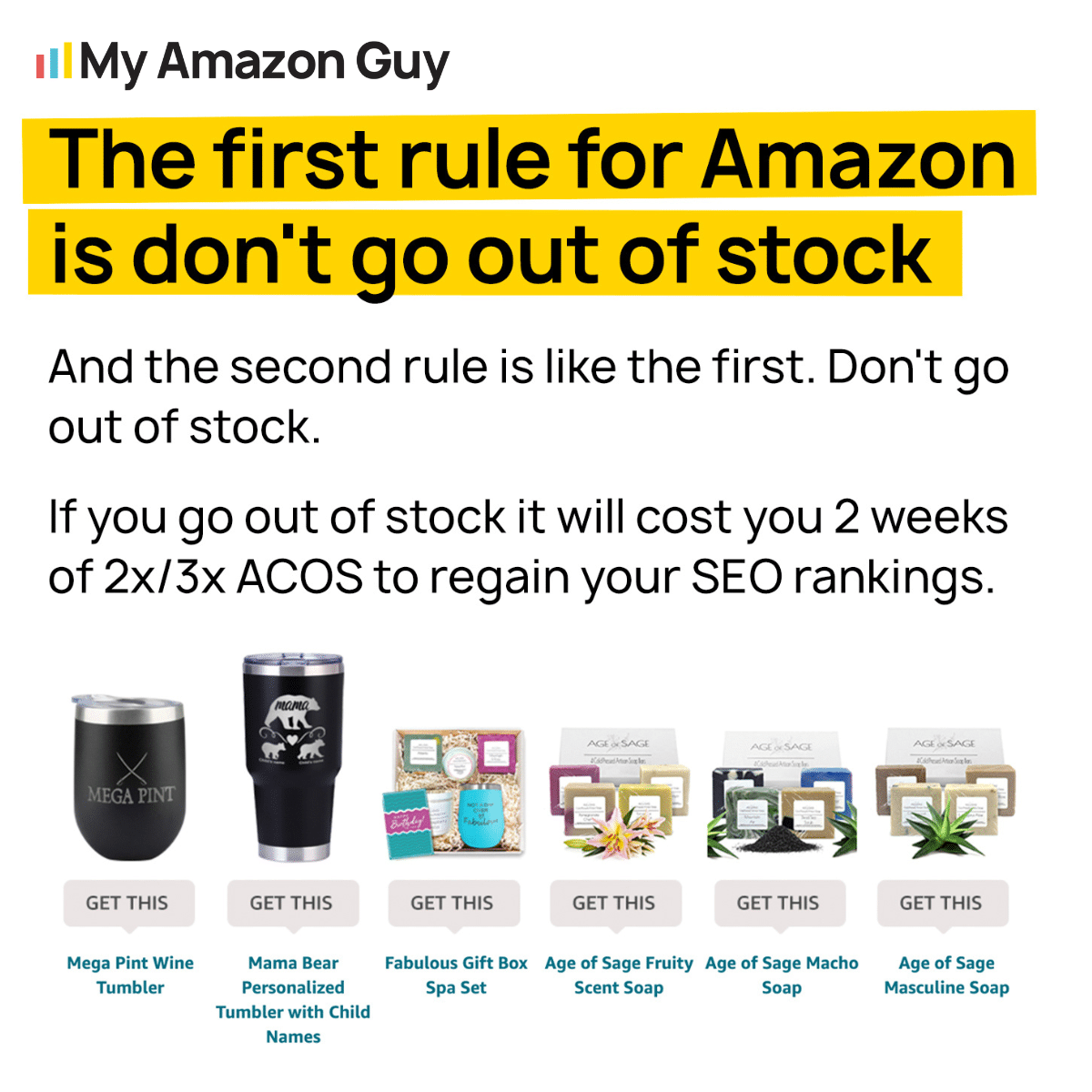
How Long Your Product Was Out of Stock Changes Everything
How long your product stays out of stock directly impacts how much ranking loss you experience and how quickly Amazon deprioritizes your listing. The longer the inventory gap, the more your sales history gets weakened inside Amazon’s ranking system.
| Stockout Duration | What Happens to Your Ranking |
|---|---|
|
0-2 weeks |
Minimal ranking damage since recent sales history is still strong and only lightly impacted |
|
2-12 weeks |
Noticeable ranking decline as sales velocity slows and past performance begins to lose weight |
|
Under 6 months |
Significant ranking drop as zero-sales days increasingly dilute your 180-day performance history |
|
6+ months |
Major ranking reset where historical sales advantage is largely erased from the algorithm’s memory |
In simple terms, the longer the stockout lasts, the more Amazon replaces your historical performance with inactivity. That shift is what causes rankings to fall faster and recovery to become more difficult over time.
How to Recover Amazon Rankings and Restore Sales Velocity
When Amazon rankings drop because of stockouts, it can feel like there is nothing left to do and the listing is stuck in a downward spiral. The reality is that there are several direct actions sellers can take to rebuild sales velocity and push the ASIN back into competitive search placement.
1. Restart Sales Velocity with Quick Promotions
When a product first comes back in stock, the fastest way to restart momentum is through immediate promotions. Coupons are often the simplest option because they can trigger quick conversions without needing complex setup.
In more strategic cases, Brand Tailored Promotions can be used to target past customers and reintroduce demand. However, these are typically only effective within a 90-day window where customer audiences are still active and relevant.
2. Use Coupons or Deals to Trigger Early Conversions
If deal eligibility is available, running a deal can help create an initial spike in sales activity. If not, coupons serve as the fallback method to quickly generate conversions and signal demand to Amazon.
This early burst of sales activity is important because it helps restart ranking signals that went dormant during the stockout. Without this push, listings often struggle to regain visibility even after inventory returns.
3. Aggressively Target High-Performing Keywords
Once promotions are active, the next step is focusing on keywords that historically generated strong performance. These are typically the same search terms that drove the highest conversion rates before the stockout.
Raising bids by 25% to 50% and applying Top of Search placement helps push the listing back into visible positions quickly. This aggressive targeting is designed to force immediate sales velocity and rebuild ranking momentum.
4. Use Top of Search Placement to Regain Visibility Fast
Top of Search placements play a key role in accelerating recovery because they place the product in front of high-intent shoppers. This visibility is critical when trying to rebuild lost momentum after a period of zero sales.
The goal is to concentrate traffic in the most competitive placements where conversion likelihood is highest. This helps compress the time needed to rebuild ranking signals inside Amazon’s algorithm.
5. Focus on the 180-Day Sales Window Advantage
Amazon evaluates performance based on a rolling 180-day sales history, which means recent activity can still heavily influence ranking. If the stockout falls within this window, strong sales activity can quickly reshape ranking outcomes.
Heavy ad spend combined with promotions allows sellers to “rebuild” their performance profile faster than waiting for organic recovery. The faster this velocity is reintroduced, the quicker Amazon adjusts the listing’s search position upward.
Stop Ranking Loss After Stockouts
We help sellers restart sales momentum using PPC, promos, and keyword strategy built for recovery.
Common Mistakes That Make Amazon Ranking Recovery Harder
Common mistakes that lead to a slow recovery after a stockout are often repeated by Amazon sellers. Knowing these issues helps prevent further ranking loss and avoids wasted effort during the recovery phase.
1. Waiting Too Long to Restart Ads After Restock
Many sellers delay running ads after inventory is back in stock. This pause allows ranking momentum to weaken further and gives competitors time to take over key placements.
2. Relying Only on Organic Sales Recovery
Some sellers expect rankings to return without paid traffic support. Without ads driving sales velocity, the listing struggles to regain visibility in search results.
3. Using the Wrong Keywords During Recovery
Sellers often shift away from their best-performing historical keywords during recovery. This disconnect slows down ranking rebuild because Amazon no longer sees strong relevance signals.
4. Ignoring Inventory Timing and Ad Scaling
Running Amazon PPC ads without understanding inventory status can lead to poor performance and inconsistent availability. This results in wasted spend with limited ranking improvement.
5. Not Using Promotions to Kickstart Early Sales
Some sellers skip coupons or discounts after restocking inventory. Without that initial boost, it becomes harder to generate the early sales velocity needed for ranking recovery.
Frequently Asked Questions
How long does it take to recover Amazon ranking after a stockout?
Recovery time depends on how long the product was out of stock and how aggressive the relaunch strategy is. Short gaps can recover in days, while long stockouts may take weeks or longer to fully rebuild sales velocity.
Do Amazon rankings drop immediately after running out of stock?
Yes, rankings typically start dropping quickly once sales stop because sales velocity goes to zero. The longer the stockout continues, the more the listing loses visibility in search results.
Can ads alone fix a sudden Amazon ranking drop?
Ads play a major role in recovery, but they work best when combined with promotions and strong keyword targeting. Without sales conversion support, ads may not fully restore lost ranking momentum.
Stockouts Don’t Just Stop Sales; They Reset Momentum
A stockout is not just a temporary loss of sales; it directly disrupts your sales velocity and weakens your ranking signals. Over time, this leads to lower visibility in search results and reduced organic traffic that becomes harder to recover the longer it continues.
The impact also compounds through Amazon’s 180-day performance window, where zero-sales periods slowly drag down your historical ranking strength. This is why timing and recovery strategy matter so much when trying to regain lost position after running out of stock.
Struggling with a sudden Amazon ranking drop because of stockouts? Contact our full-service Amazon agency and let our Amazon experts help you out with a data-driven recovery plan designed to rebuild sales velocity and bring your rankings back on track.
Bring Back Lost Amazon Visibility
Our team identifies exactly what broke your ranking and builds a targeted recovery plan to fix it.