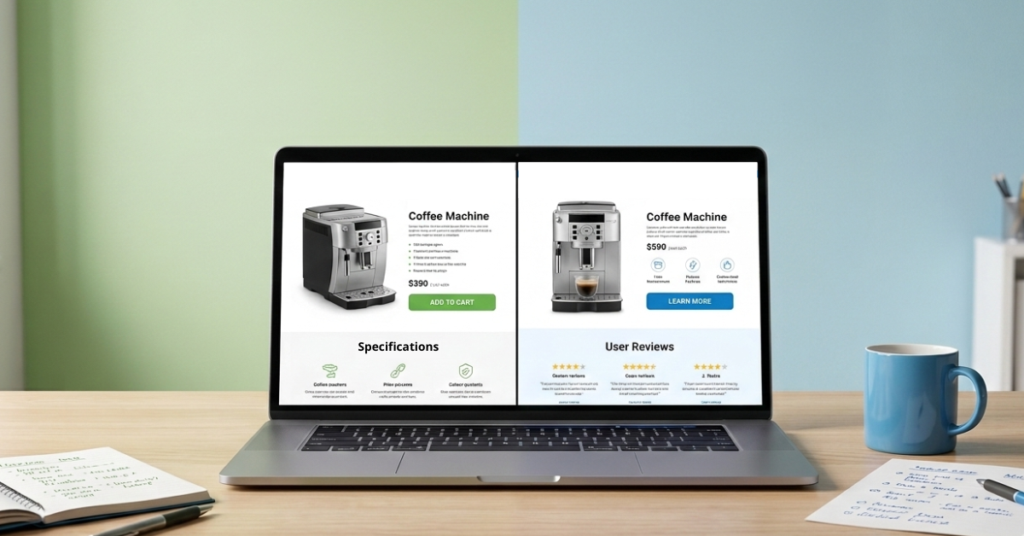
When split testing to measure how effective your product listing really is, do you ever stop and think about what elements to A/B test on Amazon?
Optimizing listings is not optional on Amazon because the platform keeps changing, and competitors are constantly adjusting their strategy. Once updates are made to images, copy, or A+ content, sellers need a reliable way to measure impact, and A/B testing is one of the most practical ways to do that.
The problem is that with so many moving parts inside a listing, it is easy to feel stuck about what to test first. Choosing the wrong variables or testing too many at once can burn traffic, slow growth, and eat into ad budgets.
This guide breaks down the most important elements to A/B test on Amazon and shows how structured testing improves clicks, conversions, and sales. Our Amazon agency will also discuss how to implement proven strategies to optimize listings and get measurable results.
Table of Contents
Master A/B Testing for Your Listings
We guide sellers through proven testing strategies for elements like images, titles, and A+ content.
Why A/B Testing on Amazon Is Important
Listing optimization can drive massive gains, and many brands have seen conversion lifts of over 30% within weeks of making structured improvements. But optimization without A/B testing is just guessing, and guessing is expensive on a marketplace where every click costs money.
A/B testing gives sellers proof instead of opinions by showing exactly which changes increase click-through rate, conversion rate, and revenue per visitor. Instead of chasing random metrics, smart brands focus on core performance indicators that tie directly to profit, such as average order value and repeat purchase behavior.
The real advantage comes when testing becomes an ongoing system rather than a one-time project. Sellers who build a culture of experimentation make better decisions, reduce wasted ad spend, and create a listing strategy that compounds results over time instead of relying on trial and error.
What Elements to A/B Test on Amazon
There are several key elements that sellers need to test to make sure their listings are performing at their best. Knowing which elements are most important helps focus your testing efforts and drives measurable results without wasting time or traffic.
1. Main Product Image
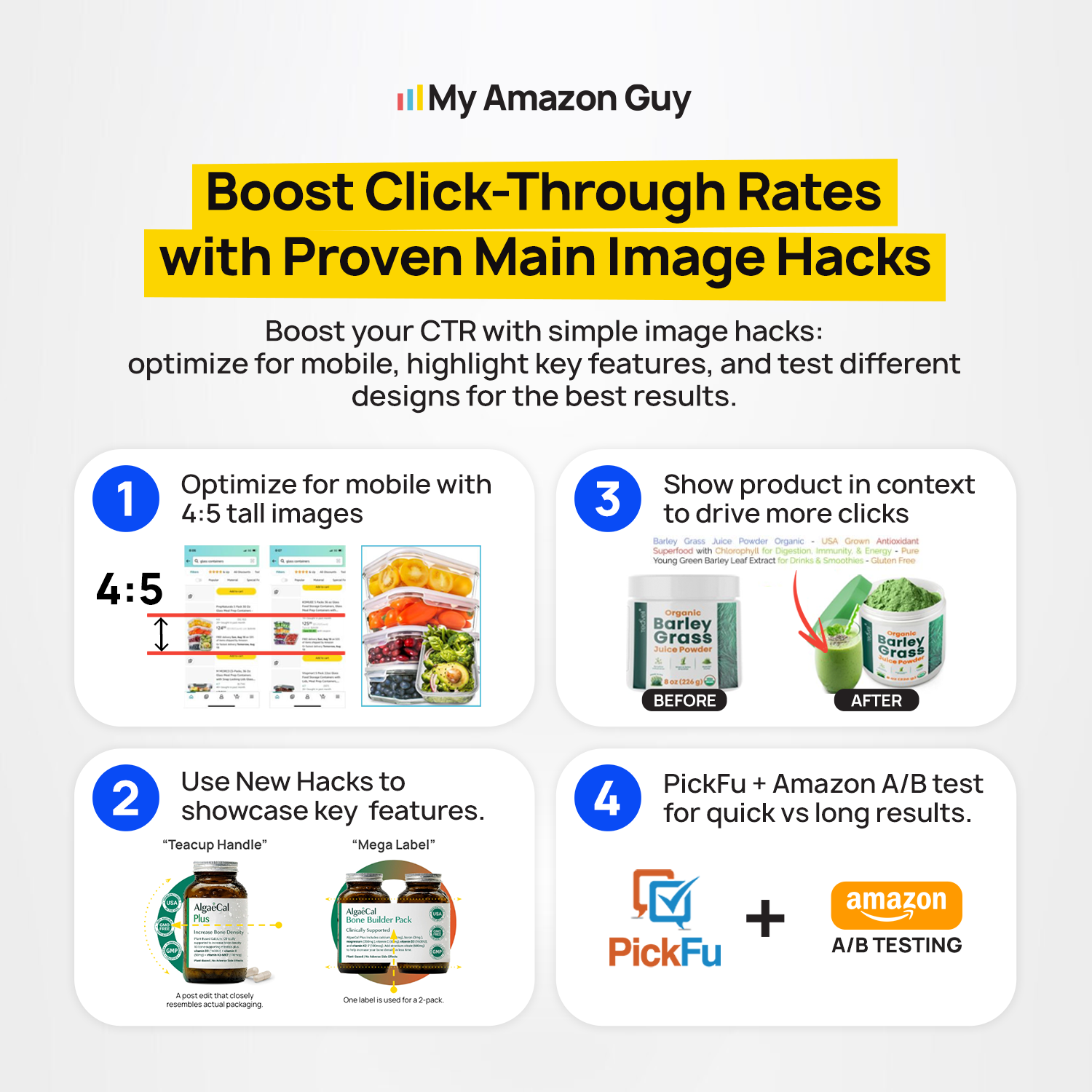
The main image is the most critical factor affecting whether a shopper clicks on your listing from search results or ads. Testing different angles, lighting, and backgrounds helps identify which version captures attention most effectively.
Lifestyle shots, product-in-use images, or close-ups of key features can dramatically impact click-through rate. By testing these variations, you can see what combination encourages shoppers to explore the rest of your listing.
2. Product Title
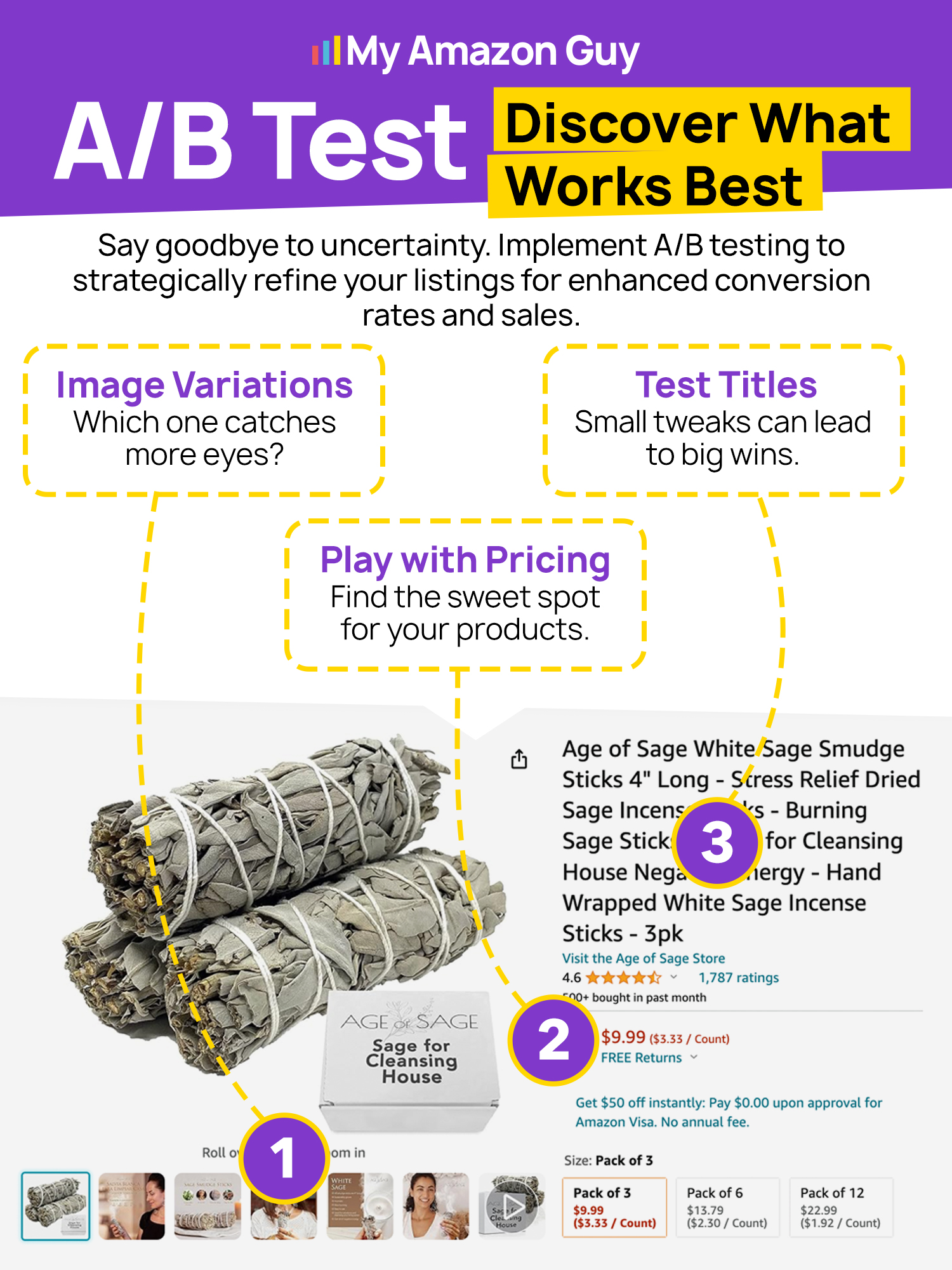
Your product title influences both search visibility and click-through rates. Testing feature-focused versus benefit-focused phrasing can show which resonates more with your target audience.
Title length and keyword placement also matter for mobile shoppers. Testing shorter versus longer titles helps identify which version drives clicks without sacrificing SEO.
3. Secondary Images
Secondary images give shoppers more context about your product. Testing infographic-style versus lifestyle action shots helps determine which communicates features and benefits more clearly.
You can also experiment with size charts, comparison images, or images highlighting individual components. The goal is to see which combination increases understanding and encourages conversions.
4. Bullet Points
Bullet points are designed for skimmers who want quick information. Testing the order of features, tone of voice, and whether to emphasize benefits over technical specs can reveal which approach engages buyers most.
You can also test visual elements like bold headers or emojis to make bullets easier to scan. Understanding which format works best can directly improve conversion rates.
5. Product Description
The product description is where detailed information can close the sale. Testing concise, scannable copy versus longer storytelling-style copy shows which keeps shoppers reading and reduces hesitation.
Descriptions can also highlight keywords naturally without hurting readability. By testing multiple versions, sellers can optimize for both search visibility and customer engagement.
6. Pricing
Small pricing changes can significantly affect clicks, conversions, and Best Seller ranking. Testing slightly different price points or bundles reveals how sensitive your audience is to pricing variations.
Coupons or promotional offers can also be tested to see if they drive more traffic from search pages. Testing pricing strategies ensures you maximize revenue without unnecessary margin loss.
7. A+ Content (Enhanced Brand Content)
A+ Content helps convert shoppers once they land on your listing. Testing different layouts, image combinations, and whether to emphasize the brand story or product features can show what drives the most engagement.
You can also test module order, like putting comparison charts at the top versus the bottom. Understanding which layout and messaging increase conversions gives you a clear advantage over competitors.
Boost Sales with Data-Driven Optimization
Stop guessing and start testing. Our team ensures your changes translate into measurable results.
Best Practices with Performing A/B Testing on Amazon
Even if A/B testing is a very powerful tool, doing it incorrectly can waste time, traffic, and money. This is why sellers should know how to run tests properly to get meaningful results that actually improve their listings.
1. Test One Element at a Time
Focusing on a single variable ensures you know exactly what drives performance changes. Changing multiple elements at once makes it impossible to identify which adjustment caused the lift or drop.
For example, test either the main image or the product title, but never both in the same experiment. Keeping everything else constant, including PPC spend, ensures results are reliable and actionable.
2. Use Amazon’s Manage Your Experiments Tool
Amazon Seller Central offers a native tool specifically for testing product titles, images, and A+ content. Using this ensures your results are statistically valid and integrated with your live listing.
It also avoids permanent changes that could negatively affect your listing if the test fails. The platform tracks key metrics over time so you can make informed decisions backed by real Amazon data.
3. Run Tests Long Enough for Statistical Significance
Short tests can be misleading because daily traffic fluctuations can skew results. Allow experiments to run for at least four weeks or until the system reaches a 90–95% confidence level.
Longer tests capture enough impressions and conversions to identify patterns rather than anomalies. This ensures that winners are based on real shopper behavior and not temporary spikes in traffic.
4. Prioritize High-Traffic Listings
Start A/B testing with your top-selling “hero” products to gather meaningful data faster. Low-traffic ASINs take months to reach statistical significance, delaying actionable insights.
High-traffic tests also have a greater immediate impact on overall sales and conversion rate. Focusing your effort here maximizes the value of your experimentation program.
5. Make Variations Meaningful
Minor tweaks rarely move the needle, so focus on significant changes that are noticeable to shoppers. For images, try lifestyle versus plain background shots; for titles, test feature-driven versus benefit-driven phrasing.
Meaningful variations provide a clear signal of what works and what doesn’t. This prevents ambiguous results and ensures you can confidently implement winning elements.
6. Account for Seasonality and External Noise
Avoid running tests during major sales events like Prime Day or Black Friday unless that is the focus. Buying behavior during these periods is erratic and can distort results.
Also, pause experiments if your inventory runs out or external promotions interfere. Ensuring stable conditions maintains the integrity of your data and prevents misleading conclusions.
7. Document Results and Iterate
Always record which version wins, why it performed better, and which metrics it improved. Documenting your learnings allows patterns to be applied across other products or categories.
After implementing the winner, move on to the next high-impact element and repeat the process. Continuous, incremental testing over time is more effective than one major overhaul and keeps your listings competitive.
FAQs About A/B Testing on Amazon
Which tools can sellers use to A/B test on Amazon?
Sellers should use Amazon’s native Manage Your Experiments tool in Seller Central for accurate, statistically valid results. External tools like PickFu can be used for pre-testing before running live experiments.
How long should an A/B test run on Amazon?
Tests should run for at least 4 weeks or until the tool shows a 90–95% confidence level. Shorter tests risk unreliable results due to normal traffic fluctuations.
What should Amazon sellers test first on their listings?
Focus on high-impact elements like the main image, product title, and A+ content first. These are most likely to influence click-through rate and conversions quickly.
Make Every Amazon Listing Change Count
Getting data from real A/B tests is the only way to know if your changes are actually improving your listing. No matter how polished your images or copy look, if they aren’t driving clicks and conversions, it’s just good in theory.
Structured testing helps sellers identify which elements truly move the needle. By following best practices, you can make data-driven decisions that improve traffic, engagement, and sales consistently.
Are you testing your listings the right way? Contact our full-service Amazon agency to run professional experiments, optimize your high-impact elements, and turn every listing into a conversion machine.
Test Your Product Listings Professionally
We help Amazon sellers identify the winning images and titles that boost CTR and conversions.