Need an Amazon PPC guide for sellers that actually helps you grow? This guide explains how Amazon Advertising works, how to build profitable campaigns, and how to make smarter decisions with your ad budget.
Selling on Amazon is more competitive than ever, and advertising without a clear strategy can quickly reduce your profits. Understanding campaign types, bidding strategies, and performance metrics helps you spend more efficiently while supporting long-term business growth.
We’ve managed $1.2B+ in ecommerce revenue, and these are the same PPC principles our team uses to help mid-market brands scale. Successful Amazon advertising isn’t about spending more money but about making informed decisions that improve profitability over time.
In this guide, you’ll learn how Amazon PPC works, which campaign types fit different business goals, and how to optimize campaigns for better performance. Our Amazon agency also explains the metrics that matter, common mistakes to avoid, and practical strategies you can use to grow your business with confidence.
Table of Contents
Get Expert Amazon PPC Management
We manage your PPC campaigns end-to-end so you can focus on growth.
TL;DR - Amazon PPC Guide for Sellers
Amazon PPC can drive consistent sales, but without structure, it turns into uncontrolled ad spend with unclear returns. Most profitability issues come from poor targeting, weak bid control, and a lack of ongoing optimization.
Key focus areas:
- Build separate campaigns for testing and performance
- Focus on converting search terms, not just traffic
- Track TACoS, ACoS, CTR, and CPC regularly
- Cut irrelevant search terms with negative keywords
- Adjust bids based on real performance data, not guesses
A disciplined PPC system helps sellers control spend, improve efficiency, and scale sales without losing sight of profitability.
What Is Amazon PPC?
Amazon PPC, short for pay-per-click, is Amazon’s advertising model that lets sellers promote their products to shoppers across the marketplace. Instead of paying every time an ad is shown, advertisers pay only when someone clicks their ad, making it a cost-effective way to reach customers who are actively shopping.
Amazon PPC helps sellers increase product visibility, generate more traffic, and drive sales for both new and existing listings. It also gives brands the flexibility to control their advertising budget while measuring performance through metrics like clicks, sales, and advertising costs.
How Does Amazon PPC Work?
Amazon PPC works by matching your ads with shoppers who are searching for relevant products or browsing related product detail pages. After you create a campaign, you choose how to target shoppers, set your bids, and define your daily budget before Amazon begins serving your ads.
When a shopper clicks your ad, they are taken to your product detail page, and you pay up to your cost per click for that visit. Your campaign continues showing ads until your daily budget is reached, making regular budget and performance monitoring an important part of campaign management.
Why Does Amazon PPC Matter?
Amazon PPC plays an important role in helping sellers increase visibility, generate sales, and collect valuable performance data that can improve future advertising decisions. Even if your products already rank well organically, PPC allows you to reach more shoppers, defend your position against competitors, and maintain visibility for high-value search terms.
Advertising and Amazon SEO work best when they support each other rather than compete with one another. Strong organic rankings can reduce your dependence on ads over time, but PPC continues to help sellers discover new keywords, launch products faster, protect branded searches, and capture additional sales that organic listings alone might miss.
Understanding How Amazon PPC Works
Amazon PPC can seem complicated at first because multiple factors determine when and where your ads appear. Understanding how the system works helps you make smarter campaign decisions, optimize your advertising spend, and build a stronger foundation for long-term growth.
How Does the Amazon PPC Auction System Work?
Amazon PPC uses a real-time auction system to determine which ads are shown whenever a shopper performs a relevant search or visits an eligible product detail page. During the auction, Amazon evaluates eligible ads by considering factors such as the advertiser’s bid and how relevant the ad is to the shopper’s search or browsing activity.
Winning an auction doesn’t always mean paying your maximum bid because Amazon charges only the amount needed to win the click, up to your maximum cost-per-click bid. This encourages sellers to focus on creating relevant campaigns with competitive bids instead of simply bidding the highest amount on every keyword.
| Step | What Happens |
|---|---|
|
1. Shopper Searches |
A shopper enters a search term or visits an eligible product page. |
|
2. Auction Begins |
Amazon identifies ads that are eligible to compete for that placement. |
|
3. Ads Are Evaluated |
Amazon considers each advertiser’s bid and the ad’s relevance to the shopper. |
|
4. Winning Ad Appears |
The selected ad is displayed to the shopper. |
|
5. Advertiser Pays |
The seller is charged only if the shopper clicks the ad. |
What Are the Amazon PPC Bidding Types?
Amazon offers three bidding types that determine how your bids are adjusted during each ad auction. Choosing the right bidding type helps balance visibility, advertising costs, and campaign performance based on your goals.
| Bidding Type | How It Works | Best Used For |
|---|---|---|
|
Dynamic Bids – Down Only |
Lowers bids when a sale is less likely. |
New campaigns and budget control. |
|
Dynamic Bids – Up and Down |
Raises or lowers bids based on conversion likelihood. |
Product launches and growth campaigns. |
|
Fixed Bids |
Always uses your maximum bid. |
Branded and mature campaigns. |
Where Do Amazon Ads Appear?
Amazon ads can appear in several locations across the shopping journey, including search results, product detail pages, and other placements, depending on the campaign type. Where your ads appear is determined by factors such as your targeting, bid, campaign settings, and the outcome of Amazon’s ad auction.
Different placements can produce different levels of traffic, clicks, and conversions, so it’s important to review placement performance instead of assuming one location is always best. Regularly analyzing placement reports helps you decide where to invest more of your advertising budget based on actual results.
How Does Amazon PPC Keyword Targeting Work?
Amazon PPC keyword targeting allows sellers to show ads to shoppers who search for specific words or phrases on Amazon. By selecting keywords that are relevant to your products, sellers can increase the chances of reaching customers who are actively looking for what they sell.
When a shopper enters a search query, Amazon compares it with the keywords in eligible advertising campaigns to determine which ads can enter the auction. If your keyword targeting, bid, and ad relevance are competitive, your ad may appear in the shopping results or other eligible placements, and you only pay when a shopper clicks your ad.
| Match Type | How It Works | Best Used For |
|---|---|---|
|
Broad Match |
Reaches searches related to your keyword. |
Keyword discovery and expanding reach. |
|
Phrase Match |
Matches searches containing your keyword phrase. |
Balancing reach and relevance. |
|
Exact Match |
Matches searches closely related to your keyword. |
High-converting and proven keywords. |
What Are the Types of Amazon PPC Ads?
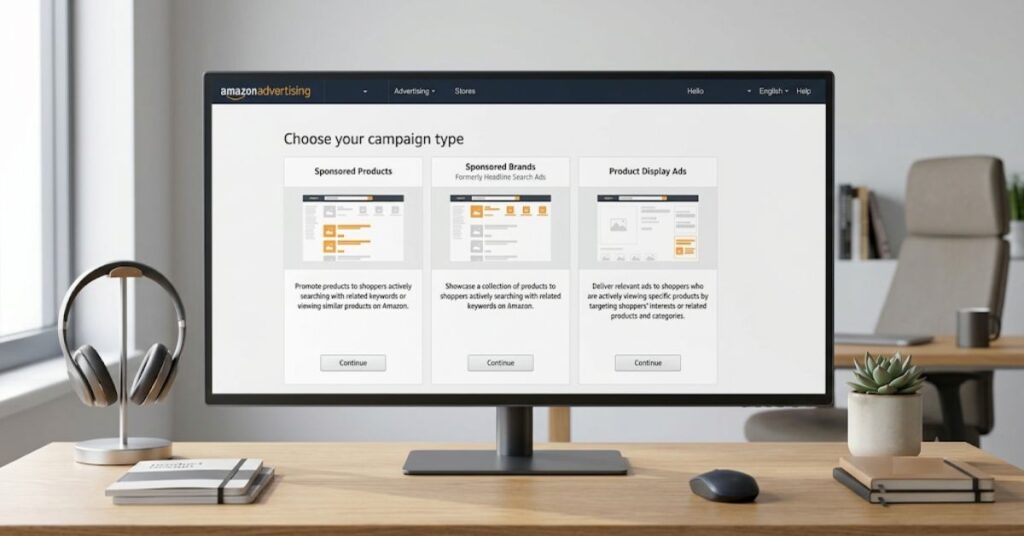
Amazon offers four main PPC advertising solutions that help sellers and brands reach shoppers at different stages of the buying journey. These include Sponsored Products, Sponsored Brands, and Sponsored Display, each designed to support different advertising objectives.
Choosing the right ad type depends on your business goals, target audience, and advertising strategy. Understanding when to use each format helps you maximize your advertising budget and build campaigns that support long-term growth.
| Advertising Solution | Where They Appear | Primary Goal |
|---|---|---|
|
Sponsored Products |
Search results and product detail pages |
Promote individual products and drive sales. |
|
Sponsored Brands |
Prominent shopping results |
Build brand awareness and showcase multiple products. |
|
Sponsored Display |
Amazon and third-party websites |
Re-engage shoppers and reach relevant audiences. |
|
Amazon DSP |
Amazon properties and third-party websites, apps, and streaming channels |
Expand audience reach through full-funnel advertising. |
What Are Amazon Sponsored Products Ads?
Amazon Sponsored Products are cost-per-click (CPC) ads that promote individual product listings to shoppers who are actively searching for similar products on Amazon. These ads can appear in shopping results and on product detail pages, making them one of the most effective ways to increase product visibility and drive sales.
Sponsored Products support both keyword targeting and product targeting, allowing sellers to reach shoppers based on relevant search terms or competing and complementary products. They are commonly used to launch new products, increase sales for existing listings, and improve visibility for high-value keywords.
What Are Amazon Sponsored Brands Ads?
Amazon Sponsored Brands are ads designed to help shoppers discover your brand, not just a single product. Available to eligible brands enrolled in Amazon Brand Registry, these ads display your brand logo, a custom headline, and multiple products to encourage shoppers to learn more about your product selection.
Sponsored Brands can appear in prominent shopping results and direct shoppers to your Amazon Store, a custom landing page, or a product detail page, depending on the campaign setup. They work best for brands that want to increase visibility, showcase a product collection, and build brand recognition while driving additional sales.
What Are Amazon Sponsored Display Ads?
Amazon Sponsored Display ads are retargeting-focused ads that help you reach shoppers based on what they’ve already viewed or shown interest in. Instead of relying only on keywords, Amazon uses shopping behavior signals like product views, past purchases, and browsing activity to decide when and where your ads should appear.
These ads can show up on Amazon product detail pages, search results, and even third-party websites and apps, helping you stay in front of potential buyers after they leave your listing. One of the most effective placements is on competitor product pages, where your ad can appear near the buy box to catch shoppers who are actively comparing options and close to making a purchase.
What Is Amazon DSP?
Although Amazon DSP is part of Amazon Advertising, it is not considered one of Amazon’s self-service PPC ad types. Instead, Amazon DSP is a demand-side platform that helps brands reach relevant audiences both on and off Amazon through display, video, and audio ads.
Unlike traditional Amazon PPC campaigns that primarily rely on keyword or product targeting, Amazon DSP focuses on audience targeting based on shopping behaviors, interests, and previous interactions. It is commonly used by established brands that want to increase brand awareness, acquire new customers, and re-engage existing shoppers through full-funnel advertising campaigns.

Improve Your TACoS and Profit Margins
We identify what’s driving high TACoS and fix it with better structure and targeting.
What Are Amazon PPC Metrics?
Running Amazon PPC campaigns without tracking performance makes it difficult to know whether your advertising is actually generating profitable results. Amazon PPC metrics help sellers measure campaign performance, identify opportunities for improvement, and make data-driven decisions instead of relying on guesswork.
Each metric tells you something different about how your campaigns are performing, from attracting clicks to generating sales and controlling advertising costs. Understanding what these metrics mean helps you optimize your campaigns, protect your profit margins, and allocate your advertising budget more effectively.
What Is ACoS on Amazon?
ACoS, or Advertising Cost of Sales, shows how much of your advertising-generated revenue is spent on ads. It’s one of the first metrics sellers look at because it helps determine whether a campaign is contributing to profit or consuming too much of the advertising budget.
If your goal is profitability, keeping ACoS within a sustainable range is more important than simply generating more sales. Some sellers intentionally accept a higher ACoS during product launches or growth campaigns to gain visibility and increase market share.
| ACoS Range | Typical Performance |
|---|---|
|
15% |
Good; controlled and efficient |
|
25% |
Average; acceptable but limits profit |
|
Above 40% |
High; overspending, profit pressure |
What Is TACoS on Amazon?
Unlike ACoS, TACoS looks beyond advertising-generated sales and measures how much of your total revenue is spent on advertising. This gives sellers a broader picture of how PPC contributes to the overall growth of the business rather than individual campaigns.
As brands mature, TACoS often declines because organic sales begin contributing a larger share of total revenue. Monitoring this trend helps sellers determine whether advertising is strengthening long-term business performance instead of simply replacing organic sales.
| TACoS Range | Typical Performance |
|---|---|
|
Under 10% |
Strong organic contribution |
|
10%-12% |
Healthy for established brands |
|
12%-20% |
Growth phase |
|
20%-25% |
Aggressive scaling |
|
Above 25% |
High ad dependence; review efficiency |
What Is ROAS on Amazon?
ROAS, or Return on Ad Spend, tells you how much revenue your campaigns generate for every advertising dollar you spend. For example, a ROAS of 5 means your ads produce five dollars in sales for every dollar invested in advertising.
While a higher ROAS generally reflects more efficient campaigns, it should never be viewed on its own. A campaign with a lower ROAS may still be profitable if it supports customer acquisition, product launches, or long-term growth.
| ROAS Range | Typical Performance |
|---|---|
|
Below 2x |
Often difficult to sustain long term. |
|
2x-4x |
Moderate performance. |
|
4x-6x |
Healthy for many campaigns. |
|
Above 6x |
Very efficient and often scalable. |
What Is CTR on Amazon?
CTR, or Click-Through Rate, measures how often shoppers click your ad after seeing it. A strong CTR usually indicates that your targeting, product image, title, and pricing are attracting attention from the right audience.
Improving CTR isn’t just about getting more clicks. It also helps sellers understand whether their ads are reaching shoppers who find their products relevant enough to engage with.
| CTR Range | Typical Performance |
|---|---|
|
Below 0.30% |
Low engagement. Review targeting and listings. |
|
0.30%-0.50% |
Average performance. |
|
0.50%-1.00% |
Strong performance for many campaigns. |
|
Above 1.00% |
Excellent engagement. |
Note: CTR benchmarks vary significantly by category, placement, and ad type.
What Is CPC on Amazon?
CPC, or Cost Per Click, represents the average amount you pay each time a shopper clicks your advertisement. Factors such as keyword competition, bid strategy, and ad relevance all influence how much each click costs.
Paying a lower CPC isn’t always the objective because inexpensive clicks have little value if they don’t convert into sales. Instead, sellers should balance CPC with conversion rate, ACoS, and overall profitability when evaluating campaign performance.
| Average CPC | Typical Performance |
|---|---|
|
Under $0.50 |
Low competition. |
|
$0.50-$1.50 |
Typical across many categories. |
|
$1.50-$3.00 |
Competitive keywords. |
|
Above $3.00 |
Highly competitive markets. Monitor profitability closely. |
Note: CPC varies widely across product categories, marketplaces, and keyword competition.
What Makes an Amazon PPC Strategy Successful?
There is no one-size-fits-all Amazon PPC strategy because every business has different products, goals, budgets, and profit margins. However, the most successful campaigns share the same core fundamentals that help sellers structure their accounts, optimize performance, and make better advertising decisions over time.
Understanding these fundamentals provides a solid foundation for building profitable campaigns instead of relying on guesswork or constant trial and error. Whether you’re launching a new product, defending your market share, or scaling an established brand, these principles can help you create a more effective and sustainable Amazon PPC strategy.
How Should You Structure Your Amazon PPC Campaigns?
A well-organized campaign structure makes it easier to manage budgets, measure performance, and optimize campaigns without affecting unrelated products. Instead of grouping everything into one campaign, separate campaigns based on their purpose so you can identify what’s working and make more informed decisions.
Many sellers begin with automatic campaigns to discover new search terms and product targets before moving high-performing keywords into manual campaigns. This approach allows you to continuously identify new opportunities while maintaining greater control over bids, budgets, and targeting as your campaigns mature.
How Should Sellers Approach Amazon PPC Keyword Targeting?
Successful keyword targeting starts with understanding how shoppers search for products like yours. Rather than choosing keywords based on assumptions, use Amazon’s search term data to identify the search queries that consistently generate clicks, conversions, and sales.
As your campaigns collect more data, focus more of your budget on keywords that deliver profitable results and reduce spending on those that don’t. Adding negative keywords is equally important because it prevents your ads from appearing in irrelevant searches, helping you improve efficiency and reduce wasted ad spend.
How Should Sellers Optimize Their Amazon PPC Bids?
Bid optimization should be based on performance data rather than guesswork or frequent adjustments. Instead of changing bids every day, allow your campaigns enough time to collect meaningful data before deciding whether to increase, decrease, or maintain your bids.
Increase bids on keywords that consistently generate profitable sales and maintain healthy advertising metrics, while lowering bids on keywords that spend without converting. Reviewing campaign performance on a regular schedule and making gradual adjustments helps improve efficiency without disrupting campaign stability.
Common Amazon PPC Mistakes Sellers Should Avoid
No matter how much you spend on Amazon PPC, common mistakes can prevent your campaigns from delivering profitable results. Understanding these mistakes helps you reduce wasted ad spend, improve campaign performance, and make better optimization decisions over time.
1. Pausing High-Performing Keywords Too Soon
Many sellers move successful search terms from automatic campaigns into manual campaigns and immediately add them as negative keywords in the original campaign. Before removing a keyword, compare the performance of both campaigns because Amazon may continue favoring the original one based on its historical performance.
2. Not Adding Negative Keywords Regularly
Allowing irrelevant search terms to continue triggering your ads wastes your advertising budget and lowers campaign efficiency. Review your search term reports regularly and add negative keywords to stop paying for clicks that are unlikely to convert.
3. Replacing Campaigns That Already Work
Some sellers pause or archive campaigns simply to create a cleaner account structure, even when those campaigns are performing well. If a campaign is consistently generating profitable sales, keep it running while testing new campaigns instead of replacing it.
4. Controlling Spend by Lowering Budgets
Reducing your daily budget can cause your ads to stop showing long before shoppers finish searching throughout the day. When you need to control advertising costs, lowering bids is often a better approach because your campaigns can continue participating in more auctions.
5. Ignoring Listing Quality
Even the best PPC strategy cannot overcome a listing that shoppers don’t want to click or buy. Improving your main image, title, pricing, and overall listing quality often increases click-through rate and conversion rate, allowing your advertising budget to work more effectively.
Amazon PPC Campaign Setup Checklist
Follow this basic checklist every week to keep your advertising account clean and profitable. Regular maintenance prevents small issues from turning into expensive structural problems.
Consistent execution ensures your brand remains competitive against aggressive sellers. Use these simple steps to audit your performance.
☐ Set a clear advertising goal.
☐ Create separate automatic and manual campaigns.
☐ Use a consistent campaign naming structure.
☐ Research keywords before launching campaigns.
☐ Optimize your listing before increasing ad spend.
☐ Choose the right bidding strategy.
☐ Set a daily budget that won’t run out too early.
☐ Review search term reports regularly.
☐ Add negative keywords to reduce wasted spend.
☐ Move winning search terms into manual campaigns.
☐ Adjust bids using enough performance data.
☐ Monitor ACoS, TACoS, ROAS, CTR, and CPC.
☐ Compare paid performance with organic rankings.
☐ Test new creatives and ad formats.
☐ Review campaigns every week or two.
☐ Monitor inventory before scaling ads.
☐ Plan campaigns around seasonal events.
☐ Keep testing new keywords and audiences.
☐ Don’t treat PPC as “set it and forget it”.
☐ Repeat this checklist regularly.
FAQs About Amazon PPC
Is Amazon PPC worth it?
Yes, Amazon PPC can be worth the investment because it helps increase product visibility, generate sales, and support organic rankings. Its success depends on having optimized listings, the right targeting, and ongoing campaign management.
How much does Amazon PPC cost?
There is no fixed cost because sellers decide how much they want to spend through daily budgets and keyword bids. Your actual advertising cost depends on competition, bid amounts, and how often shoppers click your ads.
How does Amazon PPC bidding work?
Amazon uses a real-time auction whenever a shopper searches or visits a product page where ads can appear. The winning ad is determined by a combination of the seller's bid and the ad's relevance to the shopper.
What are the different types of Amazon PPC ads?
Amazon offers Sponsored Products, Sponsored Brands, and Sponsored Display as its self-service PPC advertising options. Amazon also offers Amazon DSP, a separate demand-side platform that uses audience targeting to serve display, video, and audio ads both on and off Amazon.
What is a good ACoS on Amazon?
A good ACoS depends on your business goals and profit margins rather than one universal benchmark. Many established sellers target around 20% to 35% for profitability, while new product launches may temporarily accept higher ACoS to gain visibility.
How long does it take for Amazon PPC to work?
Most campaigns begin generating impressions and clicks shortly after they are approved, but meaningful optimization usually requires several weeks of performance data. The exact timeline depends on factors such as competition, budget, bids, and listing quality.
Can Amazon PPC improve organic rankings?
Amazon PPC does not directly improve organic rankings, but increased sales generated through advertising can strengthen your product's overall sales performance. As sales history grows, products often earn better organic visibility for relevant search terms.
Should I use automatic or manual campaigns?
Both campaign types should be part of a healthy Amazon PPC strategy because they serve different purposes. Automatic campaigns help discover new opportunities, while manual campaigns give you greater control over keywords, bids, and budgets.
How often should I optimize Amazon PPC campaigns?
Review your campaigns at least once a week, although high-spending campaigns may require more frequent monitoring. Make bid and targeting changes only after collecting enough performance data to support your decisions.
Bottom Line: Strong PPC Is Built, Not Bought
Amazon PPC can drive visibility and sales, but without proper structure, targeting, and ongoing management, it quickly turns into spend with weak return. Many sellers end up paying for clicks that don’t convert because the system rewards relevance, not random bidding.
A clear PPC framework gives you control over where your budget goes, which keywords matter, and how performance is measured over time. With the right setup, sellers can reduce wasted spend, stabilize results, and make decisions based on real campaign data instead of assumptions.
Having trouble scaling ads profitably or cleaning up inefficient campaigns? Contact our full-service Amazon agency and let our Amazon experts audit your account and build a more stable advertising strategy.
Fix Inefficient PPC Campaigns Fast
We clean up wasted spend and rebuild your campaigns for better performance.