Amazon Global Warehousing and Distribution expands to Ningbo with the network's cheapest rate at $7.91 per cubic meter. US brands sourcing from eastern China gain a closer place to hold bulky inventory before restocking FBA.
If you manufacture in eastern China and sell on Seller Central, your inventory has been taking the long way around for years. It sits at the factory, waits on a forwarder, lands in a US warehouse, and every leg burns cash before a single unit sells.
Amazon Global Warehousing and Distribution expands to Ningbo at $7.91 per cubic meter each month, which gives you somewhere to park bulk stock a short drive from your supplier instead of an ocean away. I run an Amazon agency that has managed $1.2B+ in ecommerce revenue across 400+ brands, and I have watched more Q4s go sideways from inventory sitting in the wrong place than from bad ad campaigns.
Amazon Global Warehousing and Distribution Expands to Ningbo With Its Lowest Storage Rate
Amazon posted the news under News and Announcements inside Seller Central, and the headline number is the storage price. Amazon’s own Global Warehousing and Distribution documentation lists Ningbo at $7.91 per cubic meter monthly, roughly a tenth cheaper than what Shenzhen and Shanghai charge.
Here is what the program actually does, because the name tells you almost nothing. You send bulk inventory to a warehouse inside China, Amazon holds it there, and Amazon moves it into US FBA as your sales pull it through.
Amazon handles the freight, the export paperwork, the clearance on the US side, and the final drop into fulfillment centers. You stop coordinating four vendors and start managing one workflow.
Yes, US sellers can use it. The eligibility gate is where the goods ship from, not where your company is registered, so a brand owner in Ohio with a factory in Zhejiang qualifies the same as an exporter based in Shenzhen.
The booking flow runs through Send to Amazon Warehousing and Distribution. You pick a ship-from address inside China, choose Ningbo from the distribution center list, add your SKUs and quantities, fill in the shipment details, and submit.
There is also a promotion attached. Inventory received at any Amazon GWD site through December 31, 2026, gets its first month of storage waived, with no ceiling on shipments or SKUs and nothing to sign.
Why Amazon Built the Ningbo Site for Big, Heavy Inventory
The three warehouses are not interchangeable, and that is the part most coverage glosses over. According to industry reporting on the East China launch, Amazon announced the Shanghai and Ningbo pair on July 7, 2026, building a second regional cluster on top of the original Shenzhen site.
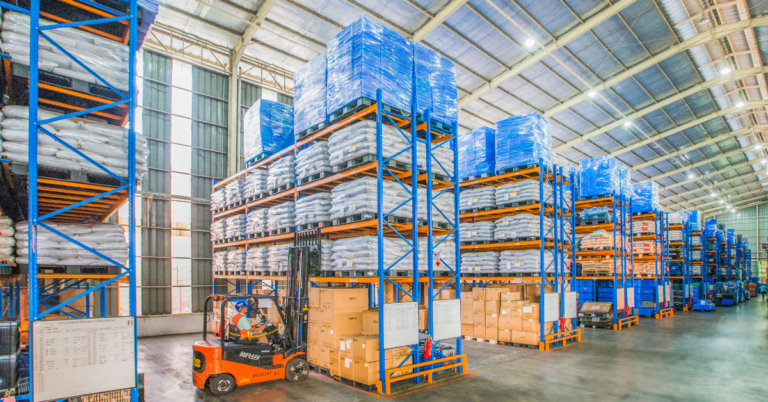
Shanghai runs close to 20,000 square meters with 574 conveyor lines, and it was designed for small items that turn over fast through Yangshan Port. Ningbo went the other direction with a 40-meter automated storage and retrieval system, and nothing else in Amazon’s Asian network stands taller.
That height is not a vanity spec. It is what lets the site hold furniture, exercise equipment, large kitchen goods, and the other bulky categories that eat cubic feet and destroy your FBA storage math.
So which warehouse should you use? Match the facility to your catalog and to where your factory sits, not to the cheapest line on the fee schedule.
| Warehouse | Opened | Built for | Storage rate |
|---|---|---|---|
|
Shenzhen |
April 2026
|
South China sourcing, general catalog
|
Baseline rate
|
|
Shanghai |
July 16, 2026
|
Small, fast-moving goods via Yangshan Port
|
Baseline rate
|
|
Ningbo |
Q3 2026
|
Large and heavy items, 40m automated racking
|
$7.91 per cubic meter
|
If your supplier sits in Zhejiang or Jiangsu and you ship oversized units, Ningbo is both the closer warehouse and the cheaper one. That combination is rare enough to be worth a serious look.
The Auto-Replenishment Tradeoff Nobody Is Warning You About
The strongest argument for Amazon GWD in Ningbo has nothing to do with the storage rate. EcomCrew’s breakdown of the Ningbo opening points out that automated replenishment out of GWD sidesteps FBA storage limits entirely, which removes the constraint that has quietly cost sellers Q4 revenue for years.
I have seen that exact failure kill a fourth quarter. A brand has the units, the units are in the country, and a restock allowance says no during the two weeks that actually mattered.
Sunny Jain, worldwide head of Fulfillment by Amazon"It's about cash flow, flexibility, and the ability to test new regions."
Now the cost you pay for that. Automated replenishment means Amazon decides how many units move west and when, and you do not get minimum or maximum unit controls to steer it.
If you need stock landing in a specific week for a Prime event or a deal submission, manual replenishment keeps that control. It also gives up the fee waivers that come attached to the automated option, so you are trading dollars for timing.
Is it cheaper than AWD? Amazon says storage runs as much as 45% below US Amazon Warehousing and Distribution, and that math holds on the storage line by itself, which is the cheapest line in the whole chain.
What I Would Calculate Before Sending Q4 Inventory to Ningbo
Ningbo sits next to serious port capacity, and that matters more than the warehouse spec sheet. Cross-border logistics reporting from China Sellers notes that Ningbo-Zhoushan handled 22.90 million TEU in the first half of 2026, an 8.8% climb that moved it past Singapore into second place worldwide.
Sailing frequency out of a port that busy is a real advantage. It shortens the window between Amazon deciding to replenish and your units actually being on the water.
The hidden costs are the ones that never show up in the announcement. Domestic trucking from your factory to the warehouse, ocean freight, duties, the transfer fee into US AWD, and the per-box handling charges all sit downstream of that $7.91.
A lower storage rate on a longer inland haul is not a saving. Run the whole route, not the one line Amazon put in the press note.
For Q4 specifically, I would treat the free first month as a test rather than a migration. Send one SKU with predictable velocity, watch how replenishment actually behaves, and keep your stockout and overstock planning running on your own forecast in the meantime.
Automated does not mean accurate. Amazon’s model reacts to your sales history, and it has no idea about the promotion you are launching in November.
If your inventory is already stuck somewhere between a boat and a fulfillment center, that is a different problem with a different fix, and our guide on Amazon receiving delays walks through the diagnostic. If you want a second set of eyes on where your storage and restock money is actually going, our team runs a free Amazon account audit with no obligation attached.