
Last Updated: July 22, 2026
Looking for the best Amazon SEO tools that could help you rank on Amazon? However, with dozens of platforms all promising better rankings and mostly overlapping features, it can be difficult to find the SEO tool that actually works for your business.
Ranking on Amazon means having to constantly optimize your keywords, listings, and backend terms, which can be hard to manage manually. That’s where an Amazon SEO tool can make a big difference by helping you track what’s working and what’s not.
So if you’re still trying to handle SEO without one, what’s stopping you? A good Amazon SEO toolkit doesn’t just save time; it helps you stop guessing and start making smarter decisions.
In this article, you’ll learn what makes SEO work on Amazon, common challenges sellers face, and how the right tool can give you a competitive edge. Our Amazon agency, which has managed 400+ brands, will also break down the top SEO tools worth trying and how to choose one that suits your needs.
Table of Contents
Want the Full SEO Playbook?
Our free toolkit covers the exact strategies we use across 400+ brands.
TL;DR - Pick Tools by Job, Not by Feature Count
The best Amazon SEO tool is the one that wins the single job you need done, not the suite with the longest feature list. Most roundups rank tools head to head, so this one segments them by use case instead.
- Match the tool to the job
- Two tools beat five
- No single tool wins everything
- Run a workflow, not subscriptions
- AI search changed what ranks
Overlapping subscriptions drain margin and still leave gaps. Pick two or three tools that cover research, optimization, and tracking, then run them on a schedule.
What Is Amazon SEO and How It Works
Did you know that SEO (Search Engine Optimization) isn’t just for Google? On Amazon, SEO means optimizing your product listings and brand store content so that your products rank higher in Amazon’s search results.
Amazon SEO focuses on making your listings more attractive to the Amazon algorithm, which decides what shows up on page one. This involves using the right keywords, improving your titles and bullet points, and making sure your images, pricing, and backend search terms are all dialed in.
Understanding the Amazon Algorithm
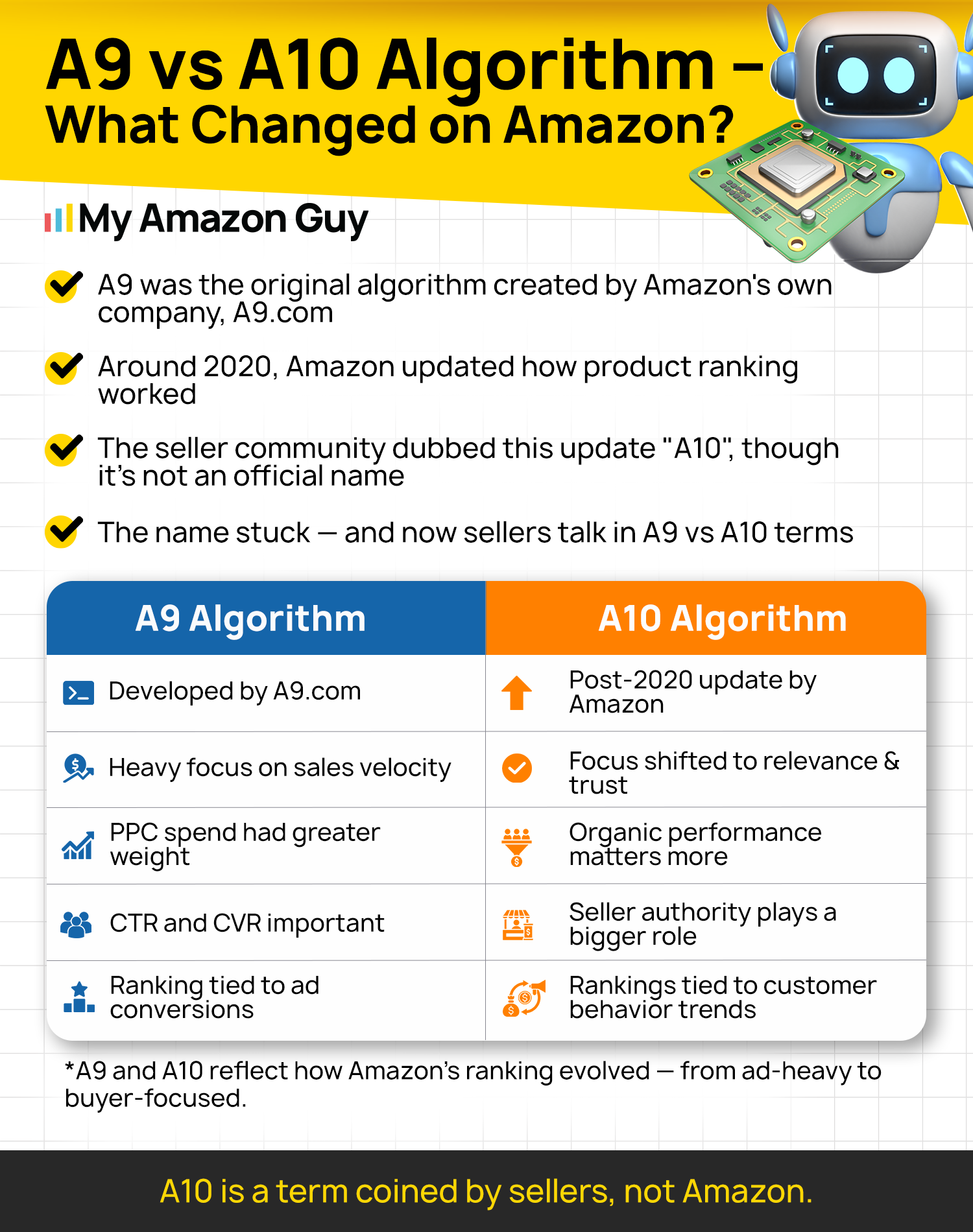
The Amazon A10 algorithm is the engine behind Amazon’s search results, and mastering Amazon SEO means learning how to work with it. It ranks listings based on how well they match what shoppers are searching for, not just who’s spending the most on ads.
A10 looks at keyword relevance, sales performance, customer satisfaction, and even external traffic from sources like social media or blogs. If you’re not aligning your SEO strategy with how the algorithm works, you’re leaving organic growth and long-term visibility on the table.
Factors That Impact Your Amazon SEO Rankings
Amazon SEO isn’t about gaming the system; it’s about aligning your listing with what the A10 algorithm values most. That’s why if you want to rank on page one, you need to understand the factors that directly influence visibility, clicks, and conversions.
Keyword Relevance
If your listing doesn’t match what shoppers are searching for, you’re invisible. Use relevant keywords in your title, bullets, and backend to stay in the game.
Click-Through Rate
Amazon tracks how often people click your listing when it shows up in search. A strong image and title that speaks to shopper intent can push your CTR higher.
Conversion Rate
Getting clicks is good, but getting sales is better. Listings that turn views into purchases consistently rank higher.
Organic Sales and Sales History
Amazon favors products that sell well without constant ad spend. A strong sales history shows that the algorithm considers your product to be worth ranking.
Price Competitiveness
Amazon compares your price against similar products in your category before deciding where to place you. Price too far above the competition and your conversion rate drops, which pulls your ranking down with it.
External Traffic
Bringing in traffic from places like social media, influencers, or blogs signals high demand. Amazon rewards this with better placement in search results.
Seller Authority
Your reputation matters. High feedback scores, low return rates, and a solid selling history all boost your authority.
Review Quality and Quantity
A high volume of recent, positive reviews builds buyer trust fast. The algorithm considers both the quality and freshness of your reviews.
Inventory and Fulfillment
Running out of stock or slow delivery times will hurt your visibility. Amazon ranks listings higher when they’re always available and ship quickly.
Attribute Completeness
AI-driven discovery rewards listings with full structured attributes like material, use case, and certifications. Complete attributes now outperform keyword-stuffed listings when the assistant decides what to recommend.
How AI Search Changed Amazon SEO in 2026
Amazon retired its Rufus chatbot on May 13, 2026, and replaced it with Alexa for Shopping, an assistant that lives directly in the main search bar. It answers product questions, compares items side by side, and pulls from a shopper’s full purchase history to personalize what they see.
That means your listing is no longer just a keyword container, since the AI reads it as a set of claims and checks them against your reviews. Complete attributes, specific bullets, and fresh reviews now decide whether the assistant recommends you at all.
Amazon SEO Challenges Sellers Face
Many Amazon sellers don’t fail because they give up; they fail because they don’t know what they’re up against. When you’re unaware of the challenges, you can’t fix what’s holding your rankings back.
By knowing exactly what problems to expect, you’ll stop guessing and start making smarter moves. Awareness leads to strategy, and that’s how you win with Amazon SEO.
Here are the most common challenges sellers face:
- Visibility Is Brutal
75% of shoppers never scroll past page one. If you’re not showing up there, your chances of making a sale drop fast. - You’re in a Keyword War
Every top-selling category has thousands of sellers chasing the same high-traffic keywords. It’s cutthroat, and being “just okay” won’t get you ranked. - The Algorithm Isn’t Transparent
Amazon’s algorithm considers multiple variables: keyword relevance, sales velocity, conversion rates, reviews, fulfillment method, you name it. And it changes often. - Guesswork Hurts Growth
Without the right data, you’re just guessing what works. And guesswork wastes time, burns ad budgets, and stalls sales. - Manual Optimization Takes Forever
If you’re doing all your keyword research, competitor analysis, and rank tracking by hand, you’re either missing opportunities or working way harder than you need to.
New to Amazon SEO?
Start with the fundamentals before you spend a dollar on tools.
The Solution: Using Amazon SEO Tools
Good thing there are Amazon SEO tools that help solve the challenges sellers face when it comes to optimizing their listings and staying competitive. These tools are designed to simplify keyword research, track performance, and keep your SEO strategy on point.
What Are the Benefits of Using Amazon SEO Tools
There are different types of Amazon SEO tools, but they all serve one purpose: to help your listings rank better and convert more. The specific features may vary, but the key benefits every good SEO tool should bring include:
- Faster Keyword Research
These tools cut down the time it takes to find high-volume, relevant keywords. You’ll get instant access to keyword data like search volume, CPC, and competition. - Data-Driven Decisions
No more guessing. Tools show you what keywords and strategies are working, so you can double down on what drives results. - Competitor Intelligence
You can reverse-engineer your competitors’ SEO strategy. See what keywords they rank for and what’s helping them convert. - Performance Tracking
Track keyword rankings and listing changes over time. This helps you measure if your SEO updates or A/B tests are paying off. - Better Efficiency
Automate repetitive tasks like keyword tracking, listing audits, or trend monitoring. Save hours every week. - Improved Organic Ranking
With better optimization and keyword targeting, your listings move up the ranks. Higher placement = more visibility = more sales. - Lower Ad Spend Over Time
Strong organic rankings reduce the need to constantly rely on paid ads. More organic traffic means lower cost per sale. - More Informed Listing Updates
Tools help you know when to update your listings based on algorithm changes, keyword shifts, or competitor moves.
Amazon SEO Tools by Use Case
Before you compare individual tools, it helps to know which job you actually need done. Buying an all-in-one suite when you only need keyword research wastes money, and so does owning three tools that all do the same thing.
Segment the market by the work you are trying to do, then pick from the tools that win that job. Here is how the top 10 tools break down.
| Use case | Best tools for the job |
|---|---|
|
Keyword research and reverse ASIN |
Jungle Scout, Data Dive, AMZScout |
|
Listing optimization and scoring |
Jungle Scout, ZonGuru, Data Dive |
|
Rank tracking and alerts |
Viral Launch, ZonGuru, Jungle Scout |
|
Market and competitor intelligence |
SmartScout, Merchant Spring |
|
Multi-marketplace analytics |
Merchant Spring, SellerLegend |
|
PPC data that informs SEO |
Sellozo, Viral Launch |
|
Product sourcing and research |
Jungle Scout, AMZScout, Seller Assistant |
Find your primary job first, then let your secondary job guide your second tool. That is how you avoid paying twice for the same feature.
Top 10 Amazon SEO Tools Amazon Agencies Recommend
With all the benefits an Amazon SEO tool brings, you might be thinking of finding one for yourself. So we made this list of the best of the best tools our Amazon agency has already tried, tested, and seen real results from.
1. Jungle Scout
Jungle Scout is a powerhouse Amazon SEO tool that goes far beyond just keyword research. It’s built to help sellers uncover profitable products, refine their listings, and boost performance with deep insights and automation tools.
One of its standout features is Keyword Scout, which provides keyword search volume, PPC bid estimates, and ranking difficulty, all in one view. Whether you’re building a new listing or improving an existing one, Jungle Scout gives you the data you need to rank higher and convert better.
2. SmartScout
SmartScout is a robust tool built for Amazon sellers who want deep, strategic insights, especially in areas most other platforms miss. Its standout feature, the Seller Map, visually shows where sellers are located in the U.S. and reveals their revenue, product catalog, and FBA usage.
It also offers powerful tools like Brand Explorer, Subcategory Data, and a unique Product Traffic Graph that maps related purchases. From competitive analysis to finding your next product line, SmartScout helps sellers make informed moves with speed and precision.
3. Data Dive
Data Dive is built for sellers and agencies that need keyword research at a level beyond standard suites. It handles bulk reverse ASIN analysis across multiple competitors at once, then clusters the results so you can see which terms actually define your category.
Its listing-building workflow turns that keyword data into prioritized title, bullet, and backend recommendations. The learning curve is steeper than most tools on this list, but for teams doing serious listing optimization, the depth is worth it.
4. AMZScout
AMZScout is a data-driven Amazon SEO tool built to help sellers uncover high-demand products and keywords based on what customers are searching for. Its keyword explorer and reverse ASIN lookup tools give you a clear view of what’s working for your competitors and how to beat them.
You can dig into product trends, track competitor stock and pricing, and build keyword-optimized listings that convert. Whether you’re launching a new product or scaling existing ones, AMZScout makes sure your strategy starts and ends with the customer.
5. Merchant Spring
Merchant Spring is a multi-marketplace analytics platform built for serious e-commerce sellers juggling multiple channels across the globe. Instead of logging into 10 different portals, you get a single dashboard that pulls performance data from Amazon, eBay, Walmart, Shopify, and even smaller, niche marketplaces.
It tracks everything from top-performing products to fulfillment issues, account health alerts, and even ad performance, helping you spot what’s working and what’s holding you back. With currency conversion baked in and tailored insights, it’s especially useful for international sellers.
6. Viral Launch
Viral Launch is an all-in-one platform built to help Amazon sellers scale with smarter data and better visibility. It covers everything from product research and competitor tracking to keyword insights and PPC performance.
Its keyword tools let you monitor rank changes daily, giving you alerts when your spot moves up or down in search results. You’ll also get insights into listing quality and keyword profitability, helping you optimize faster and launch products with more confidence.
7. Sellozo
Sellozo is mainly known for its AI-driven Amazon PPC automation, but it also helps with SEO indirectly by optimizing keyword performance through sponsored ad data. Its real-time bidding system reveals which keywords are driving conversions, allowing sellers to refine their organic keyword targeting based on proven results.
While not a traditional SEO tool, Sellozo offers valuable keyword insights that can strengthen your listing strategy. It’s best used alongside a dedicated SEO platform if organic ranking is your top priority.
8. SellerLegend
SellerLegend is built to give Amazon sellers a real-time pulse on their business with detailed analytics and customizable dashboards. It shines in inventory management and financial tracking, helping sellers forecast stock needs, monitor sales trends, and make smarter pricing decisions.
The platform also supports customer relationship insights and secure guest access, making team collaboration easier. While it packs a lot of power, the subscription cost and learning curve might be a consideration for smaller sellers or those new to such detailed analytics.
9. ZonGuru
ZonGuru stands out with its unique approach to Amazon seller tools, especially its Keyword Spotlight feature that reveals competitors’ backend search terms. This gives sellers a clear edge to optimize listings better, avoiding wasted space on duplicate keywords and making the most of Amazon’s character search term limit.
Beyond keyword research, ZonGuru offers practical tools like Review Automator for smart review requests, Sales Spy for tracking competitor sales, and IP Monitoring to protect your brand. Its global reach and gamified learning system keep sellers engaged, while the Love/Hate tool digs deep into customer feedback to help refine products based on what buyers truly want.
10. Seller Assistant
Seller Assistant is a powerful toolkit that helps Amazon sellers quickly find high-margin, best-selling products through automated price list analysis and real-time Amazon research. It offers features like profit calculators, competitor monitoring, restriction checks, and IP-Alert to keep your business safe and efficient.
With over 15 tools built specifically for wholesale, arbitrage, and dropshipping sellers, it simplifies product sourcing and saves time by centralizing everything in one platform. While it may feel overwhelming at first, Seller Assistant delivers the data and insights you need to make smarter sourcing decisions and grow your Amazon business faster.
Amazon SEO Tools Compared Side by Side
Segmenting by use case tells you which tools fit your job, but you still have to choose between the leaders. This table compares all ten picks at a glance so you can shortlist fast.
| Tool | Best for | Standout feature | Price* |
|---|---|---|---|
|
Jungle Scout
|
Growing sellers
|
Keyword Scout
|
~$49/mo
|
|
SmartScout
|
Market intelligence
|
Seller Map
|
Mid |
|
Data Dive
|
Deep keyword work
|
Bulk reverse ASIN
|
Mid to high
|
|
AMZScout |
Tight budgets
|
Trend data
|
Entry |
|
Merchant Spring
|
Multi-marketplace
|
Cross-channel dashboard
|
Mid |
|
Viral Launch
|
Rank tracking
|
Daily rank alerts
|
Mid |
|
Sellozo |
PPC-driven keywords
|
Bid automation
|
Mid |
|
SellerLegend |
Deep analytics |
Custom dashboards |
Mid to high |
|
ZonGuru |
Backend keywords
|
Keyword Spotlight
|
Mid |
|
Seller Assistant |
Sourcing and arbitrage
|
Profit calculator
|
Entry to mid
|
Ready to Rank Higher?
Get a clear picture of your SEO gaps and what to fix first.
How to Choose the Best Amazon SEO Tool
But with so many options on the market, it can be tough to figure out which Amazon SEO tool is worth your time and money. The right tool depends on your business model, goals, and how deep you want to go with keyword data and listing optimization.
Key Features to Look For in an Amazon SEO Tool
Although every Amazon seller has different goals and workflows, there are some must-have features that every SEO tool should offer. These core features make sure the tool actually helps you grow, not just collect data.
So here are the key features to look for when choosing your Amazon SEO software:
Reverse ASIN Lookup
This feature lets you plug in a competitor’s ASIN and see which keywords they’re ranking for. It’s a quick way to uncover high-performing keywords you may not have thought of and gives you a strategic edge in listing optimization.
Backend Search Term Optimization
Good SEO tools help you find and optimize backend keywords, those hidden fields that still impact ranking but aren’t visible to customers. This helps boost discoverability without cluttering your product title or bullet points.
Sales and Performance Analytics
You need real-time data on sales trends, keyword performance, and conversion rates to make smarter decisions. Tools with strong analytics features can help you pinpoint what’s working and what’s not, so you don’t waste time guessing.
Competitor Analysis
Being able to track your competitors’ keyword strategies, pricing, and offer changes helps you adjust your own listings. It’s essential for staying relevant and identifying gaps in your category.
AI-Driven Data Visualization
Some tools use AI to make sense of huge datasets and deliver clear, visual reports. This simplifies decision-making by showing keyword trends and performance shifts in a way that’s easy to understand at a glance.
Seller Central Integration
A tool that connects directly to your Amazon Seller Central account makes your workflow smoother and your data more accurate. From syncing listings to automating keyword tracking, this integration is non-negotiable if you want speed and reliability.
Practical Tips for Choosing an Amazon SEO Tool
Aside from the top SEO tools we’ve covered, there are plenty more options out there for Amazon sellers, so picking the right one can feel overwhelming. Not every tool will match your business goals or be worth the cost.
To make a smart choice and avoid wasting time or money, follow these practical tips:
- List your goals first, then create a checklist to see if the Amazon SEO tool you’re considering meets those goals with the features it offers.
- Most Amazon SEO platforms offer a free trial; use it. Testing the tool hands-on gives you a feel for whether it fits your workflow before committing long-term.
- If the tool’s user experience is clunky or overwhelming, it’s not helping. The right toolkit should simplify your SEO tasks, not add more confusion.
- Read real reviews from other sellers to find out if the tool actually delivers on its promises or just looks good on a landing page.
- Don’t overlook customer support. Even experienced sellers need help sometimes, and a responsive support team can make or break your experience when issues pop up.
- Stick to tools that match your budget. Overspending on a toolkit, even a good one, can eat into your margins fast, especially if you’re just getting started.
How to Actually Run Your Amazon SEO Workflow
Tools give you data, but data alone does not rank anything. What moves a listing is running that data through the same sequence every time, in the order Amazon actually weighs it.
The old advice is that you need sales to get sales, and most sellers read that as a reason to pour money into ads. The problem is that ad spend on keywords your listing cannot rank for organically is money you never get back.
Here is the sequence our team runs on client accounts:
- Pull Competitor Keywords
Run the top-ranked ASINs in your category through a reverse ASIN tool, then add three to five more competitors so you can filter for terms multiple rivals rank for. - Filter Down to What Fits
Strip out branded terms, then keep the terms that describe what your product actually is, how it works, or what is in it. - Build a Master Keyword List
Sort by search volume. This one list feeds your title, bullets, backend terms, and ad campaigns. - Place Keywords By Weight
Your highest relevancy terms go in the first few words of your title, secondary terms go in bullets, and the rest go in backend search terms. - Fill the Space Most Sellers Skip
Add alt text to every brand story and A+ image, and use modules with real crawlable text instead of words baked into an image. - Align Your Ads to the Same List
Paid sales on terms you can rank for organically build the velocity that lifts your position on those same terms. - Check Amazon’s Own Data
Pull your Search Query Performance report, since it beats any third-party estimate. - Track Your Keyword Counts
Compare your indexed and ranked totals against competitors, then repeat the cycle monthly.
One thing that undoes all of it: if your main image does not earn the click, none of these rankings convert. Click-through rate multiplied by conversion rate is what ultimately determines your organic position.
MAG runs this as a four-phase system covering search term optimization, copy and keyword updates, strike zone keywords, and search query report analysis. The full breakdown lives in our Amazon SEO guide.
FAQs About Amazon SEO Tools
What are Amazon SEO tools?
Amazon SEO tools help sellers find and target the best keywords, analyze competitors, and optimize listings to rank higher in Amazon search results.
Can you do SEO on Amazon?
Yes, Amazon SEO focuses on optimizing Amazon product listings using relevant keywords, clear images, competitive pricing, and strong conversion data to improve visibility and sales.
Which is the best Amazon SEO tool?
There's no one-size-fits-all answer. The best tool depends on your specific needs, but the ones we've covered in this post are solid options, especially Jungle Scout and SmartScout, which we recommend for most sellers.
Do I need more than one Amazon SEO tool?
Usually yes, since no single tool covers keyword research, market intelligence, and multi-channel analytics well. Most sellers run two tools that together cover their top jobs.
Which Amazon SEO tool has the most accurate data?
Jungle Scout leads on sales-estimate accuracy at 84 to 86 percent, which is reliable enough for product and keyword decisions. Sanity-check search volume across two tools before big decisions.
How do I optimize my listing for Amazon's AI search?
Complete every product attribute, write informational bullets and A+ content, and keep reviews fresh and recent. AI discovery rewards completeness and context over keyword density.
How much do Amazon SEO tools cost?
Costs range from entry-level plans around $49 per month to enterprise suites that run higher. Pricing changes often, so confirm current rates before you buy.
Win the Ranking Game Without Losing Your Mind
Climbing the ranks on Amazon means juggling keyword research, listing optimization, and constant tracking, on top of everything else. That’s why having a solid SEO toolkit in your corner can take the pressure off and help you handle the heavy lifting with confidence.
Of course, with so many tools out there, choosing the right one can feel overwhelming and time-consuming. Hopefully, this guide gave you clarity so you can cut through the noise and pick a tool that works for your business.
Are you having trouble improving your rankings even after using the best Amazon SEO tools? Contact our full-service Amazon agency today; we’ll help you figure out what’s holding you back and get your Amazon listings performing as they should.
Paying for Tools You Don't Need?
One conversation can save you hundreds a month in overlapping subscriptions.