
The lean Amazon PPC launch strategy that turns five keywords into a page-one rank while everyone else burns cash on fifty. Your new product does not need forty keywords on day one; it needs five, and it needs them chosen with intention.
Most sellers launch backwards. They stuff an auto campaign with every term they can think of, watch ACoS climb past 100%, and cannot tell which keyword did anything.
We have managed $1.2B+ in ecommerce revenue across 400+ brands, and the fastest launches we run start narrow, not wide. A brand-new ASIN has zero conversion history, so every keyword you add spreads your budget and your signal thinner, while five keywords each in their own campaign give Amazon a strong relevance signal and give you a scoreboard you can act on.
In this guide, our Amazon agency will show you how to pick your five launch keywords and build a clean campaign structure around them. We will cover the selection filter, the exact build steps, the budget and bids, the KPIs that prove a keyword is working, and when to graduate to a full account.
Table of Contents
Not Sure Your Keywords Convert?
We will check your account and show you which terms actually earn rank.
TL;DR - The 5-Keyword Manual Strategy for a Rapid Amazon Launch
The fastest Amazon PPC launch uses five hand-picked keywords, each in its own campaign, not a bloated list of fifty. Most guides push you to spend wide, so this one leads with the disciplined opposite.
- Launch with five keywords, not fifty
- One keyword per manual campaign
- Exact match keeps spend focused
- Expect high ACoS early
- Graduate only on proven winners
Keyword dumping dilutes your budget and buries your data. Pick five relevant terms, build clean campaigns, and your ASIN ranks while others guess.
What the 5-Keyword Manual Launch Strategy Actually Is
The method is simple. You choose five keywords that describe your product with precision, put each one in its own manual campaign, and let the data breathe.
What Is the 5-Keyword Manual Strategy for Amazon Launch?
It is a disciplined Amazon PPC launch campaign built on five hand-picked keywords instead of a giant list. Each keyword gets its own campaign, its own budget, and its own bid, so nothing hides behind an average.
This is the opposite of the keyword dump. You trade broad coverage for clean signal, which is exactly what a new ASIN needs to earn rank.
Why Do New Products Need Fewer Keywords, Not More?
A new listing has no track record, so Amazon has nothing to judge it on yet. When you concentrate spend on five relevant terms, you drive conversions on those terms fast, and conversions are what teach the algorithm your product belongs on page one.
Spread the same budget across forty terms, and none of them get enough clicks to prove anything. You end up paying for exposure without earning ranking.
Why Does Keyword Dumping Fail on a Brand-New ASIN?
Keyword dumping dilutes both your budget and your data. Twenty terms splitting one budget means each keyword gets a trickle of traffic, so you cannot tell a winner from a loser.
Amazon’s own guidance recommends a minimum of 25 keywords per campaign for a mature strategy. That advice fits an established listing, not a launch, and confusing the two is why so many launches stall.
The Strategy Behind Picking Exactly 5 Keywords
Five is not a magic number; it is a discipline. It forces you to choose the terms that matter most and ignore the ones that only look good in a search volume tool.
How Do I Pick the Right 5 Keywords for a Product Launch?
Start with the phrases a real buyer types when they are ready to purchase your exact product. Skip the broad category head terms and skip the vanity keywords with huge volume and weak intent.
Your five should be the terms most likely to convert, because early conversions drive early rank. Relevance beats volume every single time at launch.
The Relevance-Over-Volume Selection Filter
Run every candidate keyword through three questions before it makes your list of five.
- Does this describe my exact product
- Would a ready buyer type this
- Can I realistically win it early
If a keyword fails any of the three, cut it. A tight, relevant list converts far better than a big, hopeful one.
How the 5-Keyword Count Changes as You Grow Past Launch
Five is a launch number, not a forever number. Once your first terms prove out, you expand deliberately, adding harvested winners rather than guesses.
Here is how the count scales as your listing matures.
| Stage | Keyword count | Primary goal |
|---|---|---|
|
Launch (weeks 1-4) |
5 exact terms |
Earn rank and clean data |
|
Early growth (weeks 5-10) |
10 to 15 terms |
Expand proven winners |
|
Scaling (week 10+) |
25+ terms |
Capture market share |
Should I Use Auto or Manual Campaigns to Launch a New ASIN?
Use manual campaigns to launch. Manual gives you control over exactly which keyword gets your budget, which is the whole point of a lean launch.
Auto campaigns have a place for discovery later, but at launch they hand your budget to Amazon’s guesses. You want intention, not automation, when the data is this thin.
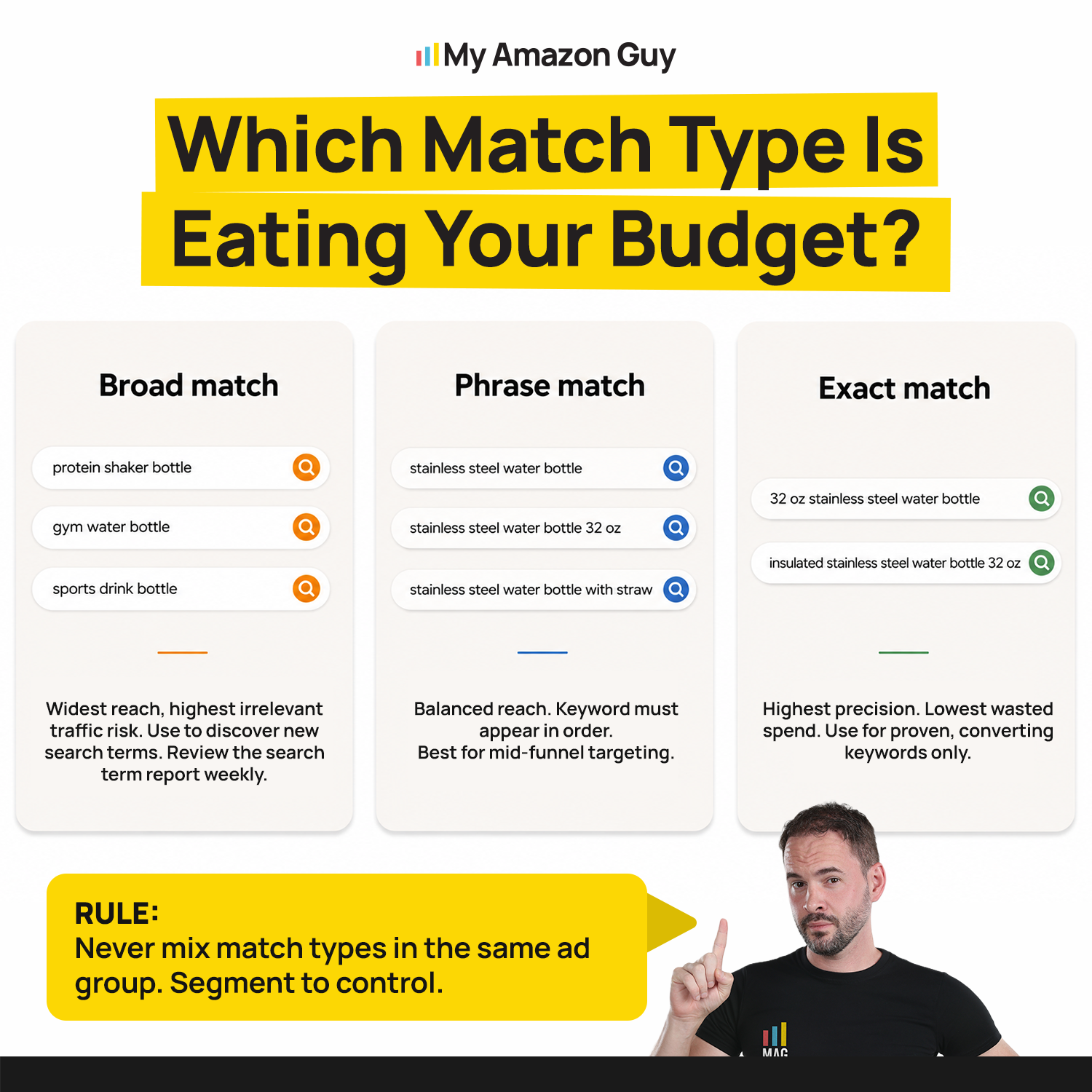
What Match Type Should I Use for a Launch Campaign?
Lead with exact match for your five launch keywords. Exact match is the most precise option and best suited to driving conversions on terms you have already researched.
Exact keeps your spend locked to the searches that matter. You add phrase and broad match later, once you know which terms convert.
Launch With Five, Not Fifty
Let our experts structure your launch campaigns the disciplined way.
How to Build Your 5 Amazon PPC Launch Campaigns Step by Step
This is where the strategy becomes real. Follow these steps in order, and you will have a clean launch structure in under an hour.
How Do I Structure a Single Keyword Campaign on Amazon?
One campaign, one ad group, one keyword. This structure gives you campaign-level budget and placement control for each keyword, so no single term drags down another’s performance.
Name each campaign clearly so you can read your account at a glance. A messy account is a slow account.
What Bid Should I Set on a Brand-New Keyword?
Start with Amazon’s suggested bid, then adjust from there based on performance. At launch, you can bid roughly 10% to 25% above suggested to win placement, because visibility now buys you the conversion data you need.
Watch the first week, then tune. Never set a bid and forget it.
How Much Budget Do I Need to Launch With 5 Keywords?
Enough that each of your five campaigns can earn 5 to 10 clicks per day. A daily cap of roughly $10 to $20 per campaign is plenty, since five focused campaigns stretch further than one bloated one.
Start at the low end and scale the winners. You do not need a big budget; you need a disciplined one.
The Launch Campaign Build Template (Naming, Bids, Placements)
Copy this template for each of your five keywords.
| Setting | What to use |
|---|---|
|
Structure |
1 campaign, 1 ad group, 1 keyword |
|
Match type
|
Exact |
|
Bid |
Suggested bid, adjust weekly
|
|
Budget |
Small daily cap per campaign
|
|
Naming |
Product-Keyword-Exact
|
What Are the Most Common Amazon PPC Execution Mistakes That Kill a Launch?
Avoid these five, and you avoid most launch disasters.
- Launching before the listing is finished
- Mixing match types in one campaign
- Setting one generic default bid
- Pausing ads when inventory dips
- Adding keywords before the first five prove out
A launch on a half-built listing wastes every click, since early traffic on a weak page generates the worst conversion data.
How to Measure a Launch Campaign That’s Only 5 Keywords Wide
The whole reason you launched narrow is so you can read the data. Here is how to read it.
How Do I Know if a Launch Keyword Is Working?
Watch conversions and rank, not just clicks. A keyword is working when it holds a conversion rate near or above 10% and your organic position for that term climbs week over week.
Dozens of clicks with no conversions mean the keyword or the listing is off. Conversions with rising rank mean you found a winner.
What ACoS Is Normal During an Amazon Product Launch?
Expect a high ACoS at launch, often 50% to 100% or more, and do not panic. During the launch phase, the goal is data and rank, not immediate profit, so an ACoS well above your long-term target is normal.
You tighten efficiency once rank is established. Chasing low ACoS on day one starves the launch.
How Long Before I Add More Keywords After Launch?
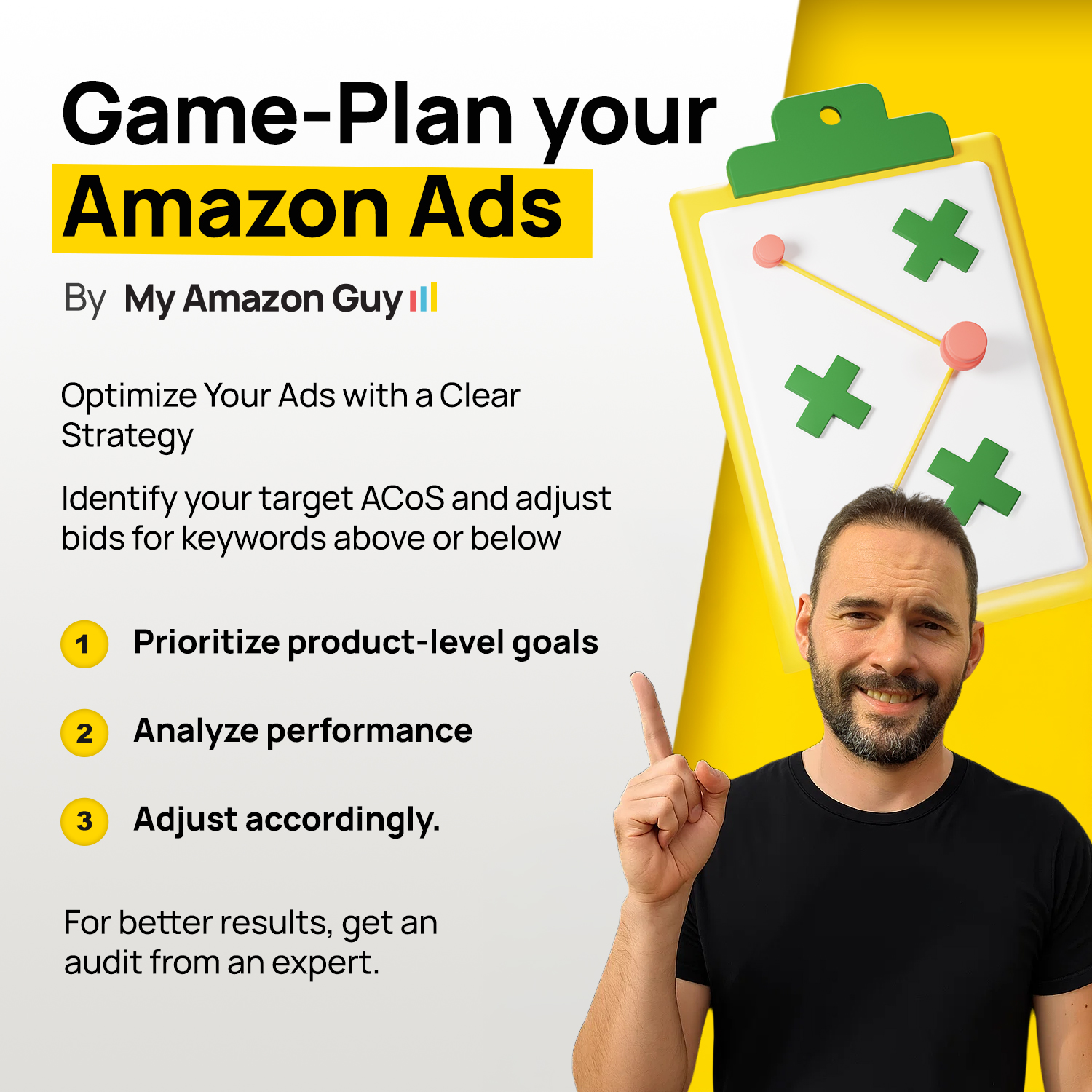
Give your five keywords about two weeks of data before you touch anything. Amazon suggests roughly two weeks of runtime before you have enough insight to optimize.
Add terms only after your first five show clear signals. Patience protects your data.
Amazon KPIs to Track and the Reporting Cadence
Your KPIs are what tell you when a launch keyword has earned its place and when it is time to expand. Watch the right numbers, and they will signal exactly when to add more terms, harvest winners, or graduate to a fuller structure.
Track these five numbers on a weekly cadence.
- Conversions per keyword
- ACoS per keyword
- Organic rank per keyword
- Click-through rate
- Total ad-attributed sales
Check weekly, not hourly. Daily fiddling on thin data creates noise, not insight.
Tools That Read Amazon PPC Launch Data Cleanly
Your Search Term Report is the free tool that matters most. It shows exactly how shoppers found you, so you can harvest winners into new campaigns.
Pair it with a bulk file for fast edits once you scale. Most launches need nothing more than these two at the start.
When to Graduate From 5 Keywords to a Full Structure
Five keywords is a starting line, not a finish line. Graduation is earned with data, not a calendar date.
When Do I Graduate From 5 Keywords to a Full Campaign?
Graduate when your launch keywords convert consistently and hold organic rank. That usually lands somewhere around week three or four, once the algorithm trusts your listing.
Then you expand into a fuller structure, adding harvested terms and new match types. You build on proof, not hope.
Should I Run Amazon Sponsored Brands During a Launch?
Yes, once your Sponsored Products base is stable. Sponsored Brands adds top-of-search presence and brand storytelling, and brand owners who use Sponsored Brands saw 23% higher sales after 13 weeks.
It builds trust even before you have reviews. Layer it on top; do not lead with it.
Do Single Keyword Amazon Campaigns Still Work In 2026?
They still work for launch and ranking, which is exactly what this method uses them for. They give you the maximum control over bids and placements for your most important terms.
They become unmanageable across a whole catalog, so you do not run your entire account this way. You use them where control matters most, at launch.
Harvesting Proven Terms Into a Scaled Structure
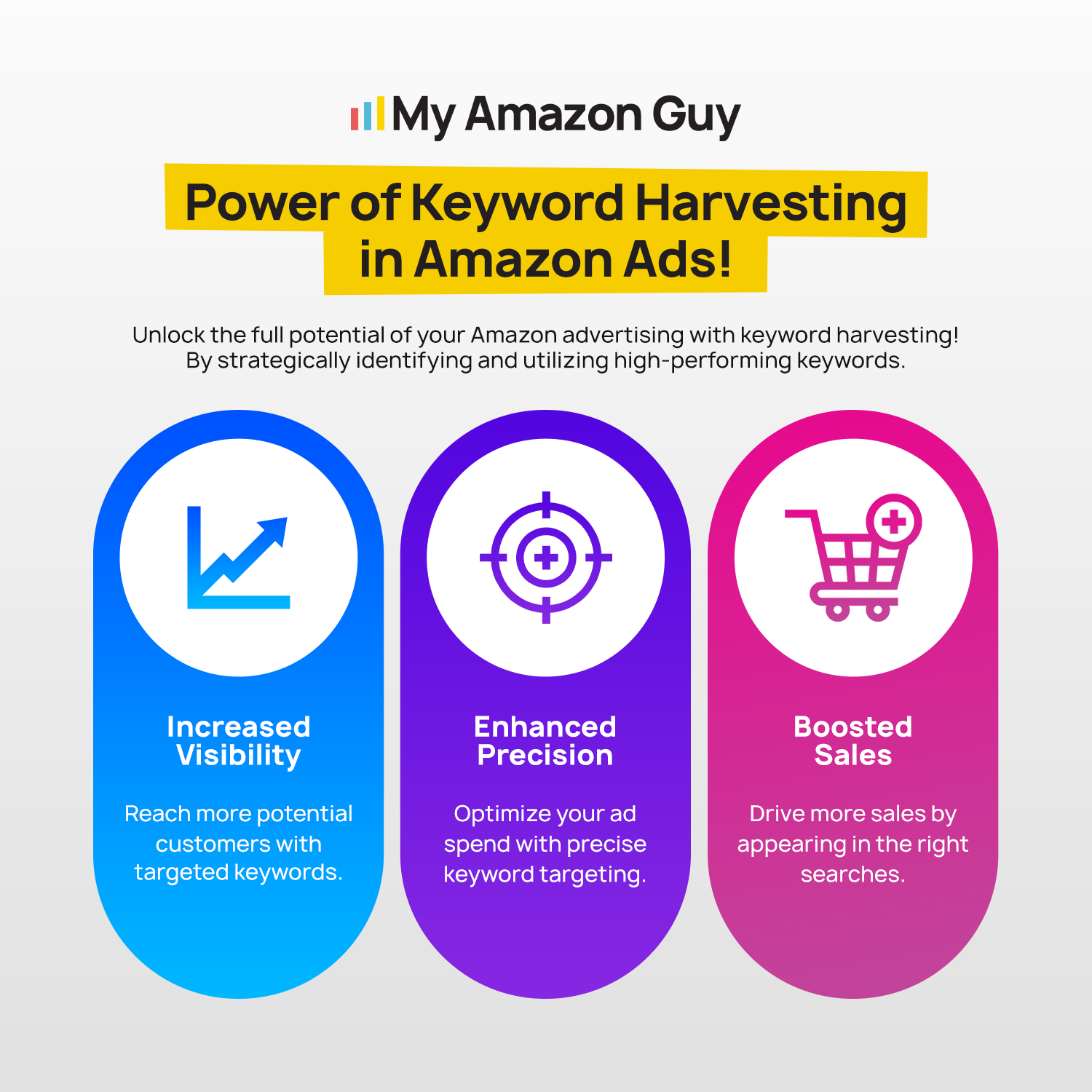
Keyword harvesting is moving search terms that convert into their own targeted campaigns. Your Search Term Report shows the winners, and you promote them one by one.
This is how five keywords become a real account. Every new campaign is built on a term that already earned its place.
Emerging Launch Tactics (Sponsored Brands Video, Broad-Match Discovery)
Sponsored Brands Video has become one of the highest-leverage launch formats in 2026, carrying a large share of spend on top-performing launches. Once your five keywords are stable, a broad-match discovery campaign helps surface new terms you never guessed.
These are additions, not replacements. The disciplined five-keyword base still comes first.
FAQs About the 5-Keyword Amazon PPC Launch Strategy
How many keywords should I launch a new Amazon product with?
Five is the sweet spot for most launches. Enough to cover your product's core buying terms, few enough to keep your data and budget clean.
How do I launch an Amazon product on a small ad budget?
Concentrate everything on five exact-match keywords in separate campaigns. A small budget goes far when it is not spread across dozens of unproven terms.
What's the difference between launch PPC and scaling PPC?
Launch PPC chases rank and clean data with a narrow structure. Scaling PPC chases efficiency and market share with a wide, harvested one.
How do I read Amazon PPC launch data without it being diluted?
Keep one keyword per campaign so no term hides in an average. Isolated campaigns give you a clean read on every keyword.
Should I use auto campaigns at all during launch?
Not as your primary launch engine. Add a small auto campaign later for discovery, but let your five manual campaigns lead.
Five Keywords Beat Fifty Every Time
The sellers who win Amazon launches are not the ones who spend the most. They are the ones who launch with five relevant keywords, keep each one in its own campaign, and read data they can actually trust.
Start narrow with exact match, bid at suggested, and stay patient while your ACoS runs high early. Once those five keywords convert and hold rank, you graduate to a fuller structure built on proven winners instead of guesses.
Not sure if your Amazon PPC launch structure is leaking budget? Contact our full-service Amazon agency and let our team check your account to show you exactly where the waste is.
Stop Burning Your Launch Budget
Let our team build a lean launch structure that actually ranks.