
You’ve raised bids, added keywords, and launched more campaigns, yet CPCs keep climbing while sales stay flat. The problem usually isn’t your bids but your own campaigns fighting over the same shoppers.
The right Amazon PPC structure to stop cannibalization gives every valuable search term one owner campaign and one winning bid. Without it, Amazon serves whichever copy of a keyword carries the highest bid, so you keep paying top dollar for clicks you already own.
We’ve managed $1.4B+ in ecommerce revenue, and this leak shows up in nearly every large account we take over. The fix is a repeatable system, and a few simple KPIs prove it works.
In this guide, our Amazon agency will show you how to assign query ownership, run match types as traffic lanes, and audit overlap step by step. We will also cover the metrics that prove the fix, advanced moves for accounts with hundreds of campaigns, and a masterclass video to watch before you book a strategy call.
Table of Contents
Get a free war room check of your Amazon budgets, stock, and backups before the event starts.
TL;DR - Amazon PPC Structure to Stop Cannibalization
Overlapping campaigns quietly raise your CPCs and starve the keywords that actually sell. Here’s how our Amazon agency fixes it in large accounts.
- Give every query one owner
- Bid exact highest, broad lowest
- Cap campaigns at five keywords
- Split branded and generic budgets
- Duplicate winners, never negate them
Most sellers try to fix rising CPCs by cutting bids or pausing campaigns. This guide shows you how to fix the structure instead, then prove it worked with clear KPIs.
Stop Making These Keyword Negation Mistakes on Amazon Ads
Fundamentals of Amazon PPC Cannibalization
Before you restructure anything, you need to know what’s leaking and where. These fundamentals explain how overlap costs you money even while every campaign still reports sales.
What Is Budget Cannibalization in Amazon PPC?
Budget cannibalization happens when one part of your account spends money another part needs to do its job. A branded term drains a shared budget, or a broad copy of a keyword outbids the exact copy you built to control costs.
Do My Amazon Campaigns Really Bid Against Each Other?
Not really, because Amazon’s Sponsored Products targeting guide confirms that adding several match types to one keyword won’t make you bid against yourself. The catch is that Amazon’s match type rules let the copy with the top bid serve the search, so a $1.85 broad bid can beat your $1.20 exact bid and cost you up to $650 more over 1,000 clicks.
What Are the Three Types of Cannibalization in Large Amazon Accounts?
Big accounts usually leak in three different ways at the same time. Each type has its own symptom and its own fix, so name it before you touch a single bid.
1. Bid Cannibalization
This is the wrong copy of a keyword winning the click at a higher price. It usually happens when different managers set bids on auto, broad, and exact months apart.
2. Budget Cannibalization
This is one keyword or ASIN eating the budget other targets need. Amazon’s own targeting guide describes a case where the smallest pack size took nearly every impression until the sizes were split into separate campaigns.
3. Data Cannibalization
This is one search term’s results spread across so many campaigns that nobody can judge it. Twelve orders split across four campaigns look like four weak keywords instead of one strong winner.
Why Does Amazon PPC Cannibalization Get Worse as Campaigns Grow?
Every new campaign gives a search term one more place to land and one more bid in play. At 20 campaigns, you can spot overlap by eye, but at 500 you need a report just to see it.
What Do Most Amazon Sellers Get Wrong About Cannibalization?
The biggest myth is that a keyword moved to exact must be negated in auto right away. If that term already makes money in auto or broad, blocking it there just cuts off a working stream of sales.
The Query Ownership Framework for Amazon PPC Campaign Structure
The fix for cannibalization isn’t zero overlap but overlap you assign on purpose. This framework decides which campaign wins each query, so every other copy plays backup.
What Does It Mean for an Amazon Campaign to Own a Search Term?
An owner campaign holds the top bid for a search term and has its own budget to back it. Backup copies bid lower, so they only win when the owner runs out of budget or sits out the auction.
How Should Amazon PPC Match Types Work as Traffic Lanes?
Treat Amazon PPC match types as highway lanes, each with its own speed limit and job. Amazon’s Sponsored Products targeting guide backs this order by recommending the highest bid on exact and the lowest on broad.
| Table Header | Table Header | Table Header |
|---|---|---|
|
Content |
Content |
Content |
|
Content |
Content |
Content |
|
Content |
Content |
Content |
|
Content |
Content |
Content |
|
Content |
Content |
Content |
When Should I Isolate, Duplicate, or Negate an Amazon Keyword?
Mixing up these three moves is how sellers accidentally kill their best keywords. Use this table for any search term that shows up in more than one campaign.
| Table Header | Table Header | Table Header |
|---|---|---|
|
Content |
Content |
Content |
|
Content |
Content |
Content |
|
Content |
Content |
Content |
|
Content |
Content |
Content |
|
Content |
Content |
Content |
How Did This Work for a 24-SKU Amazon Entertainment Brand?
Our team grouped campaigns by seed keyword with no duplicates and moved high-ACoS terms into exact match. Ad sales rose 73%, and the brand grew 29% year over year, while ACoS still improved by 2 points, according to our entertainment brand case study.
How Does Amazon PPC Strategy Change by Growth Stage?
At launch, keep about five tight keywords per hero ASIN, as our 5-keyword Amazon PPC launch strategy explains. Once you’re managing hundreds of ASINs, you need an ownership map, a review rhythm, and bulk edits.
What Are Good Targets for a Clean Amazon PPC Structure?
Keep manual campaigns to five keywords and one ad group, which is the 1-1-5 setup in our Amazon PPC optimization guide. Cap testing at 10 to 15% of your budget, a limit also suggested in Amazon Ads expert advice on common mistakes.
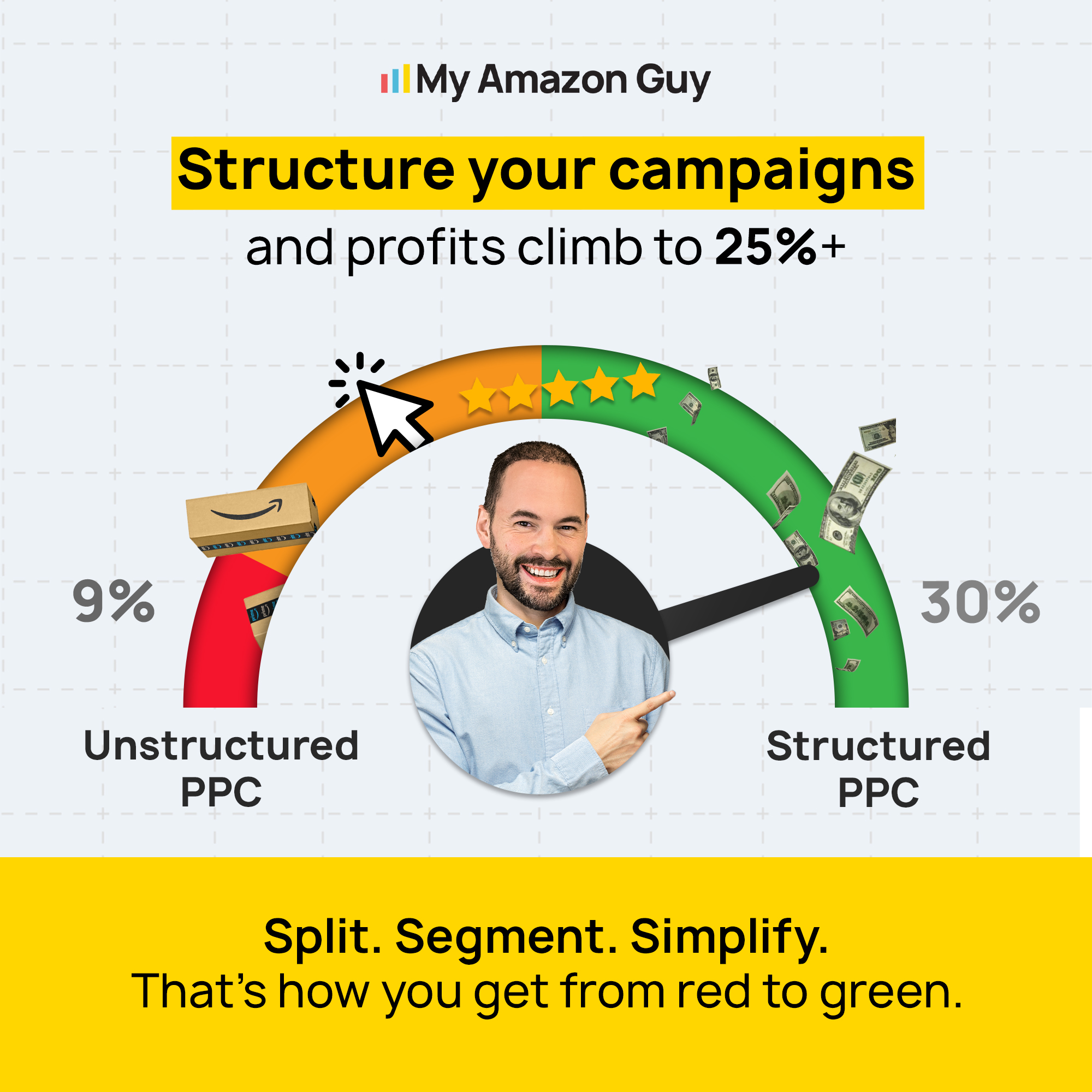
Structure Your Campaigns and Profits Climb to 25%+
Let’s map your budget pacing, hero ASIN stock, and FBM backups together before the busiest five days of your year.
How to Audit and Fix Amazon Keyword Cannibalization: Step by Step
This is the exact sequence I’d run on any Seller Central account with hundreds of campaigns. Work through it in order, because each step depends on the one before it.
Step 1: Find Search Terms Served by More Than One Campaign
Export your Sponsored Products search term report and build a pivot that counts how many campaigns served each term. Any term showing up in two or more campaigns with real spend goes on your overlap list.
Step 2: Separate Intentional Overlap From Accidental Collisions
Intentional overlap has a clear owner campaign with backups bidding below it. Accidental collisions have no owner, bids within cents of each other, or a broad copy outbidding your exact copy.
Step 3: Set Bid Priority So the Right Copy Wins
Give the owner campaign the top bid and keep every backup a clear step below it. Compare effective bids rather than base bids, since a top-of-search placement boost can lift a backup past your owner.
Step 4: Wall Off Keywords and ASINs That Drain Shared Budgets
Give any keyword or ASIN that keeps eating a shared budget its own campaign and its own budget. Watch it closely, because Amazon’s daily budgeting policy lets a campaign spend up to double its daily budget on a busy day.
Step 5: Split Branded and Non-Branded Traffic
Move your brand terms into dedicated defense campaigns and add them as negatives in your generic campaigns. In his breakdown of branded PPC and organic sales, our Amazon agency explains why brands under about 2,500 monthly branded searches still need that defense.
Are You Cannibalizing Organic With Branded PPC Campaigns?
Step 6: Add Negatives Without Blocking Your Own Winners
Put negatives in your auto, broad, and phrase discovery lanes, and leave converting terms alone. Amazon’s Sponsored Products targeting guide suggests waiting for at least 20 clicks before you judge a term.
Step 7: Name and Group Campaigns So Overlap Stays Visible
Put the lane and role in every campaign name, like PERF-SP-Tumbler-EXACT-OWNER, so anyone can spot the owner at a glance. Group campaigns into portfolios by product line, and set caps carefully, since Amazon’s portfolio budget rules pause every campaign inside once a cap is hit.
Amazon PPC Restructure Mistakes That Undo Your Progress
Most failed restructures break on the same few mistakes, and none of them are hard to avoid. Check your plan against this list before you change a single bid.
- Shutting off old campaigns and losing history
- Negating winners in auto or broad
- Building more campaigns than budget allows
- Using one ACoS target for every lane
- Capping portfolios that hold profit lanes
- Changing bids, budgets, and negatives together
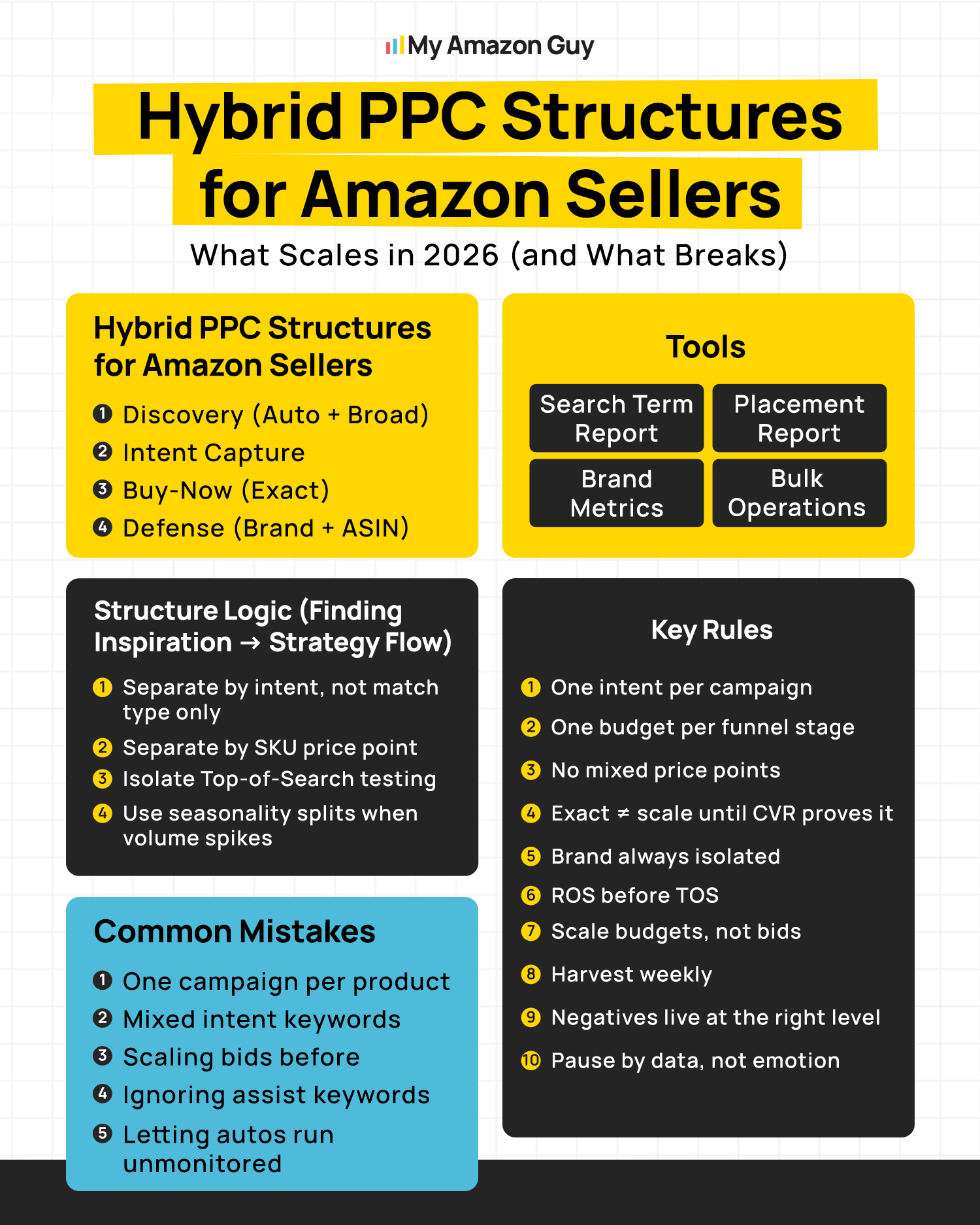
Hybrid PPC Structures for Amazon Sellers
How to Measure Amazon PPC Cannibalization and Prove the Fix Worked
A restructure is only finished when the numbers confirm it. Record a baseline before you change anything, so you have something real to beat.
Which Amazon PPC KPIs Show Cannibalization Is Shrinking?
These numbers tell you whether ownership is holding and whether budget is flowing to the right lanes. A healthy TACoS for most brands sits between 8% and 12%, according to our Amazon PPC optimization guide.
- Overlap spend share falling
- Owners winning most clicks
- Fewer capped exact campaigns
- TACoS inside 8 to 12%
- New-to-brand orders rising
How Often Should I Review Overlap in My Amazon Ad Campaigns?
Overlap creeps back in every time someone launches a new campaign, so review it on a fixed rhythm. This schedule keeps the work light without letting collisions pile up.
- Weekly, check discovery negatives
- Every two weeks, rerun the pivot
- Monthly, review budgets and caps
- Quarterly, re-test old negatives
Which Amazon Ads Reports and Tools Measure Overlap?
Your search term report and bulk files cover most of the work, along with a shared spreadsheet. Add Amazon’s Search Term Impression Share report for exposure on owned terms and Search Query Performance to see where ads overlap your organic sales.
Advanced Amazon PPC Tactics for Accounts With Hundreds of Campaigns
Once ownership is in place, the remaining gains come from the edges of your Amazon account. These tactics assume your fundamentals already hold, so save them until the overlap audit is done.
1. Rebuild Large Amazon Accounts Beside the Old Structure
Build your new owner campaigns next to the old ones and shift budget over in stages, so you never throw away years of performance history. At 10,000 campaigns, bulk sheets and macros are the only practical way to make those changes without breaking the account.
2. Give Amazon Sponsored Brands Its Own Lane and Budget
Sponsored Brands matches keywords by meaning rather than exact wording, as Amazon’s keyword targeting guide explains, so it can reach queries your Sponsored Products campaigns already own. Give it a separate budget and its own branded and generic split, so it can’t quietly raid your Sponsored Products lanes.
3. Use Amazon Marketing Cloud Audiences to Reach New Shoppers
When your ads start eating organic sales, build new-to-brand audiences in Amazon Marketing Cloud and aim them only at category and competitor targets. This keeps your spend on shoppers who don’t know your brand yet, as shown in our Amazon organic sales audit walkthrough.
Amazon Organic Sales Audit
4. Re-Test Old Amazon Negative Keywords Every Quarter
A keyword that failed last year may convert now that your reviews, rank, or price have changed. Pull your negative list each quarter and re-test the strongest former terms in an owned exact campaign at a modest bid.
5. Let Amazon PPC Automation Run Your Rules, Not Design Your Account
Software is great at applying bid rules you’ve written, but it shouldn’t decide your structure on its own. Tools that build one campaign per keyword can create thousands of campaigns that nobody on your team can audit or hand off.
Frequently Asked Questions About Amazon Keyword Cannibalization
Is it bad to have the same keyword in multiple Amazon campaigns?
No, as long as one campaign clearly owns the keyword with the highest bid. Amazon’s match type rules serve whichever copy bids highest, so overlap only costs you when nobody controls the bids.
Should I negate a keyword in auto after moving it to exact?
Only if its ACoS runs well above your goal and you want to cap the price in one place. If the keyword already converts profitably in auto or broad, duplicate it to exact and leave the original running.
How many keywords should one Amazon PPC campaign have?
Keep it to five keywords or fewer in a single ad group. Past that point, the top few keywords soak up most of the budget, and the rest barely get impressions.
Why is my Amazon exact match campaign not getting impressions?
A broad or auto copy of the same keyword with a higher effective bid is often winning the search first. Check that your exact campaign has the top bid, enough budget, and no negative blocking it.
Do branded PPC campaigns cannibalize organic sales on Amazon?
For most brands, branded ads protect sales by keeping competitors out of the ad slots around your listing. Amazon’s Sponsored Products targeting guide recommends bidding on your own brand terms as a defense strategy.
Wrapping Up Your Amazon PPC Structure to Stop Cannibalization
Your campaigns don’t bid against each other, but the wrong copy of a keyword can still win the click at a higher price. That’s why the fix starts with structure, not bids, by giving every valuable search term one owner campaign and one winning bid.
Run the overlap audit, set bid priority by match type, and wall off branded terms and budget-draining keywords. Then track overlap spend, owner win rate, and TACoS every two weeks to prove the restructure is paying off.
Are you watching CPCs climb while the same search terms show up in campaign after campaign? Reach out to our full-service Amazon agency and let our Amazon experts map your overlap, assign query owners, and stop your budget from leaking.
Our team will set up your FBM backups so a stockout never takes your best ASINs offline.